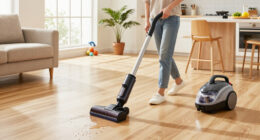
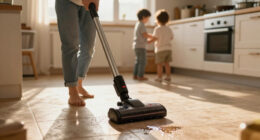
To find the quietest vacuum, look for models with decibel levels at 60 or below, as these operate quietly like background music or normal conversation. Compare sound ratings carefully, since traditional vacuums often reach 70-80 decibels, while quieter options use soundproofing and motor design improvements to reduce noise. Considering your needs and preferences, knowing about sound levels can help you select a vacuum that balances powerful cleaning with peaceful operation—more tips are just a step away.

Get cleaning gear delivered free — and shop member deals
- Fast, free delivery on millions of items
- Access to Prime Big Deal Days deals on October 6–7
- Prime Video, Amazon Music and more included
Key Takeaways
- Look for vacuums rated at 60 decibels or lower for quieter operation.
- Compare decibel levels across models to find ones with the lowest noise output.
- Consider vacuums with soundproofing features and insulated motors for better noise reduction.
- Read user reviews and sound comparisons to assess real-world noise levels.
- Balance noise ratings with cleaning power to ensure effective yet quiet performance.

Have you ever wondered how noise levels affect your daily life? The sound your vacuum makes might seem like a minor detail, but it can profoundly impact your comfort, focus, and overall well-being. When choosing a vacuum, understanding vacuum decibels is essential. Decibels measure how loud a sound is, and the lower the number, the quieter the machine. Many vacuums operate at different decibel levels, and some can be surprisingly loud, reaching 80 or more decibels—similar to a busy street or a loud conversation. Others are designed to be much quieter, often around 60 decibels or less, comparable to background music or a normal conversation. Conducting a sound comparison between different models helps you identify which vacuum best fits your needs, especially if you’re sensitive to noise or live in an apartment where loud sounds can disturb neighbors.
The key to finding the quietest vacuum is to compare their decibel ratings directly. For example, a traditional upright vacuum may produce noise levels around 70-80 decibels, which can be disruptive if you’re trying to keep noise to a minimum while cleaning early in the morning or late at night. On the other hand, newer models prioritize noise reduction, often marketing themselves as “quiet vacuums,” with decibel levels hovering around 60 or lower. These quieter models utilize special soundproofing materials and optimized motor designs to reduce noise output without sacrificing cleaning power. By listening to sound comparisons or reading decibel specifications, you’ll get a clearer picture of how loud a vacuum truly is before making a purchase. Additionally, some advanced vacuums incorporate technology from electric power generation to help minimize noise during operation.
Understanding vacuum decibels isn’t just about comfort; it also helps you gauge the machine’s efficiency. Many quieter vacuums employ innovative technology that balances sound reduction with suction power. For instance, some models use insulated motors or sound-absorbing materials that keep noise levels down while still effectively picking up dirt and debris. When comparing sound levels, keep in mind that the difference between 60 and 70 decibels can be quite noticeable—one might be barely audible, while the other could be quite intrusive. This sound comparison allows you to prioritize what matters most: a powerful clean or a peaceful environment. Ultimately, finding the quietest vacuum involves a combination of understanding decibel ratings, listening to sound comparisons, and considering your daily routine and sensitivities.
quiet vacuum cleaner 60 decibels or lower
As an affiliate, we earn on qualifying purchases.
As an affiliate, we earn on qualifying purchases.
Frequently Asked Questions
How Does Vacuum Noise Impact Indoor Air Quality?
Vacuum noise can impact your indoor air quality by stirring up airborne particles, which may worsen allergies or asthma. Loud vacuums can also harm your auditory health over time, leading to hearing issues. When you choose a quieter vacuum, you reduce noise-related stress and minimize the disturbance of airborne particles, creating a healthier environment. So, opting for a low-noise model helps protect both your indoor air and your hearing.
Are Quieter Vacuums as Effective as Louder Models?
Imagine a whispering breeze softly sweeping through a room—that’s how quieter vacuums feel in your hand. They’re just as effective because of improved sound insulation and advanced motor technology, which focus on performance. You won’t need to sacrifice cleaning power for peace; these vacuums deliver strong suction while minimizing noise perception, making your chores less disruptive and more comfortable.
Do Noise Levels Vary Between Bagged and Bagless Vacuums?
You’ll find that noise levels do vary between bagged and bagless vacuums. Bagged models often incorporate noise reduction features, making them quieter during operation. Bagless vacuums, however, can be louder due to their open dust containers and different motor designs. If quiet operation matters to you, look for vacuums with dedicated noise reduction features, regardless of whether they are bagged or bagless, to guarantee a more peaceful cleaning experience.
What Features Contribute to a Vacuum’s Quiet Operation?
To enjoy a quieter vacuum, look for features like effective sound insulation and thoughtful motor design. Sound insulation minimizes noise escape, creating a more peaceful environment, while a well-designed motor reduces vibrations and humming sounds. These enhancements work together to keep noise levels low, so you can clean comfortably without disturbing others. Choosing a vacuum with these features guarantees a more pleasant cleaning experience, blending power with tranquility effortlessly.
How Do Noise Levels Affect Pet Behavior During Cleaning?
High noise levels can trigger pet anxiety and worsen noise sensitivity during cleaning. When your vacuum is loud, your pet might become frightened, hide, or act agitated. To keep your pet calm, opt for quieter vacuums, and try to clean when they’re less anxious or distracted. Lower noise levels help your pet feel safer, reducing stress and making the cleaning process smoother for everyone.
Conclusion
When choosing a vacuum, remember that noise levels matter—not just for comfort but for safety. Did you know that some quiet models operate at just 60 decibels, similar to a normal conversation? That’s considerably quieter than traditional vacuums, which can reach over 80 decibels. By opting for a quieter model, you’ll enjoy a more peaceful cleaning experience without sacrificing power. So, next time you shop, consider noise levels—you might just find the perfect, quiet cleaning companion.
Fall Picks
fall essentials
As an affiliate, we earn on qualifying purchases.