TL;DR

Get cleaning gear delivered free with Prime
- Fast, free delivery on millions of items
- Prime Video, Amazon Music and more included
- Member-only deals all year
The source material is a Family Handyman checklist for responding to flooding, not a report of a specific flood or new government action. It recommends prioritizing electrical and contamination hazards, notifying your insurer and documenting damage before cleanup, then beginning safe water removal and drying promptly.
Family Handyman has outlined steps for homeowners after a flood, starting with avoiding electrical and contamination hazards before beginning cleanup. The checklist also advises contacting an insurer and photographing damage before removing water or damaged materials, actions that can affect both safety and the documentation of an insurance claim.
The report says homeowners should stay out of floodwater and not approach an electrical panel if reaching it requires wading. Water may have energized electrical equipment, and standing water can contain sewage, animal waste, agricultural runoff or hidden debris. If the panel is accessible by a dry route, the report advises switching off power; if not, it recommends contacting the power company to shut it off remotely. Do not enter a flooded area until the power is known to be off.
Once it is practical, contact the insurance company to start a claim. The report says some policies set reporting windows, but it does not identify specific policy terms. Before cleanup, document damage with photos or video, including the highest water mark on walls and the data plates showing model and serial numbers on affected appliances. Save records and follow the insurer’s instructions as the claim proceeds.
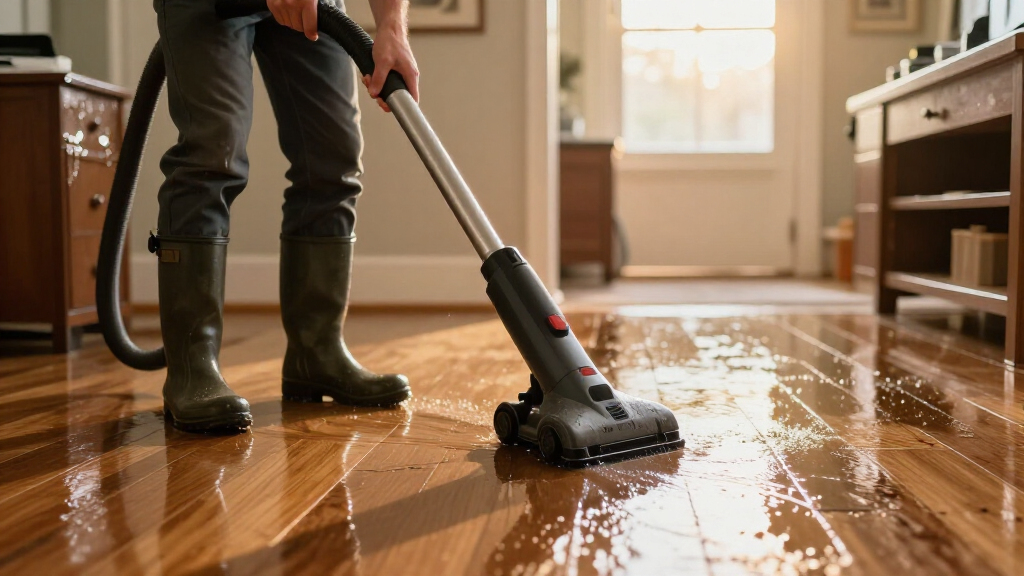
Water removal and drying should begin only when it is safe. The checklist suggests a wet/dry vacuum for small amounts of water and renting a sump pump for deeper standing water. It recommends moving wet carpet to air out where possible, lifting furniture on blocks, and removing affected baseboards. Because waterlogged drywall can wick moisture upward, the report says damaged sections may need removal. Fans and dehumidifiers can help dry the space; the report advises running them for at least 48 hours, and potentially 72, while checking that materials are actually dry.
Safety Before Flood Cleanup
The order of steps matters: entering floodwater can expose people to electric shock, pathogens and sharp debris, while premature cleanup can remove evidence useful for an insurance claim. Acting promptly after conditions are safe can also limit how long building materials remain wet and reduce the chance of mold growth.
The report cites U.S. Environmental Protection Agency guidance that mold probably will not grow on water-damaged materials if they dry within 24 to 48 hours. That is a general drying window, not a guarantee that every material or home will avoid mold. Flooding can also affect hidden spaces, so visible dryness alone may not show whether a room is fully dry.
As an affiliate, we earn on qualifying purchases.
Floods From Storms or Plumbing
The checklist applies to flooding from both severe weather and household plumbing failures, including a burst pipe, overflowing toilet or backed-up floor drain. It frames the guidance against possible heightened flood risks in parts of the United States during 2026 and 2027, citing a separate Newsweek report. The source material does not provide details that independently establish the scale or timing of those risks.
Family Handyman says its checklist draws on advice from insurance and restoration professionals. The cited recommendations include starting an insurance claim quickly, recording the damage before cleanup, and contacting restoration specialists when available. After widespread disasters, the source warns, restoration crews may be in short supply, so some homeowners may need to take initial steps themselves—but only when safe.
“Water and electricity are the biggest immediate safety risk after a flood.”
— Sam Hickerson, damage remediation expert, as quoted by Family Handyman
Insurance coverage and reporting deadlines vary by policy; the checklist does not state what any individual homeowner’s policy covers or what documentation an insurer will require. Homeowners should ask their insurer about their own claim rather than assume that one process applies to all policies.
The source also does not give a single cleanup plan for every flood. Water contamination, depth, the building’s materials and electrical conditions can differ. It does not provide detailed instructions for dealing with contaminated water, structural damage or specialized equipment. Whether walls, flooring or belongings can be dried or must be removed requires an assessment of the specific damage.
Document, Dry and Get Help
After confirming it is safe to enter, homeowners can record damage, contact their insurer and arrange professional assessment. Start water removal and drying only if the electrical and contamination risks have been addressed. The report advises contacting a restoration company for help, especially with cleaning and sanitizing after the affected area is dry.
Keep photos, receipts and communication related to the loss, and check with the insurer before discarding damaged items or undertaking extensive repairs. If water has reached electrical systems, or the home has structural damage or contaminated water, do not treat it as a routine do-it-yourself cleanup; contact the appropriate utility, qualified professionals or local authorities for guidance.
Key Questions
What should I do first if my home floods?
Prioritize personal safety. Stay out of standing water, especially if electricity may still be on. Shut off power only if you can reach the main panel by a dry route; otherwise, contact the power company to ask about a remote shutoff.
Should I clean up before photographing the damage?
No. The report advises taking photos or video before cleanup, including the highest water mark and appliance identification plates, so the damage is documented before materials are moved or removed.
How quickly should flood-damaged areas dry?
The report cites EPA guidance that mold probably will not grow on water-damaged materials if they dry within 24 to 48 hours. This is not a guarantee; keep drying equipment running and get professional advice if materials remain damp or damage is extensive.
Can I remove the water myself?
Only after it is safe to enter and power risks are addressed. The checklist suggests a wet/dry vacuum for small amounts and a sump pump for deeper water, but contaminated water, electrical hazards or structural concerns call for professional help.
Source: rss
Halloween Picks
halloween
As an affiliate, we earn on qualifying purchases.