
TL;DR

Get cleaning gear delivered free with Prime
- Fast, free delivery on millions of items
- Prime Video, Amazon Music and more included
- Member-only deals all year
A Hunker report describes using baking soda to help reduce everyday odors on some fabric couches, but it does not remove the stain or spill causing them. Check the upholstery care label, test a hidden area first and avoid using the method on leather, imitation leather, silk or delicate vintage furniture.
Baking soda may help reduce everyday odors on some fabric couches, but it will not remove the stain or spill behind a smell, according to a Hunker report. The method depends on the upholstery being suitable for the treatment: owners should check the couch’s care label and test an inconspicuous spot before covering a larger area.
Hunker recommends starting with the manufacturer’s upholstery care label, often located beneath a cushion or on the furniture’s underside. The report says a “W” code indicates water-based cleaning products or steam may be used, while an “X” generally means the fabric should only be vacuumed or brushed. Owners should follow the label’s directions rather than assuming baking soda is suitable for every couch.
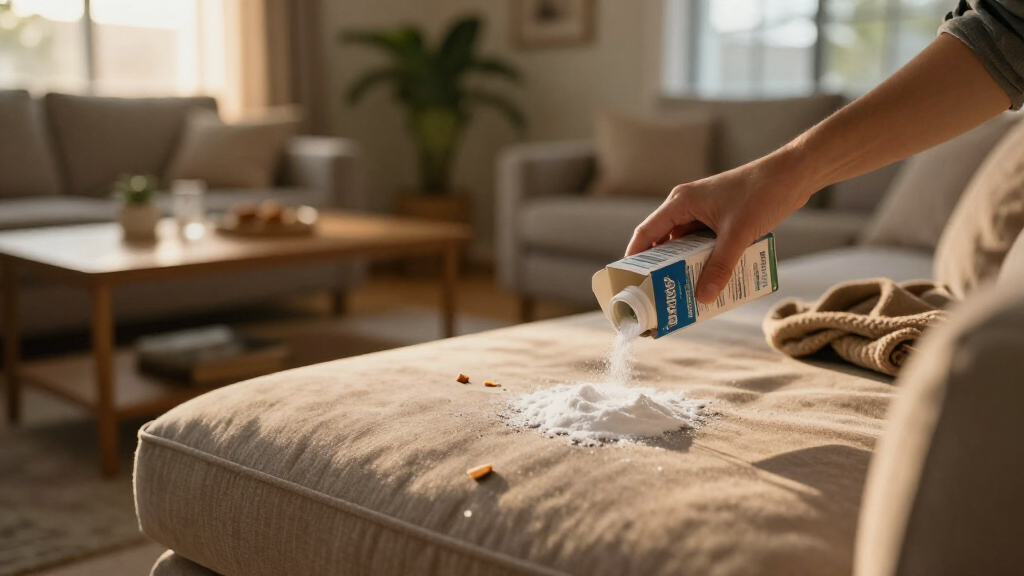
Before treating the whole sofa, test a small, hidden section and leave the powder on for the same length of time planned for the full treatment. If the test shows no discoloration or other problem, remove cushions and throws, check between seams for small objects, and vacuum the upholstery. Once the couch is dry, spread a light, even layer of baking soda over it without rubbing it in. Leave it for at least 20 to 30 minutes, then vacuum thoroughly, including seams and cushion surfaces.
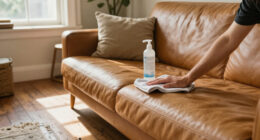
The report cautions against applying the method to leather, imitation leather, silk or delicate vintage furniture, which may dry out, become damaged or discolor. Powder can also be hard to remove from deep-pile fabrics and seams. Keep children and pets away while the baking soda is on the couch, and make another vacuuming pass if residue remains.
When Odor Treatment Is Not Enough
The main distinction for couch owners is between freshening fabric and cleaning the source of an odor. Baking soda may help with less serious smells, but it does not clean away a spill, stain or other material that has soaked into the upholstery. Treating the cause with an appropriate fabric cleaner—or arranging professional service when needed—may be necessary to address the problem fully.
Checking the label and testing first can also help prevent a small odor problem from becoming fabric damage or visible discoloration. That matters especially for upholstery that is difficult to replace or clean, and for furniture where powder could collect in seams or pile.
Products Worth Considering

eufy E25 Robot Vacuum and Mop for Pet Hair, 20,000 Pa, HydroJet Roller Mop

Dyson Omni-Glide Cordless Stick Vacuum, Gold/Iron

eufy C28 Robot Vacuum and Mop with HydroJet Roller and 15,000 Pa Suction
As an affiliate, we earn on qualifying purchases.
Care Labels Guide Couch Cleaning
The Hunker report frames baking soda as one household option for managing odors in upholstered furniture, not as a universal couch cleaner. Upholstery varies: the care code indicates which cleaning methods the manufacturer allows, while a hidden-area test can reveal whether a particular treatment affects the fabric.
The report also distinguishes ordinary odors from stronger or absorbed smells. Pet urine and other deeply soaked-in odors, for example, may require professional cleaning. A visible spill should be addressed with a cleaner appropriate for the fabric; sprinkling powder over it does not remove the spill itself.
“Baking soda can deal with many unpleasant odors, but it can’t eliminate smells that have already soaked into the fabric.”
— Hunker report
Results Depend on Fabric and Odor
The report does not quantify how much baking soda reduces odors or specify how well it works across different upholstery fabrics. Results may depend on the couch’s material, the odor’s cause and how deeply it has penetrated. A patch test can identify a visible reaction, but it cannot guarantee that the method will remove a smell or be easy to vacuum out of deep-pile fabric.
It is also not clear from the report whether a particular couch can tolerate this treatment unless its care label and fabric are checked. When the label is missing, unclear or indicates vacuum-only care, the safest course is not to assume the powder is suitable; consult the manufacturer or a professional cleaner.
Check the Label Before Treating
Before applying baking soda, locate the care label, identify the cleaning code and test a hidden patch for the intended treatment time. If the fabric passes, follow the reported sequence: remove loose items, vacuum, apply a thin layer to dry upholstery, wait, then vacuum carefully. Keep pets and children away while powder remains on the furniture.
If an odor persists, comes from a visible spill or appears to have soaked into the fabric, use a cleaner approved for that upholstery or contact a professional cleaner. Do not keep adding baking soda if residue is becoming difficult to remove or the fabric shows a change.
Key Questions
What is baking soda meant to do on a couch?
According to the Hunker report, it may help reduce less serious odors on suitable fabric upholstery. It does not remove the spill or stain causing the smell.
How long should baking soda stay on a fabric couch?
The report recommends leaving a light layer undisturbed for at least 20 to 30 minutes. It says longer treatment, including overnight, may be considered for stronger smells only after a patch test of the same duration.
Can I use baking soda on a leather couch?
The report advises against using it on leather or imitation leather, as well as silk and delicate vintage furniture, because the material could dry out, become damaged or discolor.
What should I do if the smell remains?
Check whether a stain or spill is causing the odor and use a cleaner suitable for the upholstery. Strong or deeply absorbed smells, including some pet urine odors, may need professional cleaning.
Source: rss