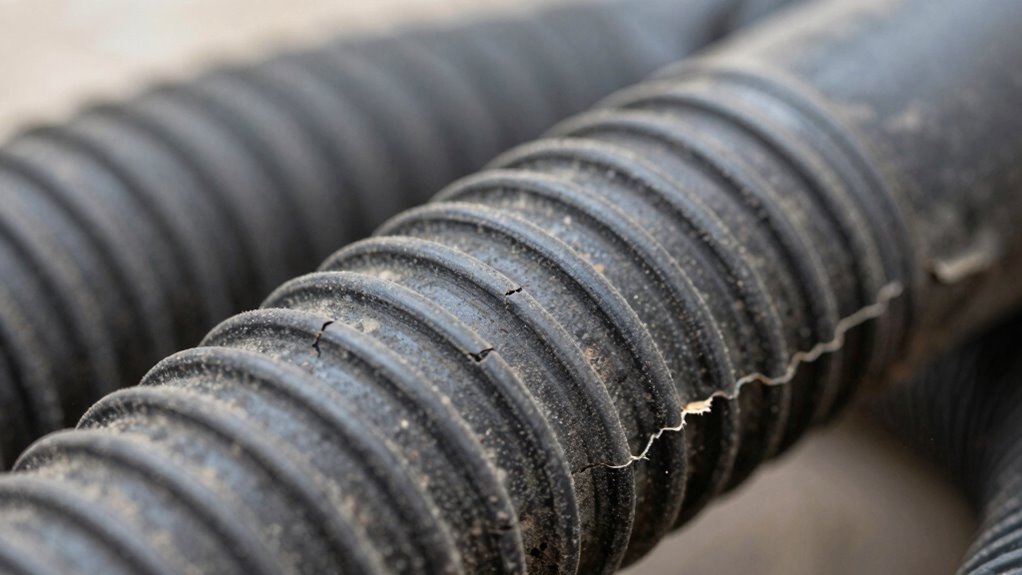

Over time, vacuum hoses lose efficiency because their materials degrade from exposure to heat, chemicals, and wear. Rubber, plastic, and silicone hoses can crack, harden, or become brittle, which weakens their ability to maintain proper vacuum levels. Regular use and environmental factors accelerate this deterioration. If you want to understand how to spot problems early and keep your system running smoothly, there’s more to discover below.
Key Takeaways
- Material degradation from exposure to heat, chemicals, and environmental factors causes cracks and leaks.
- Aging hoses become brittle, harden, or crack, reducing their ability to maintain proper vacuum pressure.
- Wear and tear from regular use and flexible bending lead to stress fractures and leaks.
- Chemical exposure weakens hose materials, decreasing their durability and sealing capability.
- Lack of routine inspection and maintenance allows small damages to worsen, impairing efficiency.
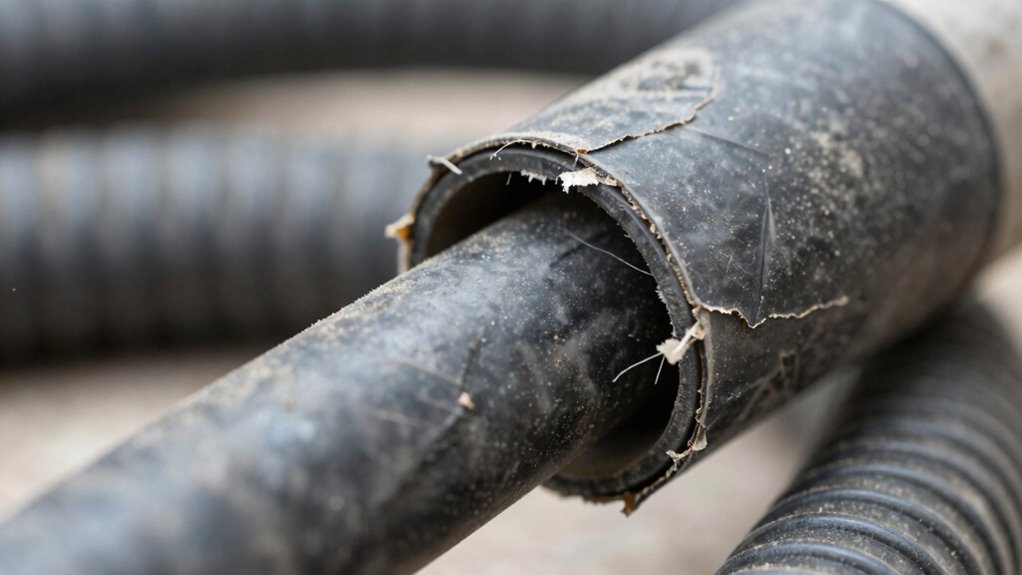
Have you noticed your vehicle isn’t running as smoothly as it used to? One common culprit behind this issue could be your vacuum hoses. These essential components help regulate various engine functions, including emissions and power brakes. Over time, they tend to lose efficiency, and understanding why can help you keep your vehicle running smoothly longer. A key factor is the materials used in vacuum hoses. Most are made from rubber, plastic, or reinforced silicone. Rubber hoses, while affordable and flexible, are prone to cracking and hardening with age, especially under extreme temperature fluctuations. Plastic hoses are more resistant to heat but can become brittle and crack over time. Silicone hoses, although more durable, can still degrade if exposed to harsh chemicals or prolonged heat. Regardless of the material, all vacuum hoses are susceptible to wear and tear, which impairs their ability to maintain proper vacuum levels. Additionally, exposure to various engine chemicals can accelerate deterioration, making chemical resistance an important consideration when choosing replacement hoses. Regularly inspecting hoses for signs of chemical exposure helps prevent unexpected failures.
Vacuum hoses degrade over time, affecting engine performance and requiring regular inspection and maintenance.
The deterioration of vacuum hose materials isn’t the only reason they lose efficiency. Maintenance routines play an important role in prolonging their lifespan. If you neglect routine inspections, small cracks or leaks can go unnoticed, leading to decreased engine performance. Regularly checking your vacuum hoses for signs of damage—such as cracks, swelling, or loose connections—is essential. Replace any worn or damaged hoses promptly to avoid more serious engine issues down the line. Also, a good maintenance routine involves cleaning the hoses and surrounding areas to prevent dirt and debris from causing additional wear. Using a quality hose clamp ensures a tight fit, reducing the chances of leaks that can compromise engine operation. Proper storage of replacement hoses in a clean, cool environment can also help maintain their integrity until installation.
Another factor that contributes to vacuum hose deterioration is exposure to engine fluids and chemicals. Over time, exposure to oil, coolant, or other automotive fluids can weaken hose materials, especially if they aren’t resistant to such substances. To prevent this, opt for hoses that are designed to withstand exposure to chemicals and regularly inspect for any signs of deterioration. Properly maintaining your vacuum hoses also means avoiding unnecessary flexing or bending, which can cause stress fractures. Keeping an eye on engine temperatures and addressing overheating issues promptly can also help preserve the integrity of your vacuum hoses. Maintaining optimal engine temperature not only prolongs hose life but also supports overall engine health.
In short, understanding the importance of vacuum hose materials and sticking to consistent maintenance routines can greatly extend the life of these essential engine components. By staying proactive with inspections and replacements, you ensure your vehicle maintains peak performance and avoids the headaches of unexpected repairs caused by degraded vacuum hoses.

Multipurpose Vacuum Line Kit,6PCS 5Ft Vacuum Hose Automotive+64PCS Vacuum Line Connectors,Max 130PSI Silicone Hose for Variety Car Piping System Automotive Replacement Vacuum Hoses (70PCS)
- Complete 6-Piece Vacuum Hose Set: Includes six 5ft hoses with various diameters
- Wide Range of Connectors: Includes 64 hose connectors for versatility
- High-Quality Silicone Material: Made from durable, temperature-resistant silicone
As an affiliate, we earn on qualifying purchases.
As an affiliate, we earn on qualifying purchases.
Frequently Asked Questions
Can Vacuum Hose Material Affect Long-Term Efficiency?
Yes, the hose material considerably affects long-term efficiency. If you choose durable materials like rubber or reinforced plastics, your vacuum hose will resist cracking, brittleness, and wear better over time. Durability factors such as exposure to chemicals, temperature fluctuations, and physical stress play a role too. Selecting high-quality, resilient hose materials helps maintain ideal suction power, reducing the need for frequent replacements and ensuring your vacuum performs efficiently for longer periods.
How Often Should I Replace My Vacuum Hose?
You should replace your vacuum hose when it shows clear replacement indicators, like cracks, tears, or significant clogs. Regular hose cleaning helps maintain efficiency, but if damage persists, replacement is necessary. Typically, inspect your hose every few months and consider replacing it annually or when cleaning no longer restores maximum suction. Keeping an eye on these signs ensures your vacuum performs well and extends its lifespan.
Do Certain Vacuum Models Experience Faster Hose Degradation?
Did you know some vacuum models degrade faster? Yes, certain models face quicker hose deterioration due to design flaws or lower-quality manufacturing. You should pay attention to vacuum hose design and manufacturer quality, as these factors influence durability. Cheaper or poorly designed hoses tend to crack or lose suction quicker. Investing in a reputable brand with sturdy construction can extend your hose’s lifespan, saving you time and money in the long run.
Can External Chemicals Damage Vacuum Hoses?
Yes, external chemicals can damage vacuum hoses. Chemical corrosion occurs when harsh substances like cleaning agents or solvents come into contact with the hose material, weakening it over time. Environmental exposure, such as sunlight or extreme temperatures, can also accelerate deterioration. To keep your vacuum functioning efficiently, avoid exposing hoses to these chemicals and harsh conditions, and store your vacuum in a protected, cool place when not in use.
Are There Specific Storage Tips to Prolong Hose Life?
To prolong your vacuum hose’s life, focus on proper hose storage and material preservation. Store your hose in a cool, dry place away from direct sunlight and chemicals. Coil it loosely to prevent kinks and avoid sharp bends. Keep it off the ground to prevent damage. Regularly inspect for wear, and clean it with mild soap and water. Proper storage guarantees your hose stays flexible, durable, and efficient for longer use.
Conclusion
To keep your vacuum hoses in prime condition, prioritize proper maintenance and periodic inspections. Recognize the risks of cracks, clogs, and corrosion that can compromise their capacity. Staying proactive prevents problems before they worsen, preserving power and performance. Remember, neglect now can lead to nuisances later. So, stay vigilant, regularly verify vulnerabilities, and value your vacuum’s importance. Vigilance and care cultivate consistent comfort, ensuring your vacuum remains a crucial, vibrant part of your routine.