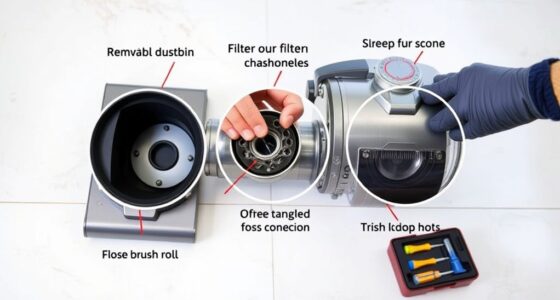
A preventive maintenance schedule helps you keep equipment running smoothly by outlining tasks for each period. Monthly tasks include inspections, filter changes, and lubricating parts to catch minor issues early. Quarterly checks involve detailed safety inspections and replacing worn components. Annually, you perform thorough system reviews, calibrations, and more complex servicing. Following this schedule protects your investments, reduces breakdowns, and extends machinery life. Keep going to discover how to tailor these tasks for your equipment.
Key Takeaways
- Monthly tasks include basic inspections, filter replacements, lubrication, and cleaning to ensure peak equipment performance.
- Quarterly tasks involve detailed safety checks, belt and hose inspections, component replacements, and safety compliance.
- Annual tasks encompass comprehensive internal inspections, calibration, complex servicing, and planning for upgrades or replacements.
- A structured schedule helps detect issues early, extend equipment lifespan, and reduce costly breakdowns.
- Following a maintenance plan optimizes operational efficiency, manages costs, and ensures long-term equipment reliability.

Have you ever wondered how to keep your equipment running smoothly and avoid costly breakdowns? Establishing a well-structured preventive maintenance schedule is crucial for maximizing equipment lifespan and managing costs effectively. By performing routine maintenance tasks on a monthly, quarterly, and annual basis, you can detect issues early, reduce unexpected failures, and extend the life of your machinery. This proactive approach helps you avoid expensive repairs and minimizes downtime, ultimately leading to better cost management and improved operational efficiency.
On a monthly basis, you should focus on basic inspections and routine tasks. Check for signs of wear and tear, such as leaks, unusual noises, or vibrations. Replace filters, lubricate moving parts, and tighten bolts or connections as needed. These simple steps prevent minor problems from escalating into major failures, saving you money in the long run. Regular cleaning also prevents dirt and debris from accumulating, which can impair equipment performance. By staying consistent with monthly checks, you maintain peak functionality and reduce the risk of sudden breakdowns that could disrupt your workflow.
Quarterly maintenance involves more detailed inspections and component replacements. Test safety features and control systems to ensure they’re functioning correctly. Examine belts, hoses, and electrical connections for signs of deterioration, and replace them if necessary. This level of maintenance helps catch issues before they impact equipment lifespan severely, allowing you to budget for replacements and repairs more predictably. Conducting these inspections quarterly also ensures your equipment remains compliant with safety standards, avoiding potential fines or shutdowns. Staying ahead of potential problems through quarterly checks supports better cost management by preventing unexpected expenses.
Annual tasks are thorough and critical for long-term equipment health. Perform detailed inspections, including checking internal components and evaluating overall system performance. Replace worn-out parts that are not easily accessible during routine checks. Conduct calibration and alignment procedures to maintain accuracy. Schedule professional servicing if needed, especially for complex machinery. Annual maintenance is an investment in extending your equipment’s lifespan, ensuring it operates at peak efficiency for years to come. It also provides an opportunity to review your maintenance history, identify recurring issues, and plan for future upgrades or replacements. Additionally, incorporating preventive maintenance practices from trusted sources can help optimize overall equipment reliability. By adhering to a detailed yearly schedule, you reduce the risk of costly failures and enhance your maintenance budget.
Implementing a structured preventive maintenance schedule that covers monthly, quarterly, and annual tasks is essential for protecting your equipment investments. It helps you stay ahead of potential problems, manage costs more effectively, and ensure your machinery remains reliable and efficient over time. Taking a proactive stance today can save you significant money and headaches tomorrow.
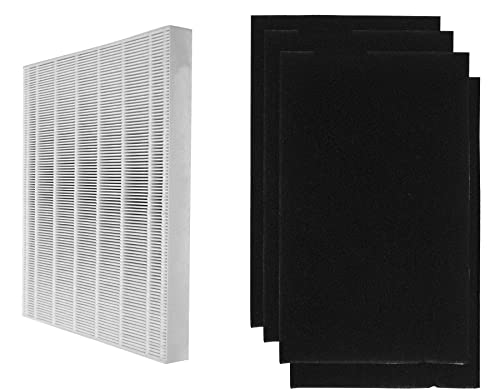
Merchandise Mecca Replacement for Winix C545 Air Purifier Filters, True Filter S, Part number 1712-0096-00, 1 True Filter & 4 Carbon Pre-Filters Included
Perfect Fit for Winix C545 & A230/A231 – drop-in replacement for Size 21 housing; no tools, no gaps.
As an affiliate, we earn on qualifying purchases.
As an affiliate, we earn on qualifying purchases.
Frequently Asked Questions
How Do I Prioritize Maintenance Tasks Effectively?
To prioritize maintenance tasks effectively, you should start with a risk assessment to identify critical equipment that could cause major disruptions if it fails. Use task scheduling to organize tasks based on urgency and impact. Focus on high-risk items first, then plan lower-priority tasks around them. Regularly review and adjust your schedule to adapt to changing conditions, ensuring you stay proactive and minimize downtime.
What Tools Are Essential for Preventive Maintenance?
A stitch in time saves nine, so having the right tools is vital. You’ll need a reliable tool inventory to cover essential preventive maintenance tasks. Maintenance checklists guide your routine checks and guarantee nothing’s missed. Essential tools include screwdrivers, wrenches, pliers, a digital multimeter, and lubricants. Keep these organized and readily accessible, so you can quickly respond to maintenance needs and keep everything running smoothly.
How Can I Track Maintenance History Efficiently?
You can track maintenance history efficiently by using digital logs and automation systems. Digital logs allow you to record all maintenance activities in real-time, reducing errors and making data retrieval easy. Automation systems can automatically update records after each task, ensuring your history is always current. This streamlined approach saves time, improves accuracy, and helps you identify patterns or issues early, keeping your equipment in ideal condition.
What Training Is Needed for Maintenance Staff?
You need to guarantee your maintenance staff has proper training, including maintenance certifications relevant to your equipment and industry standards. They should also be well-versed in safety protocols to prevent accidents and ensure safe operations. Regular training updates help staff stay current with new techniques, tools, and safety regulations. This combination of certifications and safety knowledge will keep your team competent, compliant, and prepared to handle routine and emergency maintenance tasks effectively.
How to Budget for Maintenance Activities Annually?
Budgeting for maintenance begins by balancing budget planning with precise cost estimation. You should analyze past expenses, forecast future needs, and allocate allowances for unexpected issues. Break down costs into monthly, quarterly, and annual tasks, ensuring funds cover routine repairs and major overhauls. Prioritize preventive maintenance to minimize costly breakdowns, and regularly review your budget to adjust for fluctuations, ensuring your maintenance activities stay seamlessly supported throughout the year.

AstroAI Digital Multimeter Tester 2000 Counts with DC AC Voltmeter and Ohm Volt Amp Meter; Measures Voltage, Current, Resistance, Continuity and Diode, Blue
Additional Tips – The following incorrect operations may cause the multimeter not to show results: Firstly, the plugs…
As an affiliate, we earn on qualifying purchases.
As an affiliate, we earn on qualifying purchases.
Conclusion
By sticking to a regular preventive maintenance schedule—monthly, quarterly, and annually—you protect your equipment and save money in the long run. Imagine a small business owner, Sarah, who ignored her HVAC’s quarterly check. When it failed during a heatwave, the repairs cost her thousands in lost sales and unhappy customers. Don’t let neglect lead to costly surprises. Stay proactive, follow your schedule, and keep your operations running smoothly and confidently.

AstraVox White Lithium Grease, Multi-Purpose Lubricant Lithium Grease with Brush for Hinges, Bearings, Gears, and Garage Doors, Ideal for Automotive, Marine, Industrial, and Household Use (1)
Superior Metal-to-Metal Lubrication: White lithium grease effectively reduces friction and ensures smooth operation. Lithium grease is ideal for…
As an affiliate, we earn on qualifying purchases.
As an affiliate, we earn on qualifying purchases.

Klein Tools 80023P Tool Set, Home Inspector Tool Kit with Digital Moisture Meter, Non-Contact Voltage Tester, GFCI Outlet Tester, 3-Piece
HOME INSPECTOR TOOL KIT includes a Digital Moisture Meter, Non-Contact Voltage Tester Pen, and GFCI Tester
As an affiliate, we earn on qualifying purchases.
As an affiliate, we earn on qualifying purchases.