If your vacuum makes a high-pitched squeal, it likely has a slipping or worn belt. Loud banging usually means objects are stuck in the brush roll. A consistent humming or buzzing points to blocked filters or hoses. Crackling or popping noises may indicate electrical or motor issues. Regular maintenance helps prevent these problems. Curious about how to fix these sounds and keep your vacuum running smoothly? Keep exploring to discover detailed solutions.

Get cleaning gear delivered free — and shop member deals
- Fast, free delivery on millions of items
- Access to Prime Big Deal Days deals on October 6–7
- Prime Video, Amazon Music and more included
Key Takeaways
- High-pitched squealing indicates slipping or worn belt, often caused by debris or stretching, which may damage the motor if ignored.
- Loud banging or thudding typically comes from objects lodged in the brush roll, requiring removal to prevent motor strain.
- A consistent humming or buzzing suggests a clogged filter or blocked hose, reducing airflow and increasing noise.
- Crackling or popping noises can signal electrical or motor issues, necessitating immediate shutdown and professional inspection.
- Regular maintenance and tuning help prevent common noises, ensuring quieter, smoother, and more efficient vacuum operation.
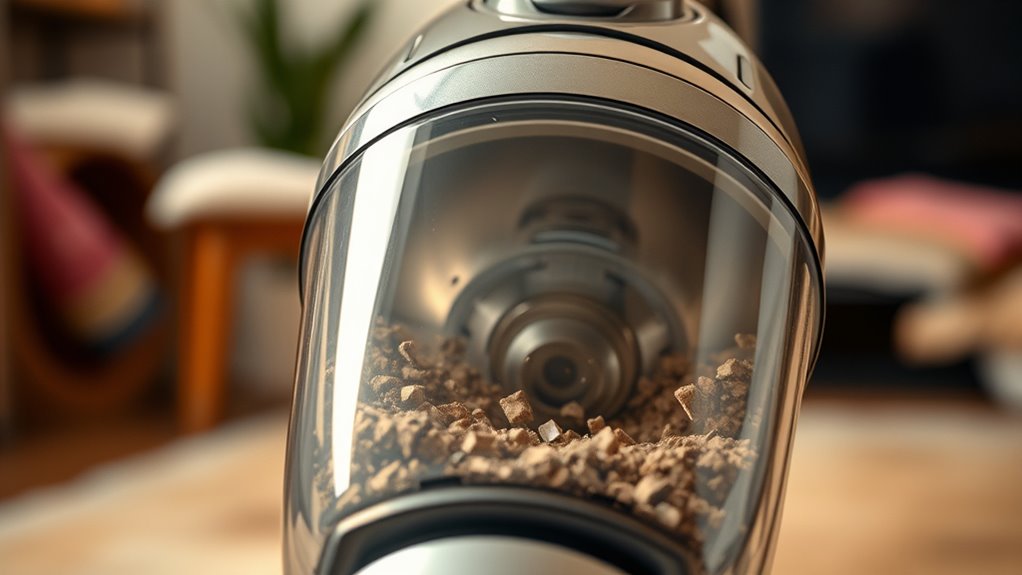
Have you ever noticed strange noises coming from your vacuum cleaner while you’re using it? If so, you’re not alone. Vacuum noises can be unsettling, and understanding what they mean can save you time and frustration. Troubleshooting vacuum sounds is essential because different noises often point to specific issues, and addressing them early can extend your vacuum’s lifespan.
Strange vacuum noises can signal specific issues—early troubleshooting extends your vacuum’s lifespan.
If your vacuum starts making high-pitched squealing or screeching sounds, it’s usually a sign that the belt is slipping or worn out. This noise occurs because the belt struggles to turn the brush roll smoothly, often due to debris buildup or stretching over time. Don’t ignore this; a slipping belt can damage your vacuum motor if left unchecked. To troubleshoot vacuum sounds like this, turn off the vacuum and inspect the belt for signs of wear or breakage. Replacing the belt is typically straightforward and can restore quiet operation and effective cleaning.
On the other hand, if you hear a loud banging or thudding noise during use, it’s often caused by objects getting lodged in the brush roll or the roller hitting a hard surface. Sometimes, small toys, coins, or hair wrap around the brush, disrupting its rotation. This can create a rhythmic thumping sound. To troubleshoot vacuum sounds like this, turn off the vacuum and carefully remove any obstructions from the brush roll. Clearing out debris not only quiets the noise but also prevents potential motor strain.
If your vacuum emits a consistent humming or buzzing sound but isn’t picking up dirt effectively, it could be a clogged filter or blocked hose. Restricted airflow causes the motor to work harder, generating unusual vacuum noises and reducing suction power. Troubleshooting vacuum sounds here involves checking the air pathways. Remove and clean filters, and inspect hoses for blockages. Clearing these obstructions restores proper airflow and quiet operation.
Sometimes, your vacuum might produce a crackling or popping noise, which can indicate electrical issues or motor problems. These sounds are less common but more serious. If you hear crackling, turn off the vacuum immediately and unplug it. It’s best to have a professional examine the motor or wiring to prevent potential damage or safety hazards.
Additionally, regular maintenance and vacuum tuning can prevent many common noises by ensuring all components are properly aligned and functioning smoothly.
As an affiliate, we earn on qualifying purchases.
Frequently Asked Questions
How Often Should I Service My Vacuum to Prevent Strange Noises?
To prevent strange noises from your vacuum, you should service it regularly. Check your vacuum filter every 1-3 months and replace it if it’s dirty or clogged. Also, inspect the belt and replace it if it shows signs of wear or cracking. Regular maintenance keeps your vacuum running smoothly, reduces noise issues, and extends its lifespan. Staying on top of these tasks ensures peak performance and less frustration.
Can Vacuum Noises Indicate a Motor Failure?
A strange noise from your vacuum could be an emergency warning sign of motor failure, which might stop your cleaning in its tracks. Don’t ignore it—this noise diagnosis is essential. You might think it’s minor, but it could lead to total breakdown if left unchecked. Pay attention to unusual sounds, as they often signal underlying issues. Catching problems early can save you from costly repairs and extend your vacuum’s lifespan.
Are Loud Noises Always a Sign of a Problem?
Loud noises aren’t always a sign of a problem; sometimes, they’re just part of vacuum sound diagnostics. You should consider noise troubleshooting tips to determine if the sound indicates an issue. For example, a sudden loud bang might signal a jam, while a constant high-pitched whine could point to motor trouble. Always listen carefully and investigate further before assuming your vacuum needs repairs.
What Tools Are Needed to Fix Vacuum Noises?
You might be surprised how often fixing vacuum noises is simple. To start, grab a screwdriver to check the vacuum belt for wear or breakage, and inspect the hose for leaks or cracks. A flashlight helps you see hidden issues, and some pliers can tighten loose connections. With these tools, you can quickly identify whether the vacuum belt needs replacing or if a hose leak is causing the noise, saving you time and money.
Does Vacuum Brand Affect the Types of Common Noises?
You might wonder if your vacuum brand affects the noises it makes. Generally, brand compatibility influences design and quality, but noise frequency often depends on the vacuum’s model and age, not the brand itself. Some brands might produce quieter models, but common noises like rattling or whistling can occur across different brands. Regular maintenance and checking for blockages or worn parts help reduce unwanted sounds, regardless of brand.
Conclusion
Now that you know what those vacuum noises mean, you can picture each sound like a different character in a busy household symphony. Maybe a high-pitched whine is your vacuum’s way of singing its own tune, or a rattling noise echoes like a busy street outside your window. With this knowledge, you can listen carefully, turning a simple household chore into a moment of understanding. Soon, your vacuum’s sounds become familiar melodies, guiding you to keep it running smoothly.
Evergreen bestsellers Picks
bestsellers
As an affiliate, we earn on qualifying purchases.