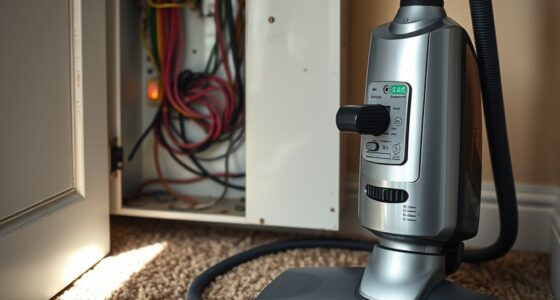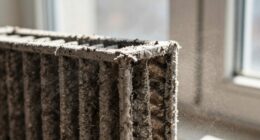
When using compressed air to clear filters and sensors, always wear safety goggles and a dust mask, and work in a well-ventilated area. Hold the nozzle perpendicular to the surface and keep a safe distance from sensitive components. Use low-pressure settings to avoid damage and make sure the air is clean and dry. Following proper techniques and manufacturer guidelines helps prevent debris buildup and extends equipment life. If you want to learn more, keep exploring these essential safety and cleaning tips.
Key Takeaways
- Always wear safety goggles and a dust mask before using compressed air for cleaning filters and sensors.
- Hold the nozzle perpendicular and maintain steady airflow to avoid damage and ensure effective cleaning.
- Use low-pressure settings initially and increase gradually to prevent component damage.
- Ensure the compressed air source is clean, dry, and free of leaks for optimal results.
- Follow manufacturer guidelines to avoid pushing debris further into sensors or filters during cleaning.
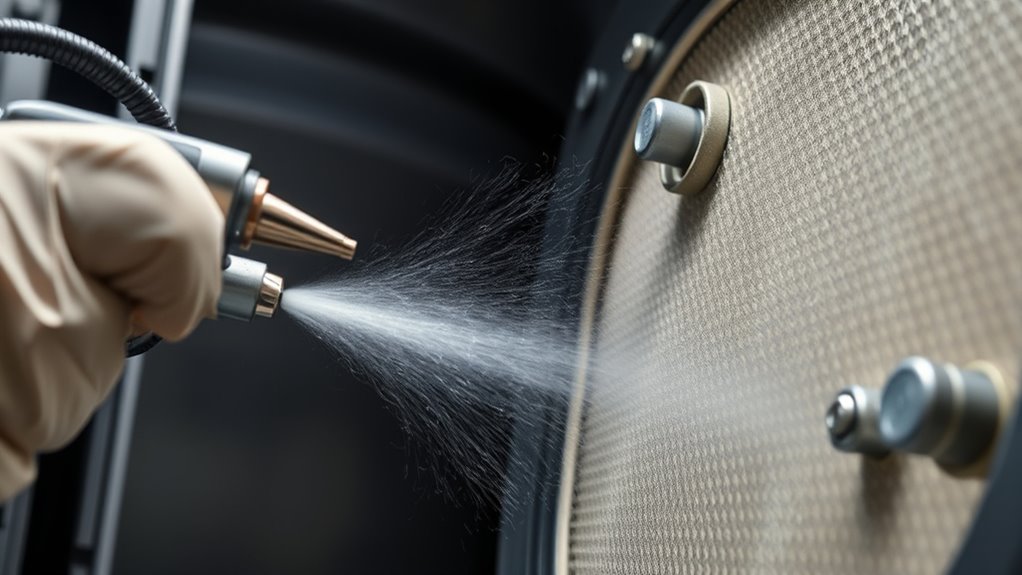
Regularly using compressed air to clear filters and sensors can substantially improve their performance and longevity. When you keep these components clean, you guarantee that air quality remains high and that your equipment functions efficiently. Proper cleaning prevents dust, dirt, and debris from building up, which can hinder sensor accuracy and reduce the lifespan of filters. By maintaining clean sensors, you also help your system operate more reliably, avoiding costly downtime or repairs. Additionally, understanding the tuning options available for vehicles can help you optimize overall system performance and extend the lifespan of your components. However, using compressed air safely is essential to avoid damage or injury. Always wear safety goggles and a dust mask to protect your eyes and respiratory system from airborne particles. Make sure the area is well-ventilated, especially if you’re working indoors, to prevent the buildup of dust or compressed air fumes. Keep your face a safe distance from the nozzle, and never use compressed air at high pressure directly against your skin or sensitive components, as it can cause damage or injury. When cleaning filters and sensors, start with a low-pressure setting to minimize the risk of harm. Hold the nozzle perpendicular to the surface you’re cleaning and maintain a steady, controlled airflow. Avoid shaking or tilting the nozzle, which can cause uneven cleaning or accidental damage. It’s also vital to make certain the compressed air source is in good condition, with no leaks or damaged hoses, to maintain consistent airflow and prevent accidental bursts of high pressure. Remember, compressed air is effective only if used correctly; improper use can push debris further into sensors or filters, making cleaning less effective or even damaging the components. When working on sensitive sensors, check the manufacturer’s guidelines for recommended cleaning procedures, and never use compressed air as a substitute for proper maintenance or replacement when necessary. Regularly inspecting filters and sensors after cleaning helps you assess whether they need further attention or replacement. Additionally, ensuring your compressed air system is clean and dry prevents introducing moisture or oil into your equipment, which could compromise air quality and damage sensitive parts. Taking safety precautions, like disconnecting power before cleaning and working in a dry environment, protects both you and your equipment. By following these practices, you’ll maintain ideal air quality and guarantee your sensors and filters deliver accurate readings for a long time. Consistently applying safe cleaning techniques with compressed air helps you avoid costly repairs, extend equipment life, and keep your operations running smoothly. Proper handling of compressed air, coupled with diligent safety precautions, empowers you to maximize the benefits of this cleaning method while minimizing risks.
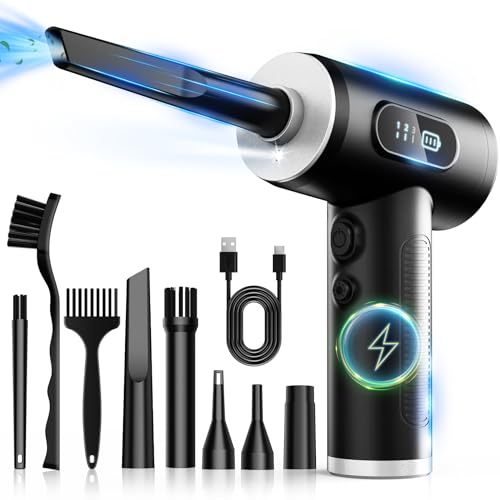
Compressed Air Duster-3 Gear Adjustable 100000RPM Electric Air Duster with LED Light, Rechargeable Cordless Air Blower for Keyboard Electric Devices Cleaning. Replaces Compressed Air Cans (Black)
Powerful Performance:The air duster has a maximum speed of 100000 RPM motor with 3 gear adjustable airflow settings,…
As an affiliate, we earn on qualifying purchases.
As an affiliate, we earn on qualifying purchases.
Frequently Asked Questions
Can Compressed Air Damage Sensitive Electronic Components?
Compressed air can cause electronic damage if used improperly, especially if it’s too forceful or contains moisture or debris. You should always hold the can upright and use low pressure to avoid damaging sensitive components. By taking these precautions, you minimize the risk of electronic damage from compressed air. Proper technique guarantees you clean filters and sensors effectively without risking harm to your electronic devices.
What Safety Precautions Should Be Taken When Using Compressed Air?
Imagine you’re wielding a gust of wind; safety becomes your shield. Always wear protective gear like goggles and gloves to guard against flying debris. Guarantee proper ventilation to prevent buildup of compressed air, which can cause accidents or damage sensitive parts. Keep the nozzle a safe distance, and avoid pointing it at yourself or others. Following these precautions helps you control the storm, keeping everyone safe and equipment intact.
How Often Should Filters and Sensors Be Cleaned With Compressed Air?
You should perform filter maintenance and clean filters and sensors with compressed air regularly, typically every few weeks or as recommended by the manufacturer. The cleaning frequency depends on your environment’s dust levels and the equipment’s usage. Keep an eye on sensor performance and filter clogging to determine the right schedule. Consistent cleaning helps maintain ideal operation, prevents malfunctions, and extends the lifespan of your filters and sensors.
Is There a Preferred Pressure Setting for Cleaning Filters?
You should use a moderate pressure setting when cleaning filters to avoid damage. Start by adjusting your pressure regulation to around 80 PSI, and select a nozzle that provides a focused, yet gentle blast. High pressure can harm delicate components, so always test the pressure first. Proper nozzle selection and pressure regulation guarantee effective cleaning without risking damage, making your maintenance safer and more efficient.
What Alternative Methods Exist for Cleaning Filters and Sensors?
You can explore several filter cleaning techniques and sensor maintenance methods besides compressed air. For filters, consider soaking in cleaning solutions or using a gentle brush to remove debris. For sensors, regular calibration, wiping with soft cloths, or using ultrasonic cleaning can improve performance. These methods help maintain ideal function, extend lifespan, and reduce downtime, ensuring your equipment runs smoothly without relying solely on compressed air.

AirGearPro G-500 Reusable Respirator Mask with A1P2 Filters | Anti-Gas, Anti-Dust | Gas Mask Ideal for Painting, Woodworking, Construction, Sanding, Spraying, Chemicals, DIY etc
PROTECTION : The AirGearPro G-500 Respirator mask and Safety Goggles are CE certified to ensure your protection during…
As an affiliate, we earn on qualifying purchases.
As an affiliate, we earn on qualifying purchases.
Conclusion
By using compressed air to clear filters and sensors, you’re releasing a force powerful enough to blast away even the toughest dirt storms. Imagine turning a tiny gust into a whirlwind that leaves your equipment sparkling and perfectly clean in seconds—like summoning a tornado of freshness! So go ahead, harness that compressed air, and watch your machinery perform like a superhero, unstoppable and spotless, ready to conquer any challenge with a single, mighty puff.

FIRSTINFO A18569US Windstorm (2X Flow) Two-Way Taiwan Air Blow Gun – Adjustable Flow, TPR Anti-Slip Handle
TAIWAN High Flow Nozzle: This nozzle delivers an air outlet flow of 1700L/min at 90 PSI. It is…
As an affiliate, we earn on qualifying purchases.
As an affiliate, we earn on qualifying purchases.

K&N Air Filter Cleaning Kit: Squeeze Bottle Filter Cleaner and Red Oil Kit; Restores Engine Air Filter Performance; Service Kit-99-5050
CLEANS ALL OILED K&N AIR FILTERS
As an affiliate, we earn on qualifying purchases.
As an affiliate, we earn on qualifying purchases.