Upgrading your vacuum with aftermarket filters, belts, and batteries can boost its performance, extend its lifespan, and improve overall cleaning efficiency. Better filters trap more dust and allergens, protecting your motor and improving air quality. New belts ensure smoother operation, while upgraded batteries give you longer runtime and more consistent power. Choosing quality aftermarket parts can prevent breakdowns and save you money long term. Keep going to discover more ways these upgrades can make your vacuum work better for you.
Key Takeaways
- Upgrading to aftermarket filters improves vacuum suction and indoor air quality by trapping more dust and allergens.
- High-quality aftermarket belts ensure better tension, durability, and smoother operation of the vacuum’s moving parts.
- Aftermarket batteries restore or enhance cordless vacuum runtime and performance, reducing recharging frequency.
- Proper filter and battery maintenance extends vacuum motor lifespan and overall device durability.
- Selecting reputable aftermarket parts ensures better efficiency, compatibility, and long-term savings.
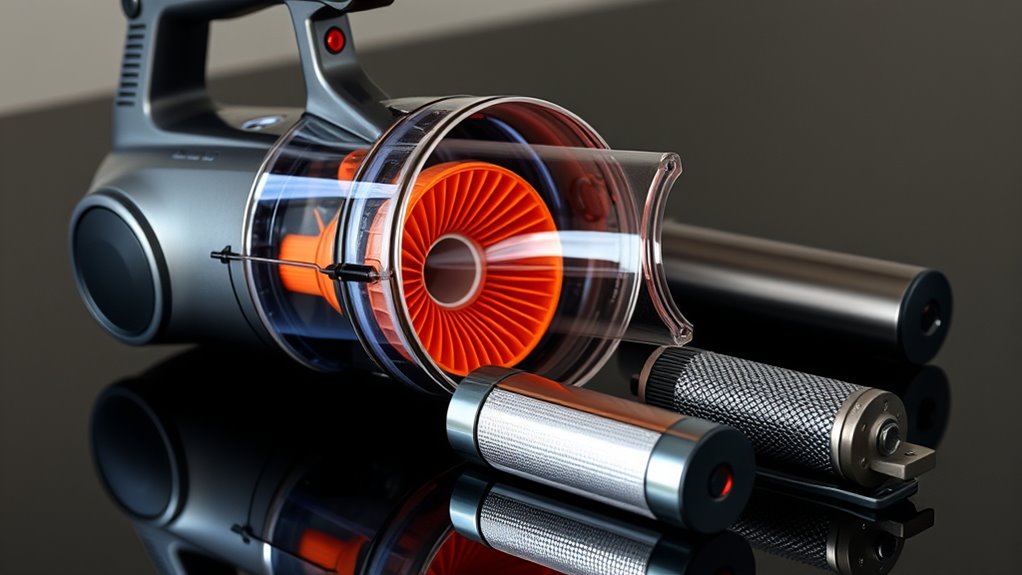
Are your vacuum’s cleaning performance and suction power starting to decline? If so, it’s a clear sign that it’s time to consider upgrading some of its parts. One of the most effective ways to boost your vacuum’s efficiency is by upgrading to high-quality aftermarket filters. Over time, filters can become clogged or worn out, restricting airflow and reducing suction. Regular filter maintenance is essential, but even with diligent upkeep, aftermarket filters often outperform the original ones. They’re designed to trap more dust and allergens, helping your vacuum run more effectively and improve indoor air quality. Plus, investing in a better filter can extend the lifespan of your vacuum’s motor by preventing dust and debris from reaching sensitive components.
When you upgrade your vacuum’s filter, you’re not just enhancing its cleaning ability—you’re also promoting better filter maintenance habits. High-quality aftermarket filters tend to last longer and require less frequent replacements, which means you spend less time on maintenance and more time enjoying a cleaner home. Keep an eye on the filter’s condition, and replace it as recommended to maintain ideal suction power and prevent strain on your vacuum’s motor. Proper filter maintenance, combined with quality aftermarket filters, helps your vacuum perform at its best and prolongs its overall lifespan.
Similarly, when it comes to batteries—especially if you own a cordless model—upgrading to a higher-capacity or more durable aftermarket battery can considerably improve your vacuum’s performance. Over time, batteries lose their ability to hold a charge, which directly impacts battery longevity and run time. A new, aftermarket battery designed for your specific vacuum model can restore or even boost its runtime, allowing you to clean more thoroughly without interruptions. This upgrade also reduces the frequency of recharges, saving you time and frustration. Plus, newer batteries tend to have better charging cycles, meaning they’ll last longer over their lifespan, providing more consistent power with each use.
Investing in an upgraded battery isn’t just about convenience—it’s about maintaining a consistent cleaning experience. A fresh, high-quality battery supports your vacuum’s suction power, ensuring it can pick up dirt and debris effectively. It also minimizes the risk of sudden power loss during cleaning, which can be frustrating and less effective. When choosing a replacement battery, opt for reputable aftermarket options that offer reliable performance and compatibility with your vacuum. Proper battery maintenance, such as avoiding complete discharges and storing it correctly, can further enhance battery longevity, maximizing your investment.
Frequently Asked Questions
How Do I Know if Aftermarket Parts Are Compatible With My Vacuum?
You can tell if aftermarket parts are compatible with your vacuum by checking the brand compatibility and part specifications. Look at the model number and compare it with the part details to guarantee a proper fit. Read product descriptions carefully, and if possible, consult the manufacturer’s guidelines or customer reviews. This helps you avoid mismatched parts and ensures your vacuum maintains peak performance with the new components.
Are There Risks Associated With Using Non-Original Replacement Parts?
They say “you get what you pay for,” and using non-original parts can risk product reliability. While aftermarket parts often offer cost savings, they might not match the quality of OEM components, leading to potential damage or decreased performance. Always research reviews and compatibility to avoid issues. If you prioritize longevity and dependability, sticking with original parts can be a smarter choice despite higher costs.
How Often Should I Replace Vacuum Filters, Belts, and Batteries?
You should replace your vacuum filters every 3 to 6 months, depending on filter lifespan and usage. Belts typically need replacement every 6 to 12 months, based on the belt replacement interval and wear. Check your vacuum’s manual for specific guidance, but staying proactive guarantees peak performance. Don’t forget to inspect batteries regularly and replace them when they no longer hold a charge to keep your vacuum running smoothly.
Can Upgrading Parts Improve My Vacuum’s Cleaning Performance Significantly?
Upgrading your vacuum parts can substantially boost cleaning performance. High-quality aftermarket filters improve filter performance, trapping more dust and allergens, while upgraded belts ensure better suction power. Additionally, a new battery can extend battery lifespan, giving you longer cleaning sessions without loss of power. These upgrades make your vacuum more efficient, saving you time and effort, and help maintain peak performance over time.
Do Aftermarket Parts Void the Vacuum’s Warranty?
Using aftermarket filters, belts, or batteries can void your vacuum’s warranty due to warranty implications and manufacturer policies. Manufacturers often specify only original parts for repairs and replacements, and using non-OEM components might be seen as improper maintenance. To avoid issues, check your warranty terms and consult the manufacturer before upgrading parts. This way, you protect your warranty while still enhancing your vacuum’s performance.
Conclusion
Think of upgrading your vacuum parts as tending to a garden. Each new filter, belt, or battery is like planting seeds for a healthier, more vibrant space. When you care for these essential parts, your vacuum blooms with renewed strength, sweeping away dust and debris like sunlight breaking through clouds. Embrace these upgrades as your tools for a cleaner, brighter home—because a well-maintained vacuum is the heart of a fresh start.