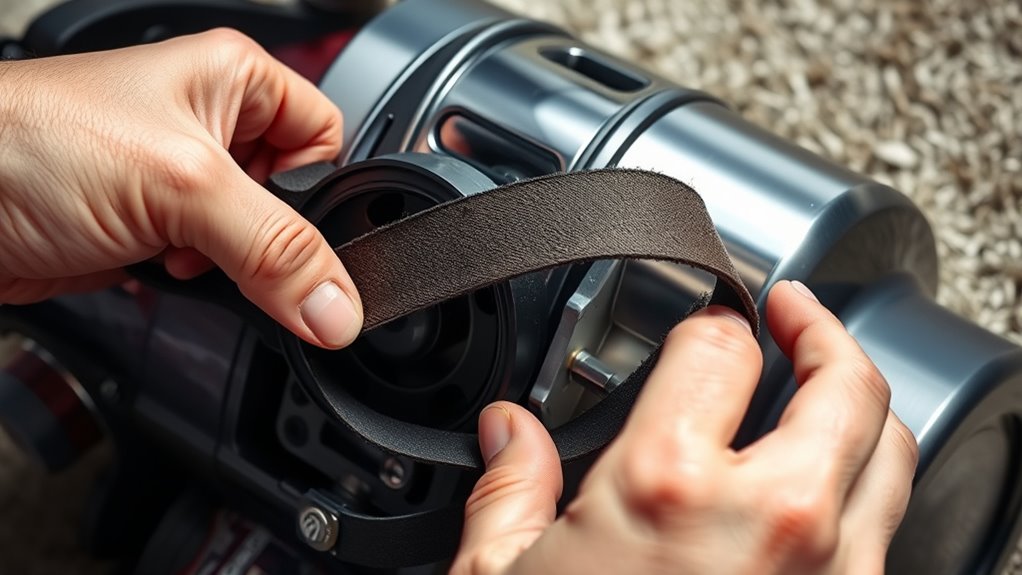

To check and replace your vacuum belt, first unplug the vacuum and access the belt compartment under the brush roller. Look for signs of fraying, cracking, or stretching in the belt. If it’s damaged, remove the old belt and verify the new one fits your model correctly. Install the new belt on the motor shaft and brush roll. Reassemble your vacuum, then test it to see if performance improves. There’s more to know about maintaining your vacuum!
Key Takeaways
- Unplug the vacuum and access the belt compartment to inspect the belt for damage or wear.
- Look for signs of fraying, cracking, or stretching that indicate the need for replacement.
- Listen for unusual noises like grinding or squeaking that may suggest a belt issue or obstruction.
- Ensure you have the correct belt model for your vacuum before replacing it.
- After installation, reassemble the vacuum and perform a test run to confirm proper functionality.

When your vacuum starts losing suction or making strange noises, it’s often a sign that the belt needs checking or replacing. A vacuum belt plays an essential role in how efficiently your machine operates, connecting the motor to the brush roll. If the belt’s durability has diminished over time, it can lead to performance issues. You might notice that the brush isn’t spinning or that the vacuum struggles to pick up dirt and debris. In such cases, you’ll want to troubleshoot the noises and inspect the belt to guarantee everything’s working as it should.
Begin by unplugging your vacuum for safety. Next, locate the belt compartment, which is usually found under the brush roller. Remove any screws or clips that hold the cover in place. Once you’ve accessed the belt, take a good look at its condition. If it appears frayed, cracked, or stretched, it’s time for a replacement. Even if it looks fine, keep in mind that belts can lose their effectiveness over time due to wear and tear.
If your vacuum is making unusual sounds, such as grinding or squeaking, these can also indicate a failing belt. Pay attention to these troubleshooting noises, as they could signal that the brush roll is obstructed or that the belt is slipping. In such cases, it might be a good idea to check for any debris caught in the brush roll. Clearing out any blockages can sometimes solve the problem and prevent further damage to the belt.
When you’re ready to replace the belt, guarantee you’ve got the correct part for your vacuum model. Consult your user manual or look online for specifications if you’re unsure. Installing a new belt is usually straightforward; just slide it onto the motor shaft and the brush roll, making sure it’s seated correctly. Once that’s done, reassemble the vacuum, secure the cover, and plug it back in.
After replacing the belt, take your vacuum for a test run. Listen for any unusual sounds and observe its suction power. If everything’s working smoothly, you’ve likely solved the issue. Regularly checking the belt can extend your vacuum’s lifespan and keep it running efficiently. By staying proactive about maintenance, you’ll guarantee your vacuum remains a reliable tool for keeping your home clean. Additionally, just like how performance upgrades can enhance a vehicle’s efficiency, ensuring your vacuum belt is in good condition is crucial for optimal performance.

KEEPOW Style 7/9/10 P/N 3031120 Replacement Belt for Bissell Vacuum
- Wide Compatibility with Bissell Models: Compatible with various Bissell vacuums
- Suitable for Multiple Bissell Vacuums: Fits PowerForce, PowerLifter, Powergroom, PowerClean
- Belt Perimeter Length: 14.72 inches for proper fit
As an affiliate, we earn on qualifying purchases.
As an affiliate, we earn on qualifying purchases.
Frequently Asked Questions
How Often Should I Check My Vacuum Belt?
You should check your vacuum belt at least once every three months to make certain it’s in good condition. Regular vacuum belt maintenance helps prevent issues and prolongs the life of your vacuum. If you notice any signs of wear, like fraying or cracks, it’s time for a belt replacement. Keeping an eye on the belt replacement frequency can save you from unexpected breakdowns and keep your vacuum running smoothly.
Can a Worn Belt Damage My Vacuum?
Yes, a worn belt can definitely damage your vacuum. If the belt’s tension is off, it may cause excessive strain on the motor, leading to overheating. You might notice unusual vacuum noise as a result. Ignoring these signs can lead to more significant issues down the line, so it’s essential to address a worn belt promptly. Regular checks can help you maintain peak performance and prevent costly repairs.
What Signs Indicate a Vacuum Belt Needs Replacing?
You’ll notice a few signs when your vacuum belt needs replacing. If you see visible belt wear, like cracks or fraying, it’s time for a change. Additionally, if your vacuum struggles to pick up dirt or makes unusual noises, it could indicate motor strain caused by a worn belt. Address these issues promptly to avoid further damage and make sure your vacuum operates efficiently. Regular maintenance keeps your vacuum running smoothly!
Are All Vacuum Belts Interchangeable Between Models?
No, not all vacuum belts are interchangeable between models. In fact, about 75% of vacuum brands require model-specific belts for essential performance. When you’re looking for a replacement, it’s vital to check for belt compatibility with your specific vacuum model. Using the wrong belt can lead to poor suction or damage your machine. Always refer to your vacuum’s manual to guarantee you’re getting the correct replacement belt for your model.
Where Can I Purchase a Replacement Vacuum Belt?
You can purchase a replacement vacuum belt at various retailers, both in-store and online. Popular vacuum belt brands like Hoover, Bissell, and Shark are often available on platforms like Amazon, Walmart, or the manufacturer’s website. If you prefer shopping locally, check home improvement stores or appliance shops. Online shopping options usually provide a broader selection, so you’re likely to find the exact belt you need to keep your vacuum running smoothly.
Conclusion
Now that you’ve checked and replaced your vacuum belt, you can feel the satisfying hum of your cleaner springing back to life. Picture the dust and debris vanishing like magic as your vacuum glides effortlessly across the floor. With each pass, your home transforms, revealing the hidden beauty beneath the clutter. Keep an eye on that belt, and your trusty vacuum will continue to be your partner in maintaining a sparkling clean space. Happy cleaning!