
If your vacuum’s suction seems weak, check the dust container or bag; it might be full and needs emptying. Also, inspect filters for clogs—they can dramatically limit airflow. Don’t forget to clean the brush roll; tangled hair can stall it. Lastly, examine hoses for blockages or leaks. Addressing these issues can improve performance. Keep going to find even more tips for enhancing your vacuum’s efficiency!
Key Takeaways
- Check and empty the dust container or replace the bag if it’s full to improve suction efficiency.
- Clean or replace clogged filters to restore proper airflow and enhance suction power.
- Inspect and remove tangled hair or debris from the brush roll for optimal cleaning performance.
- Examine hoses and attachments for blockages, ensuring unobstructed airflow during use.
- Verify seals and bags for leaks; faulty seals can mimic weak suction issues.
When you notice your vacuum isn’t picking up dirt like it used to, it can be frustrating. You rely on it to keep your space clean, and when it falters, that chore becomes a hassle. The first thing to check is the dust container or bag. If it’s full, your vacuum can’t effectively create suction. Empty it out or replace the bag, and see if that resolves the issue.
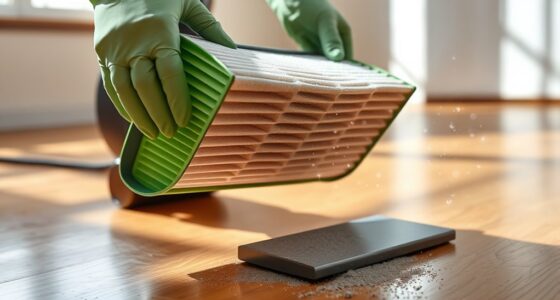
Next, inspect the filters. Clogged filters can lead to airflow blockages, which severely impact suction. Many vacuums have washable filters, so if yours does, give it a good rinse and let it dry completely before reinstalling. If your vacuum uses disposable filters, consider replacing them if they’re old or dirty. A simple filter change can work wonders for suction power.
Inspecting and cleaning your vacuum filters can significantly improve suction power and enhance performance.
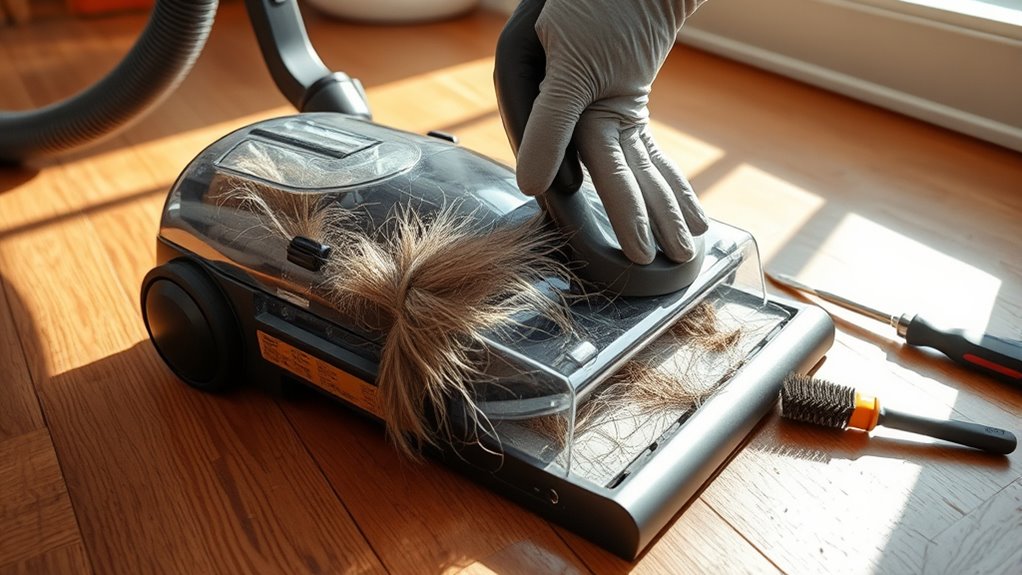
Don’t forget to check the brush roll. Hair, fibers, and debris can build up around the brush, causing it to stall. Turn the vacuum over and inspect the brush roll. Remove any tangled hair or threads that might be wrapping around it. Keeping this area clean not only helps with suction but also ensures your vacuum performs at its best.
If you’re using a vacuum sealer, double-check the seals and bags you’re using. A faulty or compromised bag can lead to air leaks, which can mimic weak suction. Ensure the bag is properly sealed and in good condition. If you’re using reusable bags, inspect them for wear and tear. Sometimes, these small details can make a significant difference in performance. Additionally, maintaining your vacuum’s filters can significantly enhance overall suction efficiency.
Lastly, examine the hose and attachments for blockages. Sometimes, small items or debris get lodged in the hose, restricting airflow. Detach the hose and inspect it closely. If you can’t see through it, it’s time to clean or replace it. You might even find a hidden toy or sock that’s been causing the issue!
With these checks, you can often resolve weak suction without needing to call for professional help. Regular maintenance is key to keeping your vacuum in top shape and ensuring it’s always ready to tackle dirt and dust. So, roll up your sleeves, and get back to enjoying a clean, fresh space!
Top picks for "troubleshoot weak suction"
Open Amazon search results for this keyword.
As an affiliate, we earn on qualifying purchases.
Frequently Asked Questions
How Often Should I Clean My Vacuum Filter?
You should clean your vacuum filter every month for peak performance. This vacuum filter maintenance ensures your vacuum runs efficiently and lasts longer. If you use your vacuum daily or have pets, consider cleaning it every two weeks. Establishing a consistent cleaning schedule helps prevent clogs and maintains strong suction. Regular maintenance can save you time and money in the long run, so don’t skip it! Keep your vacuum in top shape and enjoy cleaner floors.
Can a Clogged Hose Cause Weak Suction?
Yes, a clogged hose can definitely cause weak suction. When there’s a hose blockage, it restricts airflow, making it harder for your vacuum to pick up dirt and debris. You might notice decreased performance or even strange sounds when using it. Regularly checking and clearing your vacuum’s hose guarantees ideal airflow and suction. It’s a simple step that can keep your vacuum working efficiently, so don’t overlook it!
What Type of Vacuum Is Best for Pet Hair?
For tackling pet hair like a pro, a vacuum with specialized attachments is your best bet. Think of it as having a trusty sidekick, ready to assist in the battle against fur. Look for models featuring powerful suction and motorized brush heads, specifically designed for pet hair removal. Brands like Dyson or Shark offer excellent options to make your cleaning adventures easier. With the right vacuum, you’ll reclaim your space from pesky pet hair!
Why Is My Vacuum Making a Strange Noise?
If your vacuum’s making strange noises, it might indicate an issue with the vacuum motor. You should check for blockages in the hose or brush roll, as these can put extra strain on the motor. Loose parts or worn bearings can also cause unusual sounds. Make sure you unplug it before inspecting. If you’re unsure, consulting the manual or a professional can help you pinpoint the problem and guarantee peak performance.
How Do I Know if My Vacuum Needs Replacing?
You can tell if your vacuum needs replacing by considering its lifespan and watching for replacement indicators. If it’s over eight years old, it might be time to start shopping. Notice if it struggles to pick up dirt, has excessive noise, or emits strange smells. Also, check for frequent breakdowns or repairs. If you’re spending more on repairs than a new vacuum, it’s definitely time to invest in a replacement.
Conclusion
In summary, addressing weak suction isn’t just about fixing a problem; it’s about ensuring your vacuum works effectively and efficiently. By checking filters, hoses, and brushes, you can restore that powerful suction you need. Isn’t it satisfying to see your vacuum perform at its best again? With a bit of troubleshooting, you’ll keep your space clean and fresh, making vacuuming a breeze rather than a chore. Don’t wait—tackle those suction issues today!