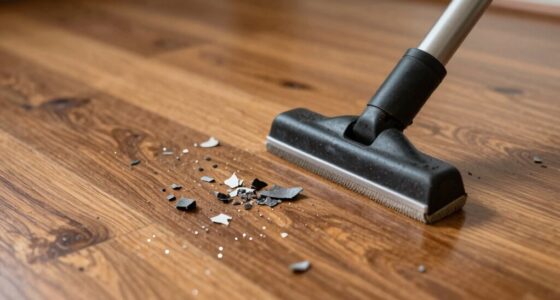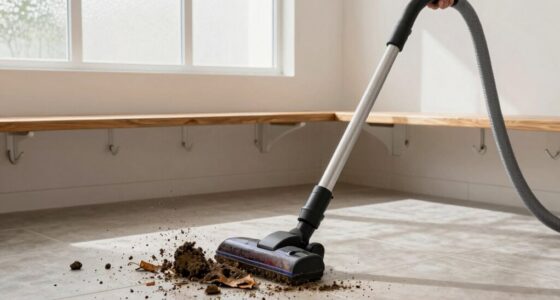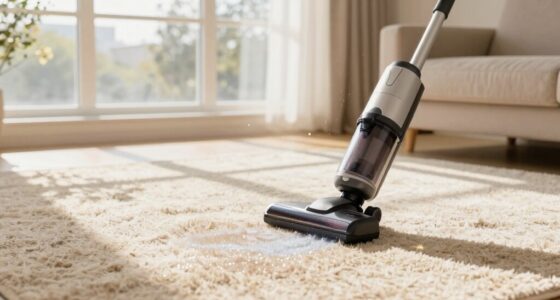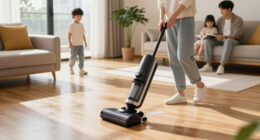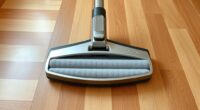
Going slow while vacuuming lets you control the process better and guarantees a thorough clean. It gives the vacuum more time to lift dirt, dust, and pet hair from carpets and floors. Moving slowly also helps you spot missed spots and adjust your technique for maximum suction. Using a steady, deliberate pace reduces the chance of redistributing debris or damaging surfaces. Keep this in mind, and you’ll improve your cleaning results—if you keep exploring, you’ll discover even more about perfecting your vacuuming technique.
Key Takeaways
- Going slow allows the vacuum to effectively lift and remove dirt, dust, and debris from surfaces.
- Slow movements improve control, ensuring thorough cleaning without missed spots or redundant passes.
- Reduced speed maximizes suction efficiency by giving the vacuum more time to pick up debris.
- Moving slowly helps identify areas needing extra attention through better observation and feedback.
- Slower vacuuming prevents surface damage and prolongs the lifespan of both surfaces and vacuum components.

Ever wonder if you’re vacuuming effectively? Many people overlook the importance of technique, but how you vacuum can make a huge difference in how clean your space gets. One key factor is your vacuum’s suction power. If your vacuum doesn’t have enough suction, dirt, dust, and debris won’t lift from your carpets or floors efficiently. Instead of rushing through the process, taking your time allows your vacuum to do its job properly. When you go slow, you give the machine more time to loosen and pick up embedded particles. Rushing can cause you to miss spots or just push debris around, rather than removing it.
Another essential aspect is the use of vacuum attachments. These accessories are designed to reach tight corners, upholstery, stairs, and other tricky areas that a standard vacuum head might miss. When you take your time, you can switch between attachments thoughtfully, ensuring every inch of your space gets attention. For example, a crevice tool can get into narrow gaps, while a brush attachment can loosen pet hair from upholstery. By not rushing, you can carefully maneuver each attachment to maximize suction power and thoroughly clean surfaces. This deliberate approach helps prevent the buildup of allergens and dirt that can cause allergies or respiratory issues.
Using vacuum attachments carefully ensures thorough cleaning and reduces allergens for a healthier home.
Moving slowly also helps you maintain better control over your vacuum. When you rush, it’s easy to push too hard or not apply enough pressure, which can reduce suction efficiency. By intentionally moving at a steady pace, you can adjust your pressure and angle, ensuring you’re getting the most out of your vacuum’s capabilities. This is especially important on carpets, where deep cleaning requires more deliberate strokes. Slow vacuuming allows you to see where you’ve already cleaned and where you still need to go, avoiding redundant passes that waste time and energy.
Furthermore, vacuuming slowly helps you listen for changes in sound or suction, indicating when you’ve picked up a significant amount of debris or if a filter or brush roll needs attention. This feedback loop ensures your vacuum remains at peak performance, improving overall cleaning effectiveness. It also prevents you from missing spots, which can happen if you move too quickly and lose track of where you’ve been.
A slow, deliberate vacuuming technique also allows you to better observe the contrast ratio of your cleaning results, ensuring that your carpets and floors look their best. In the end, adopting a slower, more mindful vacuuming technique maximizes the suction power of your machine and the effectiveness of vacuum attachments. It’s a simple change that results in cleaner floors, better air quality, and a more efficient cleaning process overall. So next time you vacuum, remember: slow and steady truly wins the race when it comes to a thorough clean.

Eureka Lightweight Powerful Upright Vacuum Cleaner for Carpet and Hard Floor, PowerSpeed, New Model,Blue,black/New Model
- Cyclone System: Handles large debris and microscopic dust
- Powerful Pick-Up: Deep cleans carpets and floors
- Lightweight Design: Easy to maneuver and carry
As an affiliate, we earn on qualifying purchases.
As an affiliate, we earn on qualifying purchases.
Frequently Asked Questions
How Often Should I Vacuum My Home for Optimal Cleanliness?
You should vacuum your home at least twice a week for optimal cleanliness. Skipping this can turn your carpet maintenance into a dust jungle jungle! A consistent cleaning schedule keeps dirt, allergens, and pet hair at bay, preventing buildup and prolonging your carpet’s life. Going slow while vacuuming guarantees thorough removal of debris, making each session more effective. Keep up this routine, and your home stays fresh, healthy, and irresistibly clean.
Does the Type of Vacuum Cleaner Affect Cleaning Efficiency?
Yes, the type of vacuum cleaner markedly affects your cleaning efficiency. You’ll notice that higher vacuum power and stronger suction strength make it easier to pick up dirt, pet hair, and debris quickly. Choosing a vacuum with adjustable settings can help you customize suction for different surfaces, ensuring thorough cleaning without damaging delicate floors. So, investing in a model with robust power and suction strength will improve your overall vacuuming results.
Are There Specific Techniques for Vacuuming Delicate Surfaces?
Think of delicate surfaces as fragile glassware—you need a gentle touch. When vacuuming, use a soft brush attachment and set your vacuum to a low suction setting. Move slowly and carefully, like whispering to a sleeping baby, to prevent damage. This gentle cleaning maintains the surface while effectively removing dust and debris. Always test a small area first to ensure your technique won’t cause any harm.
Can Vacuuming Too Slowly Damage the Carpet Fibers?
Vacuuming too slowly generally won’t cause carpet fiber damage, but it can lead to over-saturation in one spot, potentially weakening fibers over time. Your best bet is to maintain a steady, deliberate vacuuming speed that allows dirt to lift without lingering too long in one area. This balance prevents unnecessary stress on the fibers, guarantees effective cleaning, and keeps your carpet looking fresh and durable.
What Are the Best Practices for Maintaining a Vacuum Cleaner?
To keep your vacuum working well, you should follow a regular cleaning schedule and perform routine vacuum maintenance. Empty the bag or canister often, check and clean filters, and inspect brushes and belts for debris or wear. Additionally, make certain the brush roll spins freely and replace parts as needed. These practices help maintain suction power, extend your vacuum’s lifespan, and ensure effective cleaning every time you use it.
Conclusion
Remember, when you vacuum slowly, you’re guiding your machine like a gentle river, allowing it to sweep away every speck of dust with care. Moving at a steady pace is like painting a masterpiece—each deliberate stroke guarantees nothing is missed. So, take your time, and let your vacuum dance across the floor, turning cleaning into a calming ritual. In slowing down, you’ll discover a cleaner, fresher space that feels as inviting as a warm embrace.