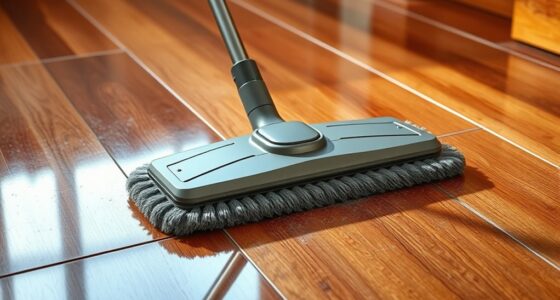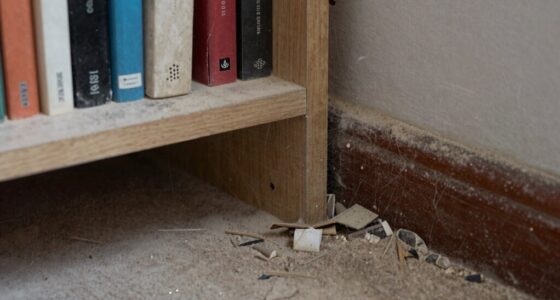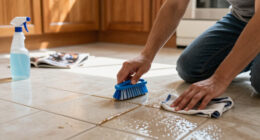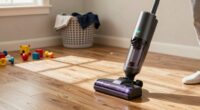
To deal with dust after home improvements, start by increasing ventilation with open windows and exhaust fans. Use HEPA filters and vacuum cleaners to remove dust from carpets, upholstery, and surfaces. Wipe down everything, including vents and ceiling fans, with microfiber cloths. Consider using dust barriers during ongoing work to prevent further spread. Regular cleaning and proper airflow management will make a big difference. If you want to learn more about maintaining a dust-free environment, keep exploring these strategies.

Get cleaning gear delivered free with Prime
- Fast, free delivery on millions of items
- Prime Video, Amazon Music and more included
- Member-only deals all year
Key Takeaways
- Use HEPA-filtered vacuum cleaners to thoroughly clean carpets, upholstery, and surfaces.
- Increase ventilation by opening windows and using exhaust fans during and after projects.
- Regularly replace or clean HVAC filters to prevent dust recirculation.
- Wipe down all surfaces, including vents, ceiling fans, and behind furniture, with microfiber cloths.
- Install dust barriers during construction to limit airborne particles and reduce dust spread.
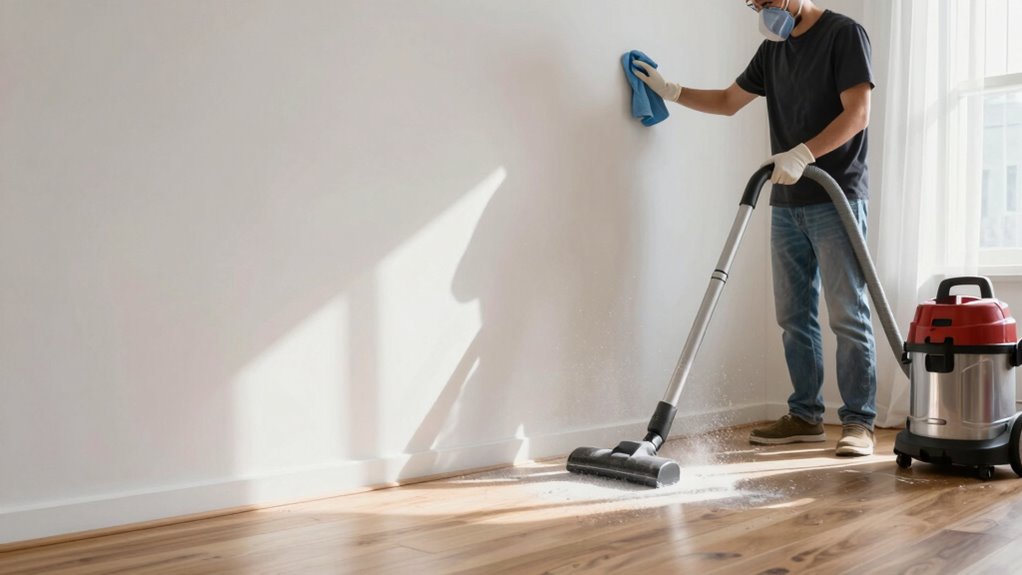
After completing home improvement projects, dust can quickly become a persistent problem that affects your indoor air quality and cleanliness. The minute particles settle on surfaces, circulate through the air, and settle into every corner, making your space feel unclean and potentially harmful. To combat this, you need to implement effective air filtration and ventilation strategies. Air filtration is essential because it captures airborne dust particles before they settle or are inhaled. Using high-efficiency particulate air (HEPA) filters in your HVAC system or air purifiers can considerably reduce dust levels. Place purifiers in rooms where you spend the most time, such as your living room or bedroom, to continuously filter the air. Remember, regularly replacing or cleaning filters is imperative to maintaining their effectiveness.
Effective air filtration with HEPA filters reduces dust and improves indoor air quality after home improvements.
Ventilation strategies also play a key role in clearing out dust and improving air quality. Open windows and doors whenever possible to promote cross-ventilation, which helps push out stale, dust-laden air and introduces fresh air. If outdoor conditions aren’t suitable, consider using exhaust fans in kitchens and bathrooms to help extract airborne particles. Running ceiling fans or oscillating fans can also assist in moving air around the space, preventing dust from settling on surfaces. For best results, combine natural ventilation with mechanical methods—like air purifiers and exhaust fans—to create a continuous flow of clean, fresh air. Additionally, selecting the right projector type during home improvement can influence the amount of dust generated, especially if you’re installing new equipment or fixtures. Using appropriate dust barriers during construction can further reduce the spread of airborne particles. Incorporating advanced filtration systems can also provide an extra layer of protection against dust infiltration. Ensuring proper airflow management can significantly improve dust control during and after renovations.
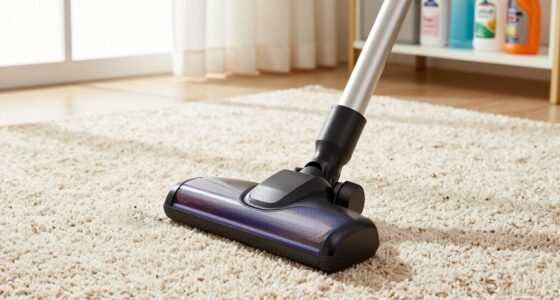
Cleaning your space thoroughly and systematically is equally important. Use a vacuum cleaner equipped with a HEPA filter to pick up dust from carpets, rugs, and upholstery. Microfiber cloths and dusters are more effective than traditional dusters because they trap dust instead of just moving it around. Wipe down all surfaces, including hard-to-reach areas like ceiling fans, vents, and behind furniture. Don’t forget to clean air vents and filters regularly to prevent dust buildup within your HVAC system, which can circulate dust particles back into the air. Regular maintenance of HVAC filters helps prevent dust from continuously circulating and settling in your home.
Staying proactive with your air filtration and ventilation strategies ensures dust doesn’t just settle into your home but is actively removed, keeping your indoor environment healthier and more comfortable. It might take some effort initially, but consistent cleaning and proper airflow management will make a noticeable difference over time. By maintaining these practices, you safeguard your indoor air quality and enjoy a cleaner, dust-free space long after your home improvement projects are complete.
As an affiliate, we earn on qualifying purchases.
Frequently Asked Questions
How Long Does Dust Typically Linger After Renovations?
Dust typically lingers for several days to a week after renovations if you don’t take proper steps. To speed up cleanup, use air purifiers and keep windows open for ventilation. Wearing dust masks during cleanup helps protect you from inhaling particles. Regularly vacuum with a HEPA filter and wipe surfaces down to remove settled dust. These actions help minimize dust lingering in your home, making the space safer and cleaner faster.
Are There Eco-Friendly Methods to Reduce Dust?
Yes, you can reduce dust using eco-friendly cleaning methods and natural dust barriers. Use non-toxic, biodegradable cleaning products to wipe surfaces and vacuum with HEPA filters to trap dust effectively. Create natural dust barriers by hanging damp cloths or using plant-based air purifiers around your space. These eco-friendly approaches help minimize dust without harmful chemicals, keeping your home healthier during cleanup after renovations.
Can I Use Commercial Cleaners for Dust Removal?
You can use commercial cleaners for dust removal, but choose wisely. Picture your cleaning tools gliding across surfaces, capturing fine dust particles, while air purifiers work like silent guardians, filtering the air. Make sure the cleaners are appropriate for your surfaces to avoid damage. Combine this with a good vacuum and microfiber cloths to make your space truly fresh. This powerful combo helps eliminate dust effectively, leaving your home spotless and breathable.
How Can I Prevent Dust From Spreading to Other Rooms?
You can prevent dust from spreading by setting up dust barriers and using air purifiers. Seal off doorways with plastic sheeting to contain dust in one area. Place air purifiers with HEPA filters in rooms you want to keep dust-free. Keep windows closed and avoid walking through dusty areas. Regularly replace filters on air purifiers to maintain their effectiveness, ensuring cleaner air across your home.
What Safety Precautions Should I Take During Cleanup?
During cleanup, you should wear protective gear like gloves, goggles, and a dust mask to prevent inhaling particles. Use air filtration systems or HEPA filters to trap airborne dust and improve air quality. Keep windows open for ventilation, and avoid stirring up dust. Careful handling of debris minimizes exposure, while ensuring your safety gear stays intact helps protect your skin and eyes from potential irritants.
Conclusion
So, after transforming your space, don’t pretend the dust is just part of the charm. Embrace the cleaning chaos as a badge of honor—proof you’ve made progress. Remember, the dust might settle, but your patience shouldn’t. If you’re lucky, maybe your next project will come with a built-in dust buster. Until then, enjoy your sparkling clean space, and perhaps invest in a helmet for the next “simple” upgrade—because dust, after all, is just home improvement’s way of saying, “Good luck.”
Halloween Picks
halloween
As an affiliate, we earn on qualifying purchases.