Creating a vacuuming routine involves breaking tasks into daily, weekly, and monthly actions. Daily, focus on high-traffic areas, quick cleans, and targeting visible dirt and pet hair with HEPA-filtered vacuums. Weekly, thoroughly clean carpets, upholstery, and corners, and empty bins. Monthly, deep clean hard-to-reach spots, check equipment, and perform maintenance like filter changes or shampooing. Building this routine keeps your home healthier and fresher—continue with the following tips to master it effectively.
Key Takeaways
- Establish a daily routine targeting high-traffic areas with lightweight vacuums to prevent allergen buildup.
- Schedule weekly deep cleaning of carpets, upholstery, and hard-to-reach spots using adjustable or specialized attachments.
- Perform monthly maintenance tasks like filter cleaning, equipment checks, and deep cleaning behind furniture for thoroughness.
- Use vacuums with HEPA filters and pet hair removal features to maximize allergen and pet dander elimination.
- Maintain consistent routines and proper equipment upkeep to ensure a healthier, cleaner, and more comfortable home environment.
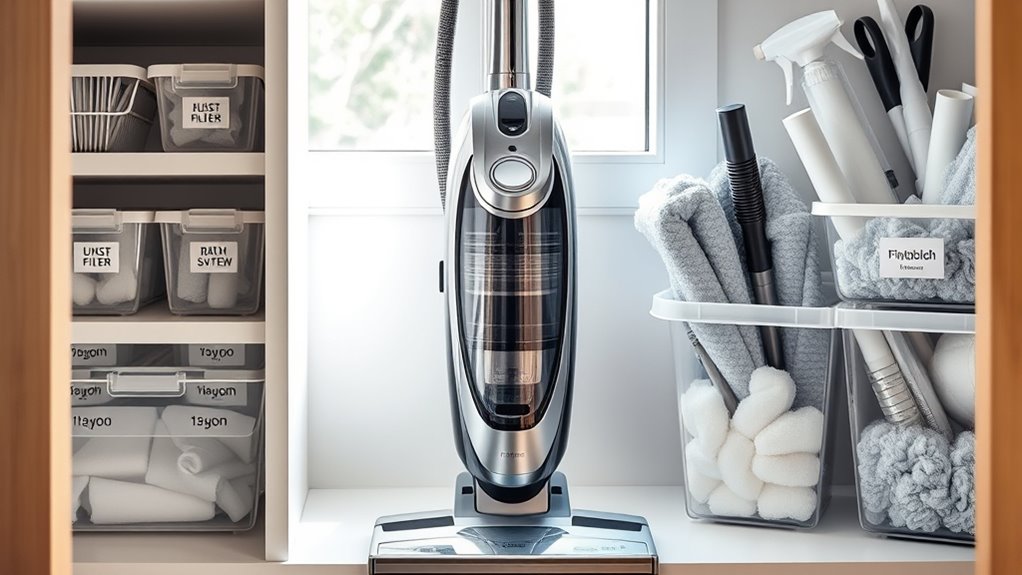
Have you ever wondered how a consistent vacuuming routine can transform your home’s cleanliness? Establishing a regular schedule isn’t just about keeping your floors looking tidy; it’s about creating a healthier living environment. The key lies in using the right vacuuming equipment and sticking to daily, weekly, and monthly tasks that target different areas of your home. When you prioritize routine, you not only maintain cleanliness but also prevent allergens from building up, which is essential for allergy prevention.
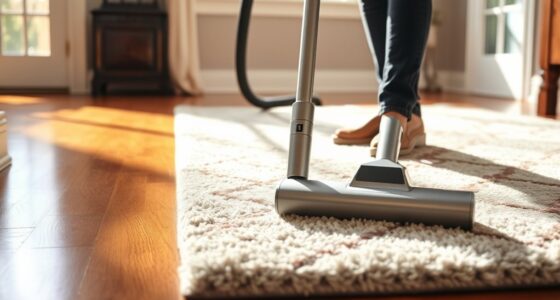
A consistent vacuuming routine improves cleanliness and indoor air quality, preventing allergens and creating a healthier home environment.
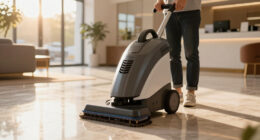
On a daily basis, your main focus should be on high-traffic areas such as the living room, kitchen, and entryways. These spots tend to accumulate dirt, crumbs, and pet hair quickly. Using a lightweight, easy-to-maneuver vacuum cleaner makes quick work of these spaces. Look for equipment with HEPA filters, especially if you or someone in your household suffers from allergies. These filters trap tiny particles like dust mites, pollen, and pet dander, preventing them from recirculating into the air. By vacuuming daily, you reduce the amount of allergens and dust in your environment, which is a critical step in allergy prevention. It also keeps your home feeling fresh and inviting, without the buildup of debris that can cause odors.
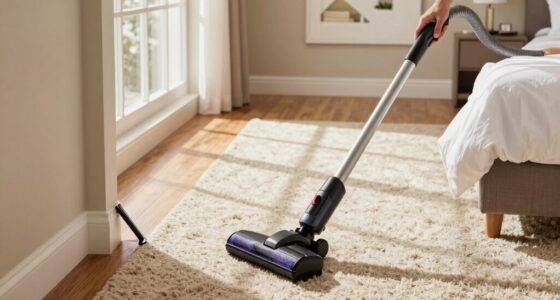
Weekly tasks should focus on more comprehensive cleaning of all surfaces, including carpets, rugs, and upholstery. Use a vacuum with adjustable height settings or specialized attachments to reach into corners, under furniture, and along baseboards. Pay particular attention to areas where dust and allergens tend to settle, like behind couches or beneath beds. Regularly emptying your vacuum’s bin or replacing bags guarantees maximum efficiency and prevents dust from escaping back into your home. If you have pets, consider using a vacuum designed with pet hair removal features, which can greatly reduce hair buildup and dander.
Monthly, you should deep clean areas that don’t get as much attention during weekly vacuuming. This includes rotating your vacuum filters and brushes for peak performance, as well as giving your equipment a thorough check. It’s also a good time to shampoo or steam clean carpets and upholstery, further reducing allergens and deep-seated dirt. Additionally, cleaning or replacing filters guarantees your vacuum continues to operate effectively and maintains its allergy-preventing capabilities.
Creating a vacuuming routine with these daily, weekly, and monthly tasks helps you maintain a cleaner, healthier home. Using the right equipment, especially models with HEPA filters and pet hair attachments, maximizes your efforts in allergy prevention. When you stay consistent, you’re not just tidying up—you’re actively improving indoor air quality and making your living space more comfortable for everyone.

Shark Navigator Lift-Away Vacuum, HEPA, Carpet and Pet Hair, Blue, NV360
- Powerful Multi-Surface Suction: Cleans carpets and hard floors effectively
- Lift-Away for Above-Floor Cleaning: Detachable pod for stairs and furniture
- Pet Hair Removal: Specialized tools for pet hair cleanup
As an affiliate, we earn on qualifying purchases.
As an affiliate, we earn on qualifying purchases.
Frequently Asked Questions
What Tools Are Best for Different Flooring Types?
For different flooring types, you need versatile tools that match flooring compatibility. A lightweight, adjustable vacuum with multiple attachments suits hardwood, tile, and laminate floors, while a powerful, brush-head-equipped vacuum works best for carpets. For delicate surfaces like hardwood, opt for soft brush attachments to prevent scratches. Your goal is to choose tools that maximize tool versatility, ensuring effective cleaning without damaging your floors.
How Do I Prevent Vacuum Cleaner Odors?
To prevent vacuum cleaner odors, regularly perform vacuum deodorizing by adding baking soda to the dustbin or filter. Clean and replace filters frequently, as they can trap smells. Use odor absorption techniques like placing dryer sheets inside the vacuum or running the vacuum with a citrus peel. These steps help eliminate and prevent bad odors, keeping your vacuum smelling fresh and your home smelling clean after each use.
When Should I Replace Vacuum Filters or Bags?
When it’s time to change your vacuum filters or bags, don’t wait until it’s too late—think of it as keeping your house in top shape. Replace filters when they’re dirty or clogged, usually every 3-6 months, and change bags when they’re full or after about 2-3 months of use. Regular filter replacement and bag maintenance keep your vacuum running efficiently and prevent odors from building up.
Are Cordless Vacuums as Effective as Corded Ones?
Cordless vacuums can be effective for quick cleanups, but they have limitations like shorter battery life and less suction power compared to corded ones. If you need consistent, powerful cleaning for larger areas, corded vacuums offer advantages like unlimited runtime and stronger suction. However, for convenience and portability, cordless models work well. Choose based on your cleaning needs and space to guarantee ideal performance.
How Can I Improve Vacuuming Efficiency in Large Spaces?
To improve vacuuming efficiency in large spaces, focus on effective vacuuming techniques like overlapping passes and adjusting the height for different surfaces. Optimize your cleaning schedule by breaking tasks into daily, weekly, and monthly routines, ensuring no area gets overlooked. Use a high-quality, powerful vacuum to cover more ground quickly. Regularly maintain your vacuum to keep it performing at its best, saving you time and effort in the long run.
Conclusion
By sticking to your vacuuming routine, you’ll keep your home as pristine as a well-tuned orchestra—every note in harmony. Remember, just like a gardener tending to each plant, regular care prevents buildup and chaos. With daily, weekly, and monthly tasks, you’re not just cleaning—you’re creating a sanctuary, a place where comfort and cleanliness dance together. Stay consistent, and your home will always welcome you back like an old friend.