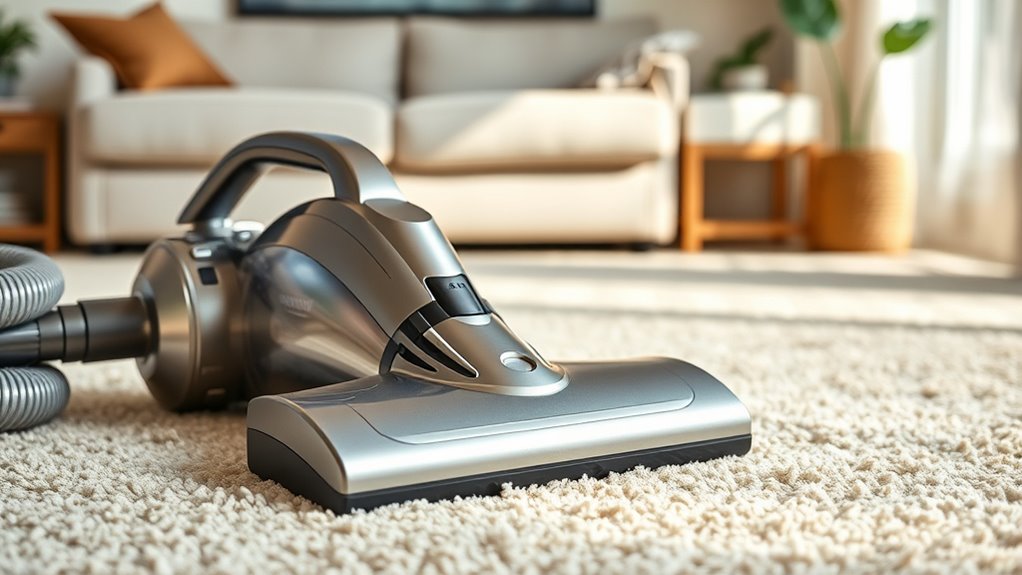

To save your back with a one-room-at-a-time vacuum plan, focus on cleaning each space thoroughly without rushing. Use ergonomic tools like lightweight vacuums and adjustable handles to reduce strain, and stick to a regular schedule to prevent buildup. Breaking tasks into smaller steps makes cleaning more manageable and less tiring. Keep this routine consistent, and you’ll notice less fatigue and better back health—discover more tips to make it even easier.
Listen free for 30 days with Audible
Thousands of audiobooks and originals — cancel anytime.
As an affiliate, we earn on qualifying purchases.
Key Takeaways
- Focus on vacuuming one room at a time to prevent feeling overwhelmed and improve efficiency.
- Use ergonomic, lightweight tools with adjustable handles to reduce physical strain.
- Create a cleaning schedule to maintain consistency and avoid last-minute, stressful cleaning sessions.
- Break down tasks into small steps, such as corners and under furniture, to make vacuuming manageable.
- Maintain proper posture and take breaks to protect your back during each focused cleaning session.

Cleaning your entire home can feel overwhelming, but breaking the task into manageable steps makes it much easier. One effective way to do this is by adopting a one-room-at-a-time vacuum plan. Instead of tackling the whole house at once, you focus your energy on just one room, making the process less exhausting and more organized. This approach also helps prevent burnout and guarantees you don’t neglect any areas. To make this even more efficient, you should invest in ergonomic tools designed to reduce strain on your back and joints. Lightweight vacuums with adjustable handles and comfortable grips can make your cleaning sessions considerably easier. These tools allow you to maintain good posture and avoid awkward bending or twisting, which can lead to discomfort or injury over time. Creating a cleaning schedule is vital when implementing this plan. Decide ahead of time how often each room needs vacuuming—some spaces may require weekly attention, while others might only need cleaning biweekly or monthly. Having a clear schedule helps you stay consistent and prevents the task from piling up. It also makes your cleaning sessions more predictable, so you won’t feel overwhelmed or forgetful about when to clean each area. When you stick to a schedule, you’re less likely to rush through the process, which can cause back pain or fatigue. Instead, you can take your time, focusing on each room thoroughly using your ergonomic tools, ensuring the task gets done right without risking injury. Additionally, understanding the importance of home security systems can provide peace of mind while you focus on cleaning, knowing your home is better protected. As you move from room to room, remember to set realistic expectations. Break down each cleaning session into smaller steps—like vacuuming the corners, under furniture, and along edges—so you don’t feel like you’re tackling everything all at once. Having a routine helps you develop a habit, making vacuuming less of a chore and more of a quick, manageable task. Additionally, using a vacuum with ergonomic features allows you to work comfortably for longer periods, making each session more productive. Over time, sticking to your cleaning schedule and utilizing ergonomic tools will not only keep your home spotless but also help you preserve your back health. This focused, room-by-room approach ensures you’re not overexerting yourself and maintains a steady flow of cleaning that fits into your lifestyle. The key is consistency, proper equipment, and breaking down the work into manageable chunks. You’ll find that a one-room-at-a-time vacuum plan is an effective method to keep your home clean without risking back pain or fatigue, turning a formidable task into a simple, routine part of your life.
ergonomic lightweight vacuum cleaner
As an affiliate, we earn on qualifying purchases.
As an affiliate, we earn on qualifying purchases.
Frequently Asked Questions
How Long Does Each Vacuuming Session Typically Take?
Vacuuming sessions usually take about 15 to 30 minutes, depending on your space size and your vacuuming schedule. Using ergonomic tools can make each session quicker and more comfortable, reducing strain on your back. You might find that focusing on one room at a time helps you stay efficient and avoid fatigue. With a consistent vacuuming schedule, you’ll keep your space clean and prevent back pain, making each session smoother.
Can This Plan Be Adapted for Larger Households?
Did you know that larger households often spend over an hour cleaning daily? You can adapt this vacuuming plan by dividing chores into manageable sections, even with bigger household sizes. Focus on prioritizing high-traffic areas first and assign specific tasks to family members. This strategy helps maintain cleanliness without overwhelming you, making cleaning more efficient and less stressful for everyone involved.
What Equipment Is Recommended for Effective One-Room Vacuuming?
For effective one-room vacuuming, you should use ergonomic tools and lightweight vacuums. Ergonomic tools help reduce strain on your back and arms, making cleaning more comfortable. Lightweight vacuums are easier to maneuver, especially in tight spaces or for extended periods. Look for models with adjustable handles and easy-to-reach controls. This equipment minimizes physical effort, allowing you to clean thoroughly without risking injury or fatigue.
How Often Should I Switch Rooms to Prevent Fatigue?
You should switch rooms every 15 to 20 minutes to prevent fatigue and maintain ergonomic posture. This approach helps conserve energy and reduces strain on your back and shoulders, keeping you comfortable throughout the task. By taking short breaks and changing positions, you stay energized and avoid overexertion. Consistently alternating rooms guarantees you stay efficient without risking injury or discomfort, making vacuuming safer and less tiring.
Are There Specific Techniques to Avoid Missing Hidden Dirt?
Imagine you’re a detective on a dirt hunt, searching every corner with sharp eyes. To avoid missing hidden dirt, master dirt detection techniques like slow, deliberate movements and thorough inspections. Use tools like crevice attachments and a flashlight to reveal concealed grime. Focus on edges and corners, and develop a routine that covers all areas systematically. These cleaning techniques guarantee no dirt escapes your vigilant pursuit, leaving your space truly spotless.
Conclusion
By tackling one room at a time, you turn a formidable task into a manageable breeze, preventing your back from becoming a broken record. This simple plan keeps you organized and prevents fatigue, making vacuuming feel less like a chore and more like a small victory. Think of it as planting seeds in your home’s health—each room cleaned is a step toward a fresher, happier space. Stick to it, and your back will thank you.
NFL season / tailgating Picks
team gear
As an affiliate, we earn on qualifying purchases.