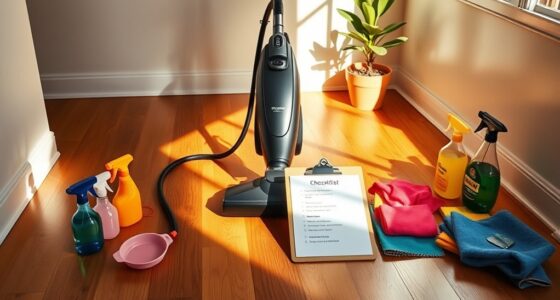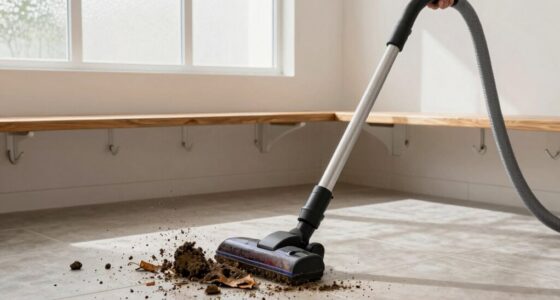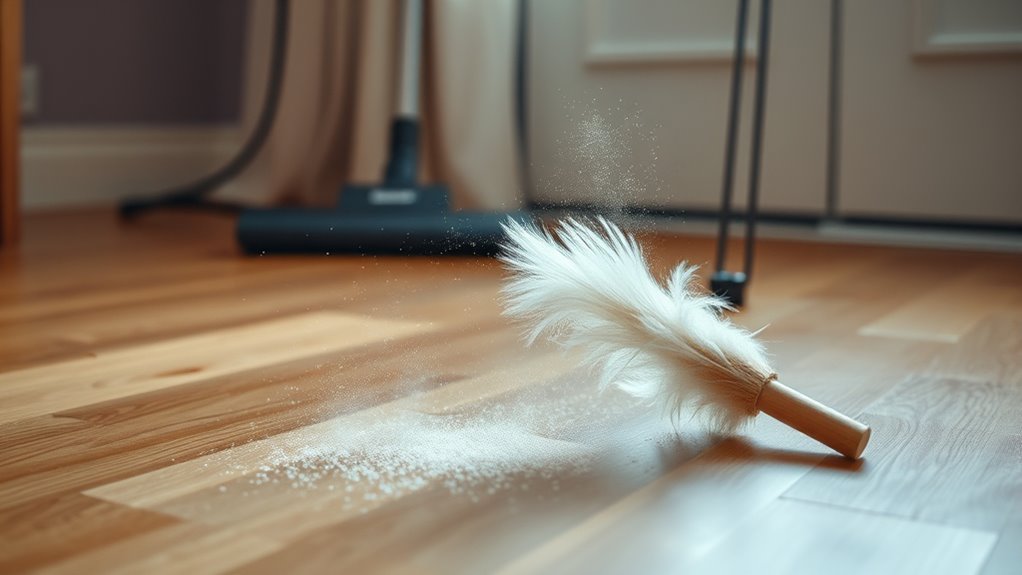

Dusting surfaces before vacuuming helps you remove loose dust, pet dander, and allergens from furniture and surfaces, making your vacuuming more effective. It prevents debris from redistributing into the air or pushing deeper into carpets and upholstery. This step also improves indoor air quality by capturing airborne particles early. By following this simple process, you’ll achieve a cleaner, healthier environment and extend your vacuum’s lifespan. Discover how this small change can make a big difference in your cleaning routine.

Get cleaning gear delivered free — and shop member deals
- Fast, free delivery on millions of items
- Access to Prime Big Deal Days deals on October 6–7
- Prime Video, Amazon Music and more included
Key Takeaways
- Dusting first removes loose debris, allowing the vacuum to clean more thoroughly and efficiently.
- Pre-dusting minimizes airborne dust and allergens during vacuuming, improving indoor air quality.
- It prevents debris from being pushed deeper into carpets and upholstery, reducing embedded dirt.
- Dusting before vacuuming extends vacuum lifespan by decreasing surface debris workload.
- Overall, it results in a cleaner environment with less need for re-cleaning and better allergen control.

Pre-vacuum dusting is an essential step to guarantee a thorough and efficient cleaning process. When you start with dusting before you vacuum, you’re tackling surface debris that could otherwise be spread around or pushed deeper into carpets and upholstery during the vacuuming process. This initial step considerably improves air quality in your space because it removes loose dust, pet dander, and other allergens that can become airborne when disturbed. By reducing the amount of dust and allergens present on surfaces before vacuuming, you create a cleaner environment and prevent these particles from recirculating in the air.
Pre-vacuum dusting removes surface debris, improving air quality and enhancing vacuum efficiency.
In terms of allergen control, pre-vacuum dusting is especially important if you or someone in your household suffers from allergies or asthma. Dust mites, pollen, pet dander, and mold spores tend to settle on surfaces, accumulating over time. When you dust beforehand, you loosen these particles, making it easier for your vacuum to pick them up effectively. This process minimizes the risk of allergens becoming airborne during vacuuming, which can otherwise worsen allergy symptoms or trigger asthma attacks. As a result, your living space becomes safer and healthier, especially for sensitive individuals.
Another reason to dust first is that it allows your vacuum to work more efficiently. When surfaces are free of loose dust and debris, your vacuum cleaner can concentrate on extracting dirt from deep within carpets and upholstery without being bogged down by surface particles. This not only enhances the vacuum’s performance but also extends its lifespan, since it doesn’t have to work as hard to pick up stubborn dirt. Additionally, dusting with a damp cloth or a microfiber duster helps trap particles instead of just dispersing them into the air, further improving indoor air quality.
You’ll also notice that pre-vacuum dusting saves you time in the long run. When dusting is done properly before vacuuming, the overall cleaning process becomes more effective and less repetitive. You’ll find fewer dust bunnies and less settled debris after vacuuming, meaning you won’t need to go over the same areas multiple times. This streamlined approach ensures that your cleaning routine is both thorough and efficient, ultimately leading to a healthier living environment.
Incorporating pre-vacuum dusting into your regular cleaning routine makes a noticeable difference. It not only enhances air quality and allergen control but also boosts the effectiveness of your vacuuming efforts. By taking this extra step, you’re actively reducing airborne irritants and creating a cleaner, fresher home for you and your family.
As an affiliate, we earn on qualifying purchases.
Frequently Asked Questions
Does Pre-Vacuum Dusting Prevent Allergies Effectively?
Yes, pre-vacuum dusting helps prevent allergies effectively. By removing dust and debris first, you decrease airborne allergens like pet dander and dust mites, which can trigger allergy symptoms. This extra step guarantees that when you vacuum, you’re pulling up more allergens from surfaces and carpets. Consequently, dust mite prevention improves, and your indoor air quality gets better, making your space healthier and more comfortable for allergy sufferers.
How Often Should Pre-Vacuum Dusting Be Performed?
Dusting should be done regularly, ideally at least once a week, to keep allergens at bay. Stick to a consistent dusting schedule, especially in high-traffic areas, to maximize cleanliness. This routine helps loosen surface dust, making vacuuming more effective. By maintaining a steady cleaning frequency, you prevent buildup and ensure a healthier environment, minimizing allergy triggers and keeping your space fresh and dust-free.
Can Pre-Vacuum Dusting Damage Delicate Surfaces?
Pre-vacuum dusting can cause surface scratching if you’re not gentle, especially on delicate surfaces. If you use a stiff brush or rough cloth, dust may get redistributed rather than removed, risking damage. To prevent this, select soft, microfiber cloths and light dusting techniques. This approach minimizes surface scratching and ensures dust is lifted properly without harming your furniture or fragile items.
What Tools Are Best for Pre-Vacuum Dusting?
You should choose soft, gentle tools like microfiber dusters or a soft-bristle brush for pre-vacuum dusting. These tools are ideal because they effectively lift dust without scratching delicate surfaces. Use light, sweeping dusting techniques to loosen dust particles, making it easier for your vacuum to pick up debris afterward. Proper tool selection and gentle dusting techniques make certain of thorough cleaning while protecting your surfaces from damage.
Is Pre-Vacuum Dusting Suitable for All Types of Flooring?
Did you know that pre-vacuum dusting improves cleaning efficiency by up to 50%? It’s suitable for all flooring types, including hardwood floors and carpets. For hardwood, dusting loosens debris without scratching the surface. On carpets, it helps lift dust from fibers, making vacuuming more effective. You should always adapt your dusting tools to your flooring type for ideal results and to protect your surfaces.
Conclusion
By dusting before vacuuming, you remove surface allergens and dirt that would otherwise settle deeper into your carpets. Imagine a busy mom who, after switching her routine, noticed her family’s allergy symptoms improved markedly. It’s a simple change that makes a real difference—less sneezing, clearer breathing, and a healthier home. Next time, try dusting first; you might just give your family the fresh, clean space they deserve.
Fall Picks
fall essentials
As an affiliate, we earn on qualifying purchases.