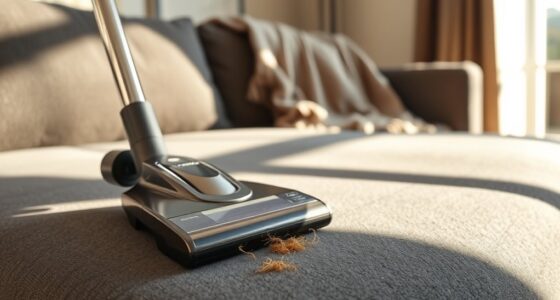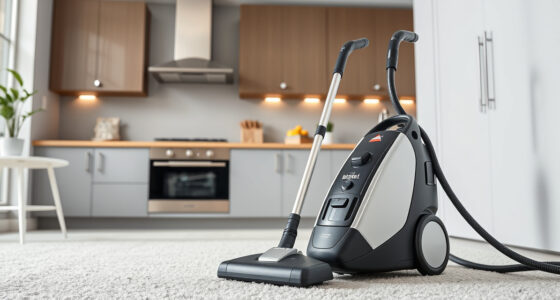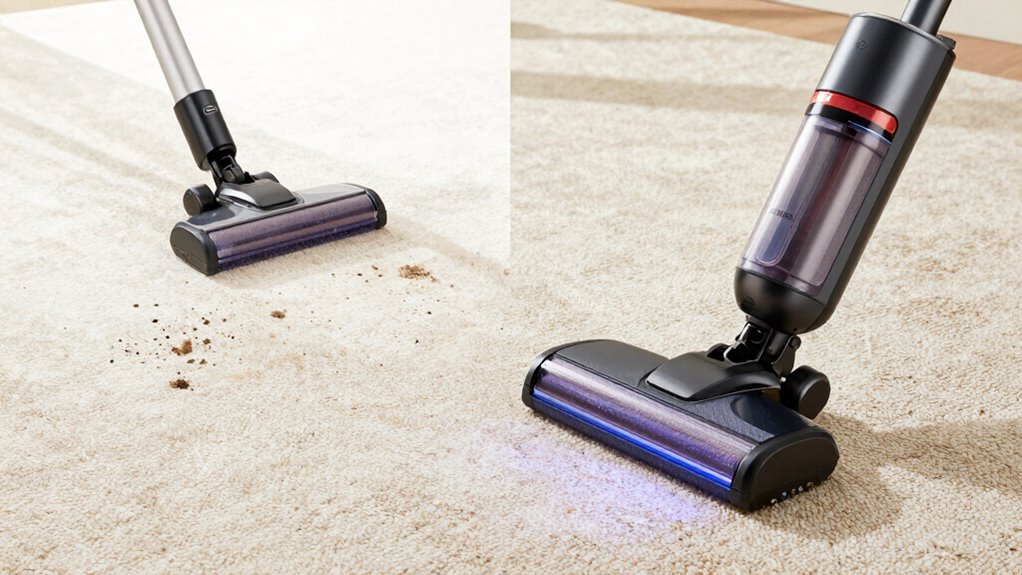
Using a better vacuum technique guarantees you cover all surface areas systematically, making cleaning more thorough and effective. It helps reduce debris redistribution, prevents dust from settling deeper into fibers, and keeps your carpet looking fresh longer. By adjusting suction and brush settings based on the surface, you avoid damage and improve dirt removal. Staying consistent with a planned pattern also saves you time and effort. Keep going to discover more ways this method can transform your cleaning routine.

Get cleaning gear delivered free with Prime
- Fast, free delivery on millions of items
- Prime Video, Amazon Music and more included
- Member-only deals all year
Key Takeaways
- Systematic vacuuming ensures thorough coverage, reducing missed spots and debris buildup compared to random passes.
- Deliberate techniques optimize dirt removal, decreasing the need for multiple, inefficient passes.
- Controlled movement minimizes dust redistribution and fiber damage, maintaining surface integrity.
- Proper surface and pressure adjustments enhance effectiveness, unlike inconsistent random passes.
- Consistent, patterned cleaning improves indoor air quality and prolongs surface lifespan more effectively.
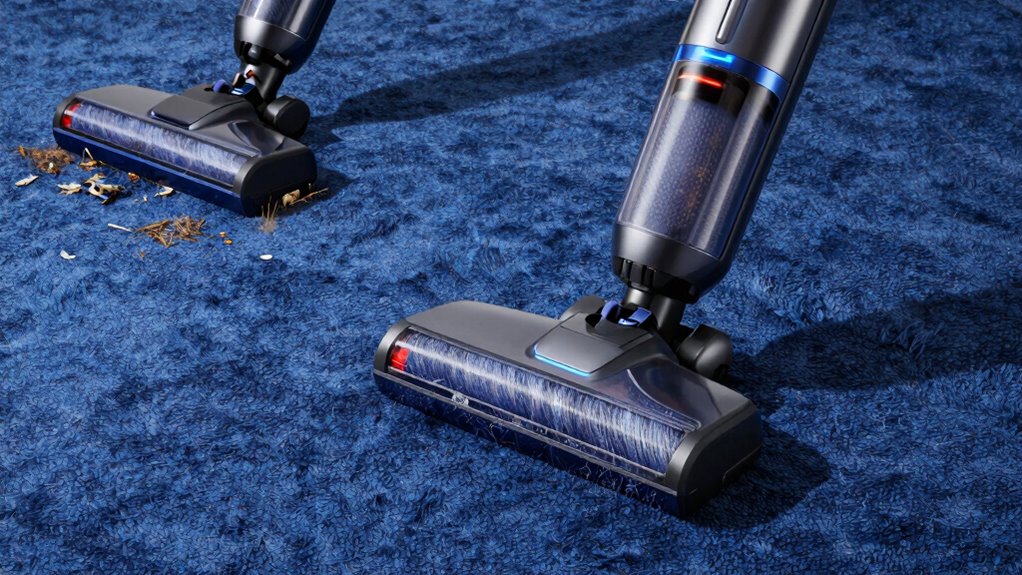
Have you ever wondered how industries achieve such precise control over processes like manufacturing, packaging, or scientific research? The secret often lies in how effectively they manage vacuum techniques. When it comes to cleaning, especially in environments where dust particles and carpet fibers can cause major issues, a well-executed vacuum technique makes all the difference. Instead of randomly going over a surface multiple times, a better vacuum technique emphasizes deliberate, strategic passes that optimize dirt removal and protect delicate materials.
Think about dust particles floating in the air or settling deep into carpet fibers. Simply making random passes with a vacuum might pick up some debris, but it’s unlikely to remove everything thoroughly. Random extra passes often lead to wasted effort, causing the vacuum to re-engage areas already cleaned or missed entirely. This inconsistency not only wastes time but can also push dust particles further into the fibers or into the air, increasing contamination and reducing overall cleanliness. A precise vacuum technique, on the other hand, involves understanding the surface’s layout and applying systematic patterns. This way, you guarantee every section gets the attention it needs without unnecessary overlap.
Systematic vacuuming ensures thorough cleaning, reduces waste, and prevents dust from settling deeper into fibers.
Your goal is to maximize efficiency and minimize the disturbance of dust particles and fibers during cleaning. To do this, you need to think about the direction and pressure of each pass. For example, moving in straight lines or overlapping slightly ensures that you don’t leave behind stubborn dust or embedded carpet fibers. This approach prevents dust particles from being redistributed and helps lift debris more effectively. When you use a technique that targets areas methodically, you reduce the need for multiple passes, saving time and effort. Plus, knowing how to adjust the vacuum’s suction and brush settings based on the surface type can improve results considerably. For instance, a gentle approach works best on delicate fibers, avoiding damage while still removing embedded dirt.
A better vacuum technique ultimately leads to cleaner spaces, especially in environments where dust particles and carpet fibers matter—like hospitals or laboratories. It emphasizes quality over quantity, ensuring that each pass counts and that no area is overlooked. This not only improves the efficiency of the cleaning process but also extends the life of your carpet and maintains healthier indoor air quality. When you focus on strategic, deliberate passes, you’re less likely to need repeated, random efforts, making your cleaning more effective and less tiring. Achieving mastery in vacuum technique means understanding how to control the process rather than just going through the motions, giving you better results with less effort. Incorporating vacuum technique best practices from industries can also help improve home cleaning routines, leading to more thorough and efficient results. Developing an understanding of systematic cleaning patterns can significantly enhance your overall cleaning effectiveness, especially when combined with vacuum control techniques that optimize suction and movement. Additionally, paying attention to proper vacuum maintenance ensures the machine performs at its best, further improving your cleaning results. Properly maintaining your equipment and understanding optimal cleaning patterns are essential for achieving consistently cleaner and healthier environments.
Frequently Asked Questions
How Do I Identify the Best Vacuum Technique for My Carpet Type?
To identify the best vacuum technique for your carpet type, consider the carpet fiber. Different fibers like wool, nylon, or polyester require specific methods. Use gentle, overlapping passes to avoid damage and effectively lift dirt. For stain removal, focus on slow, deliberate passes rather than rushing. This targeted approach guarantees thorough cleaning, preserves your carpet’s integrity, and improves overall stain removal results, making your carpet look fresh and well-maintained.
Can Better Vacuum Techniques Extend My Vacuum Cleaner’s Lifespan?
Yes, using better vacuum techniques can extend your vacuum cleaner’s lifespan. When you focus on proper cord management, you prevent unnecessary stress on the cord and motor, reducing wear and tear. Regularly changing and cleaning the vacuum filter ensures maximum airflow, preventing motor overheating. By maintaining good vacuum habits, you minimize strain on your appliance, helping it run efficiently longer and avoiding costly repairs or replacements.
Are There Specific Techniques for Pet Hair Removal?
Yes, there are specific pet hair removal techniques you can try. Use a rubber broom or gloves to loosen pet hair before vacuuming, as they help lift hair from surfaces. Opt for a vacuum with strong suction and a brush roll designed for hair removal. Regularly clean your vacuum’s filters and brushes to maintain performance. These methods guarantee effective pet hair removal and protect your vacuum’s longevity.
How Do I Maintain Consistent Vacuuming Quality Over Time?
Sure, maintaining consistent vacuuming quality is a breeze—just ignore vacuuming ergonomics and noise reduction strategies, right? Actually, focusing on good ergonomics helps you stay comfortable and consistent, preventing fatigue that leads to sloppy work. Noise reduction strategies let you stay calm and steady, ensuring thorough cleaning. Regularly check your vacuum’s filters and brushes too. With these practices, you’ll keep your vacuuming effective and consistent over time.
What Are Common Mistakes to Avoid With Advanced Vacuum Techniques?
To avoid mistakes with advanced vacuum techniques, prioritize proper vacuuming ergonomics to prevent strain and guarantee effective cleaning. Don’t rush through your cleaning schedule; taking your time allows for thorough coverage and better results. Avoid inconsistent patterns or missing spots, which can reduce efficiency. Also, neglecting regular equipment maintenance can hinder performance. Focus on a steady, deliberate approach, and adapt your technique based on the area’s needs for maximum cleanliness.
Conclusion
Think of vacuuming like painting a wall: rushing over it aimlessly leaves streaks, but deliberate, thorough strokes create a smooth finish. When you focus on better vacuum technique, you’re not just wasting time with random extra passes—you’re actually removing more dirt efficiently. I once watched a friend spend double the time vacuuming her carpet, only to realize her method was scattered. A strategic approach, like careful strokes, truly transforms your cleaning results, saving effort and ensuring a cleaner home.
Fall Picks
fall essentials
As an affiliate, we earn on qualifying purchases.