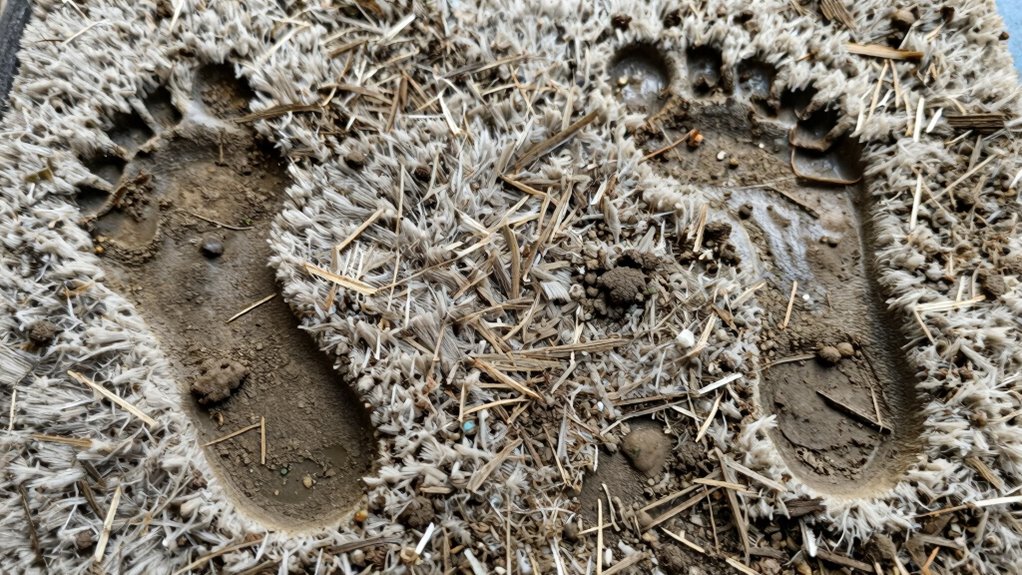
Entryway mats may seem simple to clean, but their fibers trap dirt, moisture, and debris deeply, making maintenance trickier than it looks. Over time, grime can embed into the fibers, causing buildup that’s hard to remove with regular cleaning. Harsh outdoor conditions can also cause wear, mold, or mildew if not cleaned properly. To keep your mats looking and functioning well, understanding their material and proper cleaning techniques is essential. Keep going to find out more.
Key Takeaways
- Dirt and debris can embed deeply into fibers, making removal difficult over time.
- Mold and mildew growth occur if mats are not cleaned regularly, complicating maintenance.
- Weather exposure accelerates material deterioration, requiring more intensive cleaning techniques.
- Different fabric materials need specific cleaning methods to avoid damage and prolong lifespan.
- Deeply embedded grime becomes harder to remove, increasing cleaning effort and complexity.
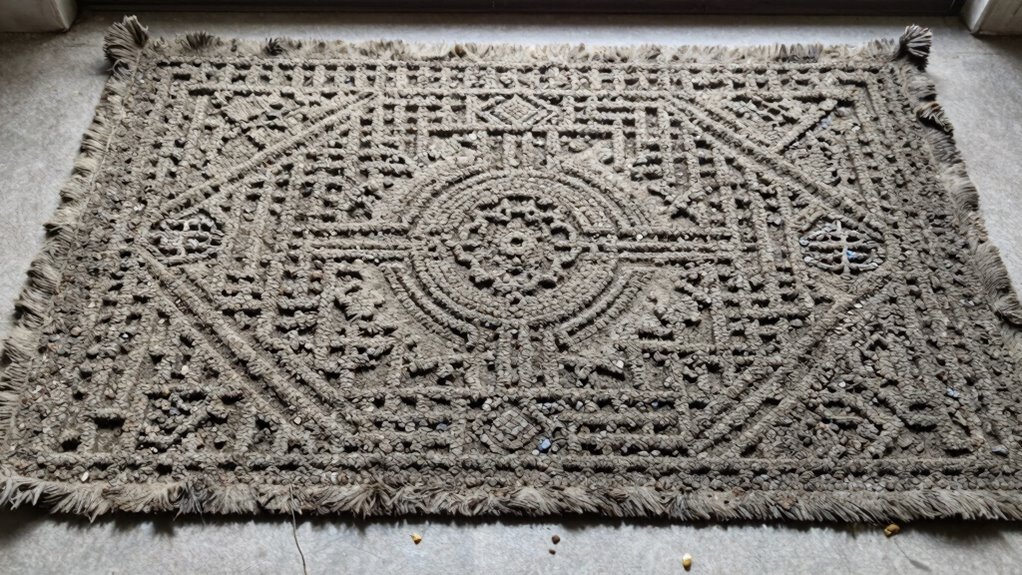
Entryway mats may seem like simple tools to keep dirt outside, but cleaning them proves more challenging than they appear. When you think about the purpose of a mat—trapping mud, moisture, and debris—you might assume maintaining it is straightforward. However, the reality involves understanding the mat’s outdoor durability and the fabric material it’s made from. These factors play a crucial role in how well the mat withstands weather and how easy it is to clean.
Outdoor durability is essential because your entryway mat faces constant exposure to the elements. Rain, snow, dirt, and foot traffic wear down the material over time. When choosing a mat, you need one designed specifically for outdoor use—materials that resist mold, mildew, and fading. Not all mats are created equal; some deteriorate quickly under harsh conditions, making cleaning a frequent chore. The more durable the mat, the longer it will resist damage and retain its appearance, but that also means you need to be mindful of how to clean it properly to avoid damaging the material. Understanding outdoor durability can help you select the best mat for your needs and prolong its lifespan. Additionally, proper cleaning techniques can help maintain the integrity of the material and prevent premature deterioration. Regular cleaning is especially important because dirt can embed deeply into certain materials, making it harder to remove over time. Using the correct cleaning methods can also prevent the buildup of grime that leads to mold or mildew growth, which is common with outdoor mats.
Fabric material is another critical aspect that influences cleaning. Many mats are made from synthetic fibers like polypropylene or nylon, which are popular because they dry quickly and resist stains. These materials are generally easy to shake out or vacuum, but they can trap dirt deep within their fibers. If you neglect to clean them regularly, dirt can embed itself, making it harder to remove and potentially damaging the fabric over time. Some fabric materials also have textured surfaces designed to scrape off debris, but those textures can trap dirt, requiring more intensive cleaning methods. Proper cleaning techniques are vital to prevent damage, especially considering the fabric composition of your mat. Regular maintenance ensures the mat’s fibers don’t become overly compacted or worn down, extending its usability. Being aware of the fabric type can help you choose suitable cleaning methods and avoid damaging delicate fibers. Furthermore, understanding how different fabric materials respond to various cleaning agents can help you maintain the mat’s appearance and functionality longer.
outdoor entryway mat cleaning tools
As an affiliate, we earn on qualifying purchases.
As an affiliate, we earn on qualifying purchases.
Frequently Asked Questions
How Often Should I Replace My Entryway Mat?
You should replace your entryway mat every 6 to 12 months, depending on the mat material and cleaning frequency. If it’s made of coir or rubber, check for signs of wear, mold, or persistent stains. Regular cleaning helps extend its life, but once it becomes frayed or heavily soiled despite frequent cleaning, it’s time for a replacement. Staying attentive guarantees your mat stays effective and welcoming.
Are There Eco-Friendly Cleaning Options for Mats?
Sure, eco-friendly options are available if you want to feel good about cleaning your mats. You can use biodegradable solutions that break down naturally and natural disinfectants like vinegar or tea tree oil. Ironically, the simplest solutions often work best, and you’ll avoid harsh chemicals. So go ahead, clean your mat guilt-free, knowing you’re helping the environment while keeping it fresh and germ-free.
Can All Types of Mats Be Machine Washed?
Not all mats can be machine washed, as material types determine cleaning methods. For example, rubber or coir mats usually need spot cleaning or shaking out, while some fabric or rubber-backed mats are machine washable. Always check the manufacturer’s instructions before tossing your mat into the washer. Using the right cleaning methods helps maintain the mat’s durability and appearance, making your cleaning routine more effective and eco-friendly.
What’s the Best Way to Prevent Mat Odor?
You can’t just hope your mat magically stays fresh—so, for odor removal, sprinkle baking soda generously and let it sit overnight. This simple trick absorbs odors and keeps your entryway smelling welcoming. Regular vacuuming after baking soda treatment further prevents odor buildup. Remember, neglecting this step turns your mat into a source of indoor stench, so stay proactive with odor removal, and your guests won’t have to hold their noses.
Do Different Mats Require Different Cleaning Techniques?
Yes, different mats need different cleaning techniques depending on their mat material. For example, rubber mats might require regular shaking and occasional washing, while fabric mats may need vacuuming more often. You should adjust your cleaning frequency based on how much dirt they accumulate. Always check manufacturer instructions for specific cleaning methods, so you don’t damage the mat. Tailoring your approach helps keep your entryway fresh and prolongs the life of your mats.
Conclusion
So, next time you think cleaning your entryway mat is a quick task, remember it’s a Herculean challenge disguised as a simple chore. This tiny battlefield demands more patience than unclogging a drain or fixing a leaky faucet. Its stubborn dirt and relentless grime conspire to test your resolve and patience. Truly, cleaning an entryway mat isn’t just a task—it’s an epic saga of persistence where victory feels as distant as a mirage in the desert.