
Dust control starts at floor level because floors are the main source of dust that spreads throughout your space. If you don’t clean properly, dust particles settle on surfaces and become airborne again, causing circulation and poor air quality. Regular sweeping, vacuuming, and mopping help break this cycle. Using the right tools and maintaining them properly makes a big difference. Keep going to discover how advanced systems and containment measures can boost your dust control efforts even more.

Get cleaning gear delivered free with Prime
- Fast, free delivery on millions of items
- Prime Video, Amazon Music and more included
- Member-only deals all year
Key Takeaways
- Floors are the primary source of dust, which continually circulates if not properly managed.
- Effective floor cleaning prevents dust from becoming airborne and spreading throughout the environment.
- Regular sweeping, vacuuming, and mopping reduce surface dust buildup at its source.
- Proper floor maintenance minimizes dust dispersion during cleaning activities.
- Controlling dust at floor level enhances overall indoor air quality and reduces airborne particles.
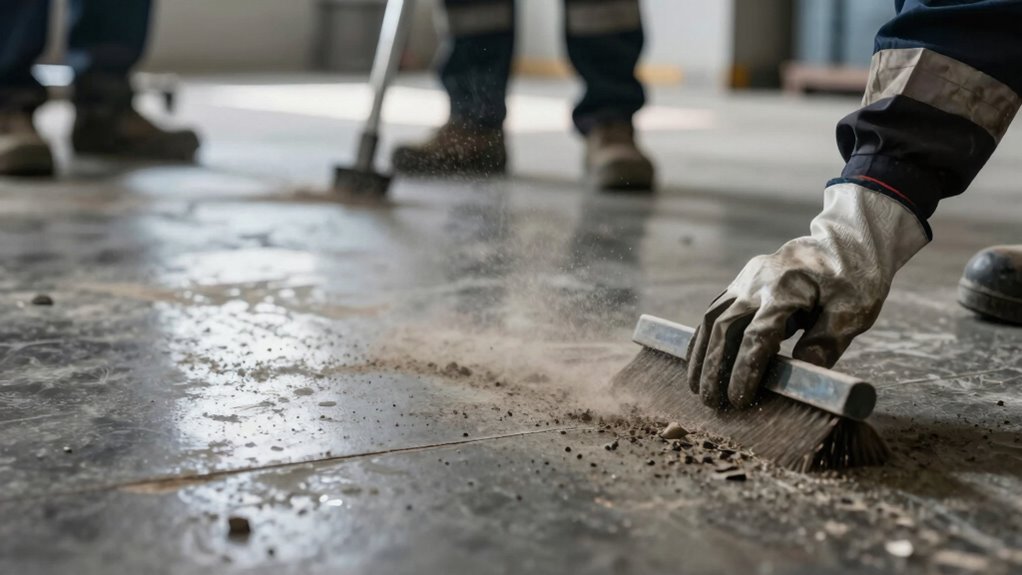
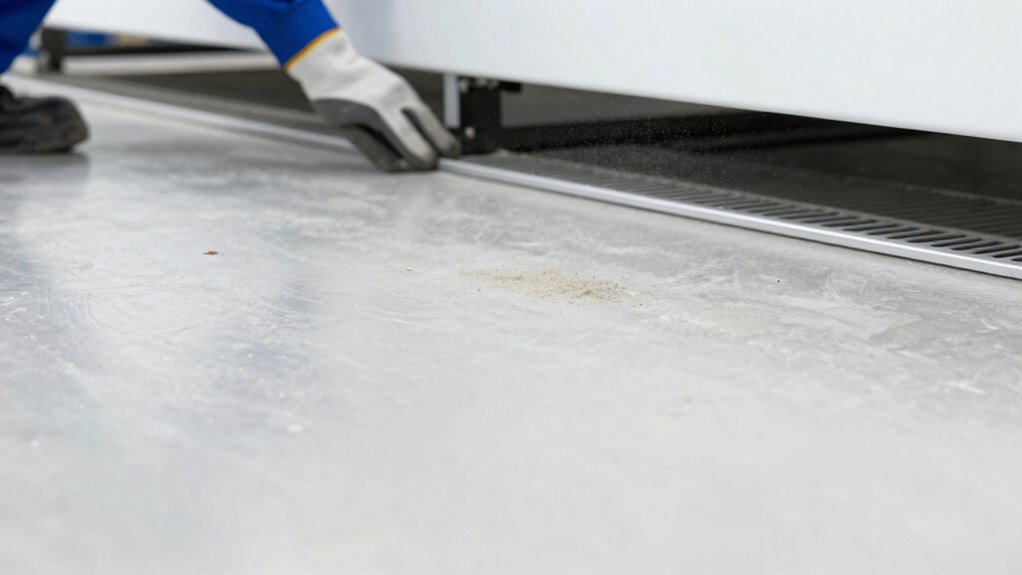
Have you ever wondered how to effectively reduce dust at floor level in your workspace? The answer lies in understanding that dust control truly begins from the ground up. Floors are the primary source of dust in most environments, and without proper attention to floor cleaning and air filtration, dust particles will continually circulate, settling on surfaces and becoming airborne again. This cycle makes it nearly impossible to maintain a clean, healthy space. To break this cycle, you need a strategic approach that prioritizes both floor cleaning and effective air filtration systems designed to capture dust at its source. Regular maintenance of cleaning equipment and filters is also crucial to ensure optimal dust removal performance.
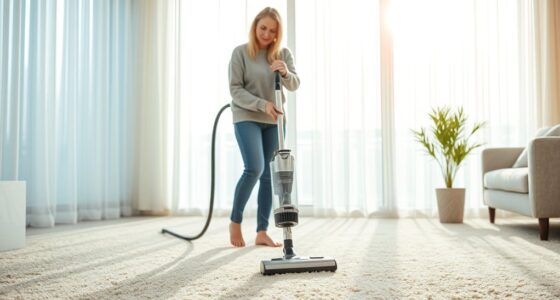
First, focus on regular, thorough floor cleaning. Sweeping, vacuuming with HEPA filters, and mopping can dramatically reduce the amount of dust that accumulates at floor level. Sweeping loosens and gathers surface debris, but it can also stir up dust into the air if not done carefully. Using a vacuum equipped with a HEPA filter ensures that dust is captured rather than redistributed into the environment. Mopping with damp cloths or microfiber mops traps dust and prevents it from becoming airborne again. Consistency is key—setting up a routine for daily or multiple times a day cleaning prevents dust from building up and becoming a persistent problem. Additionally, selecting appropriate household products can help improve overall dust control efforts. Incorporating dust containment measures, such as sealed cleaning tools or specialized mats, can further reduce dust dispersion during cleaning routines. Employing advanced filtration technology can also significantly improve indoor air quality over time. Implementing effective dust suppression techniques can also significantly improve indoor air quality over time. Regularly inspecting and maintaining air filtration systems ensures they operate at peak efficiency, further reducing airborne dust particles.
HEPA vacuum cleaner with dust filtration
As an affiliate, we earn on qualifying purchases.
As an affiliate, we earn on qualifying purchases.
Frequently Asked Questions
How Often Should Floor Dust Levels Be Tested?
You should test floor dust levels regularly, ideally once a month or more often in high-traffic or dusty environments. Use dust sampling to measure contamination accurately, and make sure air filtration systems are effectively reducing airborne particles. Regular testing helps identify dust build-up early, allowing you to adjust cleaning routines or improve filtration. Consistent monitoring keeps dust levels safe, protecting health and maintaining a clean workspace.
What Are the Best Tools for Floor Dust Removal?
To effectively remove floor dust, you should use a high-efficiency vacuum with excellent dust trapping capability. These vacuums guarantee maximum dust removal with less effort. Additionally, placing dust trapping mats at entrances considerably reduces dirt and dust from spreading. Combining these tools improves vacuum efficiency and keeps floors cleaner longer, which is vital for maintaining a dust-free environment. Regularly using these tools is key to effective dust control at floor level.
Does Floor Dust Affect Indoor Air Quality?
Yes, floor dust affects indoor air quality. When you neglect dust control, airborne dust particles and dust mites become airborne, reducing air purity. Using effective air filtration helps capture these tiny particles, improving air quality. Regularly cleaning floors prevents dust buildup, minimizes dust mites, and keeps indoor air healthier. You’ll breathe easier and create a safer environment by controlling dust at floor level, which is essential for maintaining good indoor air quality.
Can Flooring Materials Influence Dust Accumulation?
Your flooring choices act like a gatekeeper, influencing dust retention and accumulation. Smooth, sealed surfaces like vinyl or polished concrete act like a mirror, reflecting dust away, while carpet fibers trap dust like a sponge. By selecting flooring materials that minimize dust retention, you’re effectively reducing dust buildup at floor level, leading to cleaner air, easier maintenance, and a healthier indoor environment. The right choice keeps dust from becoming an ongoing problem.
Are There Health Risks From Unmanaged Floor Dust?
Yes, there are health risks from unmanaged floor dust. Dust particles can contain allergens, bacteria, and other harmful contaminants, which can trigger allergies, asthma, or respiratory issues. If you don’t control dust buildup at floor level, it can become airborne easily, increasing exposure. Regular cleaning prevents allergen buildup and reduces the risk of health problems, ensuring a safer, healthier environment for everyone in your space.
Conclusion
As you focus on controlling dust right at the floor level, you’re not just cleaning—you’re safeguarding the entire space. Imagine the unseen particles that could settle elsewhere, spreading unseen risks. But with each strategic move you make, you’re closing the door on potential hazards. The real question is, are you prepared to take that first step? Because the moment you do, you’ll realize dust control is about more than cleanliness—it’s about protecting everything that matters.
Halloween Picks
halloween
As an affiliate, we earn on qualifying purchases.