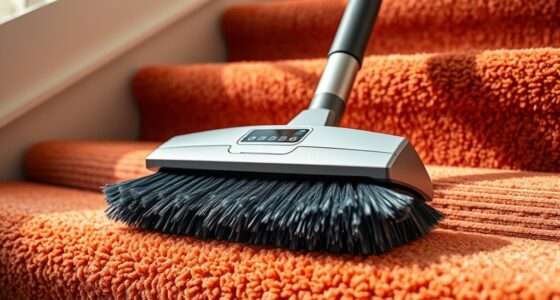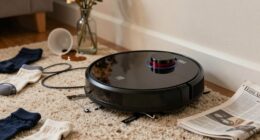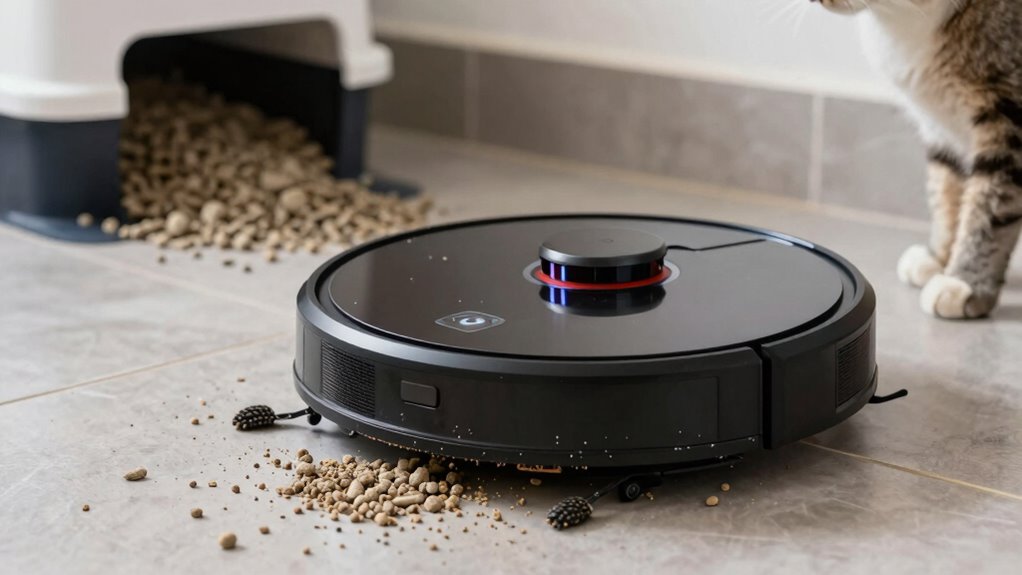
Cat litter creates constant challenges for your robot vacuum because it can clog sensors, interfere with navigation, and cause jams in brushes or wheels. Dust and tiny particles from litter can block sensors, making it harder for the vacuum to detect obstacles or map your space accurately. Plus, litter scattered outside the box causes uneven surfaces that slow down or confuse your vacuum. Keep going to discover effective tips for overcoming these issues and keeping your vacuum running smoothly.
Key Takeaways
- Cat litter particles can clog sensors, causing navigation and detection issues for robot vacuums.
- Litter creates uneven surfaces that confuse the vacuum’s navigation system and slow cleaning.
- Fine litter can hide in corners, under furniture, and inside brushes, leading to mechanical blockages.
- Scattered litter triggers frequent rerouting and reduces overall vacuum efficiency.
- Regular cleaning and a litter-free zone help prevent sensor clogging and mechanical problems.
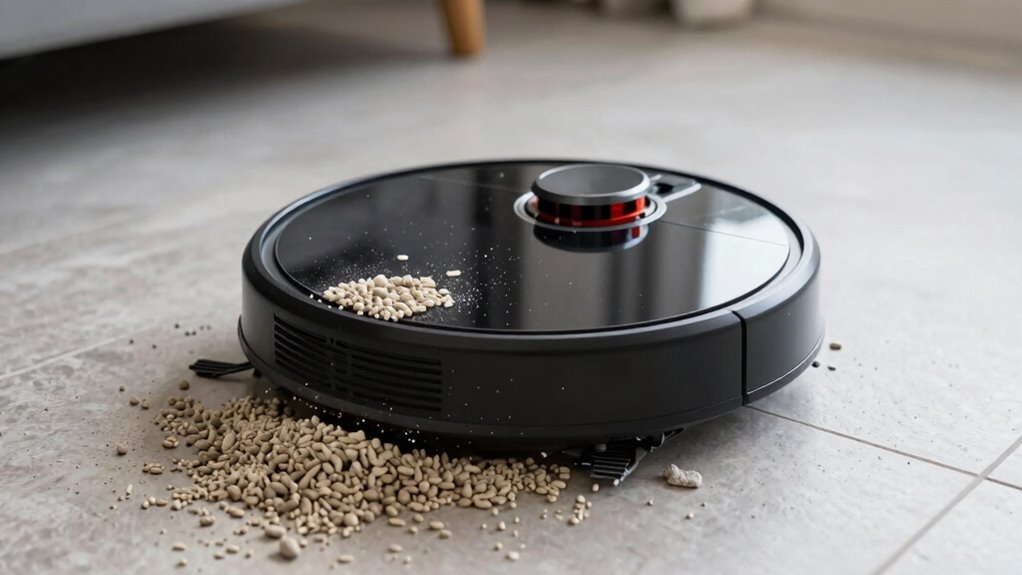
If you’ve ever noticed your robot vacuum struggling around your cat’s litter box, you’re not alone. Cat litter can be a real challenge for these devices, mainly because of the way it interacts with their sensors and movement. One common issue is clogged sensors. When litter particles get kicked up or stick to the sensors, they can interfere with the vacuum’s ability to detect walls, furniture, or even the litter box itself. This causes the vacuum to slow down, stop unexpectedly, or even misjudge where it’s supposed to clean. Regularly cleaning your robot’s sensors can help, but the tiny dust and particles from litter keep finding ways to clog them, especially if the sensors are sensitive or poorly sealed.
Another problem is the uneven surfaces created by litter scattered outside the box. Litter that spills over or gets tracked across the floor creates a bumpy terrain that confuses the vacuum’s navigation system. Robot vacuums rely on sensors and mapping technology to plan their routes, but litter on the floor can make surfaces uneven and unpredictable. This unevenness forces the vacuum to slow down or change course more often, reducing its efficiency. In some cases, it might even get stuck or have difficulty maneuvering around cluttered areas. If your vacuum struggles with these uneven surfaces, you might notice it repeatedly bumping into the same spots or avoiding certain areas altogether. Additionally, litter can also interfere with sensor functionality, further complicating navigation. Using a specialized cleaning mode designed for cluttered environments can help mitigate some of these issues.
The combination of cluttered sensors and uneven surfaces makes it tricky for robot vacuums to do their job effectively. They’re designed to handle typical dirt and dust, but the fine particles from litter are a different story. Litter can hide in corners, underneath furniture, or get lodged in the vacuum’s brushes and wheels, causing further mechanical issues. Plus, if the litter isn’t cleared away regularly, the vacuum may interpret it as an obstacle, leading to frequent stops or reroutes. To improve performance, you’ll want to stay on top of cleaning your vacuum’s sensors, vacuuming the area around the litter box more frequently, and maintaining a clean, litter-free zone. This way, your robot vacuum can navigate more smoothly, avoid getting stuck, and do a better job keeping your floors clean.
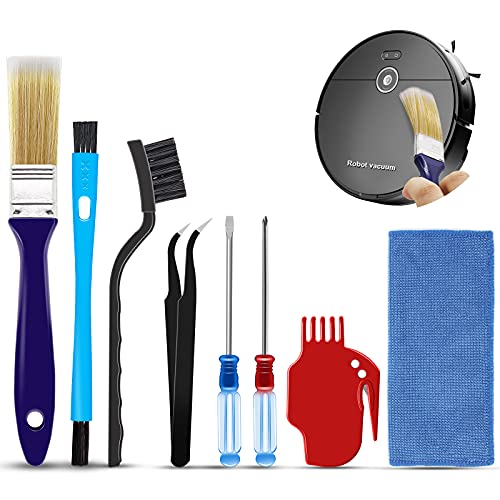
Midukit Vacuum Attachments Accessories for Robot Vacuum Cleaner,Cleaning Brush roll Cleaning Tool Replacement Parts, Part kit Tool for Vacuums Cleaner Replacement Include Vacuum Cleaning Cloth
Midukit vacuum cleaning kit for robot, dyson. Vacuum cleaning tool includes Cleaning Brush, tweezers, screwdriver (Phillips, Slotted), double-end…
As an affiliate, we earn on qualifying purchases.
As an affiliate, we earn on qualifying purchases.
Frequently Asked Questions
Can Robot Vacuums Be Programmed to Avoid Cat Litter Areas?
Yes, you can program robot vacuums to avoid cat litter areas, helping reduce litter scattering and odor control issues. Many models allow you to set virtual boundaries or no-go zones through apps, so you can keep the vacuum away from the litter box. This prevents accidental spills and keeps your home cleaner. Regularly updating these zones guarantees your robot adapts to changes, maintaining efficient cleaning without disturbing your cat’s litter area.
How Does Cat Litter Damage Robot Vacuum Sensors?
Imagine you’re in the 1920s, and sensors are like tiny telegraphs. Cat litter damages robot vacuum sensors by causing debris buildup, which blocks or confuses their detection. This debris can lead to sensor damage, making your vacuum less effective or causing it to stop working altogether. When litter gets stuck in sensors, it hampers navigation and increases the risk of malfunctions, so regular cleaning helps prevent costly damage.
Are There Specific Robot Vacuums Better Suited for Homes With Cats?
Yes, some robot vacuums are better suited for homes with cats. Look for models with strong suction, advanced sensors, and good pet hair pickup, especially on carpets. These vacuums handle pet hair and litter better, reducing clogs and sensor issues. Choose one with specialized brush rolls or filters designed for pet environments, ensuring effective carpet cleaning and minimizing litter scatter. This way, you keep your home cleaner despite your feline friends.
What Maintenance Is Required After Vacuuming Cat Litter?
After vacuuming cat litter, you should clean your robot vacuum’s brushes and filters to prevent clogs and odor buildup. Regularly check the dustbin and empty it promptly. To maintain odor control techniques, wash the vacuum’s filters and brushes periodically. Additionally, perform litter box maintenance by scooping daily and changing the litter regularly. This keeps your home fresh and guarantees your vacuum functions efficiently without spreading odors or debris.
Can Robot Vacuums Pick up All Types of Cat Litter Effectively?
Think of your robot vacuum as a diligent explorer, but some cat litters, especially those with strong odor control and tight litter clumping, act like hidden traps. While it can handle many types, it struggles with fine, clumping, or odor-rich litter. These tiny particles cling and hide, making full cleanup tough. To keep your space fresh, choose litter that’s less clingy and easier for your robot to detect and pick up effectively.
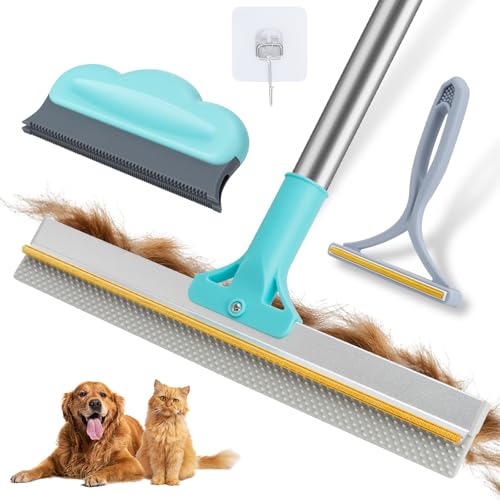
Carpet Rake for Pet Hair Removal Tool, Reusable Pet Hair Remover Broom, Dog&Cat Hair Remover Scraper Rake with 54” Adjustable Long Handle, 3 Pcs Carpet Brush Rake for Rugs, Mats, Couch, Furniture
Dual-Action Cleaning System — The metal head works first, powerfully scraping and loosening deeply embedded pet hair that…
As an affiliate, we earn on qualifying purchases.
As an affiliate, we earn on qualifying purchases.
Conclusion
Just like Icarus flying too close to the sun, robot vacuums struggle with cat litter because it’s unpredictable and messy. It slips through sensors, clogs brushes, and leaves particles behind, much like the fleeting wings that couldn’t withstand the heat. So, while your little automaton may conquer carpets and hardwood, that elusive litter remains a challenge—reminding us that some messes, like mythic tales, are simply too complex for even the smartest machines.

Robot Vacuum, 2 in 1 Robot Vacuum and Mop Combo for Pet Owners: Strong Suction, Anti-Tangle Brushless Inlet, Picks Up Dog & Cat Hair, Wet Mopping Removes Paw Prints, Auto-Recharge with Schedule
🤖[2-IN-1 ROBOT VACUUMING AND MOPPING] Experience the latest in vacuuming and mopping with our T7S Robot vacuum and…
As an affiliate, we earn on qualifying purchases.
As an affiliate, we earn on qualifying purchases.
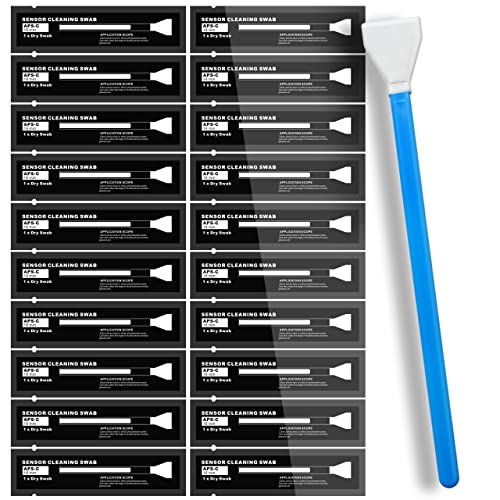
AAWipes Sensor Cleaning Swabs for APS-C Sensors of DDR DSLR or SLR Camera (20 Pack of 16 mm Sensor Cleaning Swabs) (HCS-16)
SUPERFINE MICROFIBER: the microfiber swabs are prepared by laser-cut in Cleanroom 100 level workshop. It is super fine,…
As an affiliate, we earn on qualifying purchases.
As an affiliate, we earn on qualifying purchases.