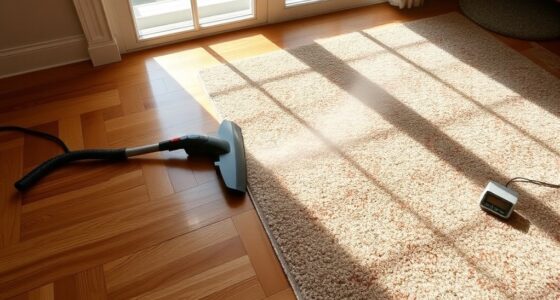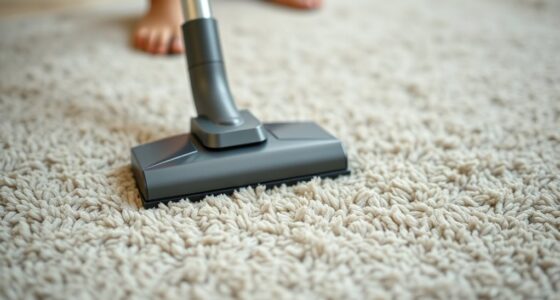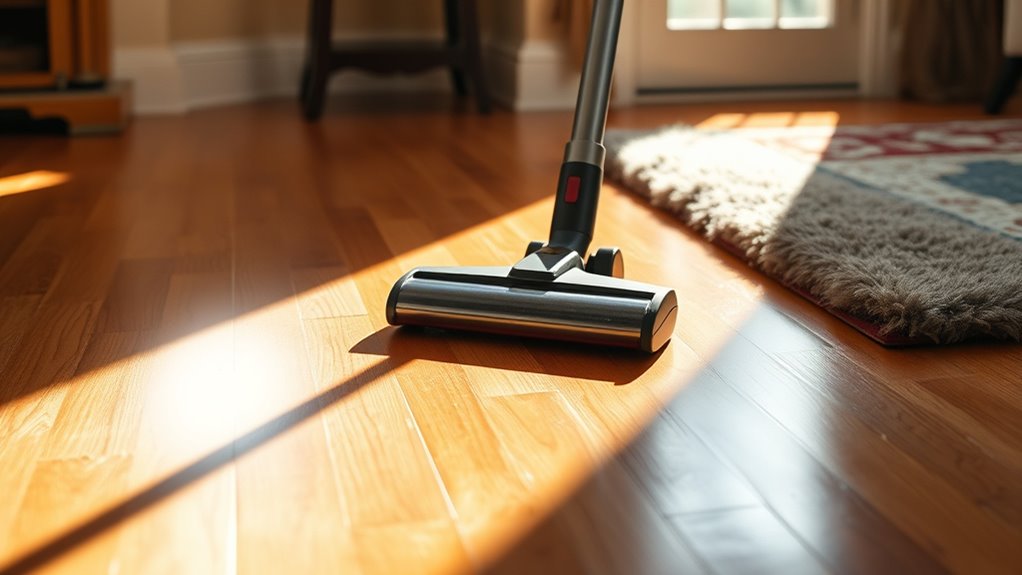
To avoid scratches while vacuuming your floors, choose the right vacuum for your specific flooring. Use vacuums with soft bristles for hardwood and laminate floors, and avoid stiff bristles and beater bars that can cause damage. Regularly check brushes for debris and maintain suction power. Use attachments designed for hard surfaces to safely reach corners. Following these tips helps prolong your floor’s appearance. Discover more essential strategies to keep your floors flawless.
Key Takeaways
- Use vacuums with soft bristles or specific hard surface settings to prevent scratches on hardwood and laminate floors.
- Avoid vacuum models with stiff bristles and beater bars, especially on delicate surfaces like hardwood and laminate.
- Regularly inspect and clean vacuum components, such as brushes and wheels, to prevent dirt buildup that can scratch floors.
- Employ canister vacuums with appropriate attachments for safe corner cleaning on tile and hard surfaces.
- Place area rugs in high-traffic zones to protect floors from scratches and wear over time.
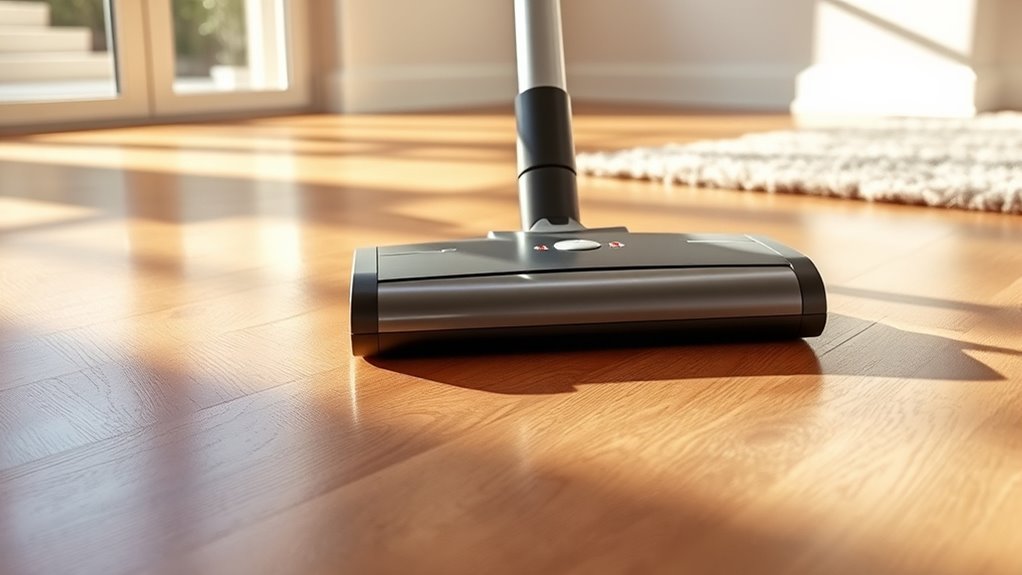
When you vacuum your floors, it’s easy to overlook the potential for scratches, especially on delicate surfaces. You might think that any vacuum cleaner can handle any type of flooring, but that’s not the case. Understanding the compatibility between vacuum cleaner types and your floor material can help you avoid unsightly marks and damage.
First, consider your floor materials. If you have hardwood, laminate, or tile floors, each requires different care. Hardwood floors, for instance, need a vacuum with soft bristles or a setting specifically designed for hard surfaces. Using a vacuum cleaner with stiff bristles can leave scratches, dulling that beautiful finish you’ve worked hard to maintain. For laminate, a vacuum designed for hardwood can work, but make sure it doesn’t have a beater bar, as that can cause wear over time.
Consider your floor materials; using the right vacuum is crucial to avoid scratches and maintain your surfaces’ beauty.
When it comes to tile floors, you have a bit more leeway, but you should still be cautious. A canister vacuum can be ideal for tile surfaces, as they often come with attachments that allow you to reach into corners and clean without damaging the glaze. Avoid using upright vacuums with rotating brushes, as they can scratch the surface if dirt gets trapped beneath.
Next, let’s talk about vacuum cleaner types. Stick vacuums are lightweight and easy to maneuver, but they may not always provide the suction power needed for deep cleaning. If you choose a stick vacuum, make sure it’s specifically designed for the type of floors you have. Robotic vacuums can be convenient, but again, check the manufacturer’s recommendations. Some robotic models are great for hard floors, while others might be too aggressive and could lead to scratches.
Regular maintenance of your vacuum cleaner is also essential. Clean the wheels often, as dirt and debris can accumulate and cause scratches during use. If your vacuum has a rotating brush, inspect it for any tangled hair or debris, which can affect its performance and the safety of your floors.
Lastly, don’t forget to use area rugs strategically. They can protect high-traffic areas and help prevent scratches on your floors. By being intentional about your vacuum cleaner type and ensuring compatibility with your floor materials, you can enjoy a clean home without worrying about damage. Additionally, using the right vacuum accessories can further protect your flooring and enhance the cleaning process.
Frequently Asked Questions
What Type of Vacuum Is Best for Hardwood Floors?
For hardwood floors, a vacuum with soft bristles is your best choice. Look for a model specifically designed for hard surfaces, as they provide excellent flooring protection. Regular vacuum maintenance is key—empty the dustbin often and check filters to guarantee maximum performance. You’ll also want to avoid vacuums with beater bars, which can scratch your beautiful floors. Investing in the right vacuum can help keep your hardwood looking pristine for years!
How Often Should I Vacuum to Prevent Scratches?
You should vacuum at least once a week to prevent scratches. Using a vacuum brush designed for hardwood floors guarantees better floor protection. If you notice dust or dirt buildup, don’t hesitate to vacuum more often. Regular maintenance keeps your floors looking pristine and reduces the risk of scratches from debris. By staying consistent, you’ll create a safe environment for your flooring, helping it last longer while maintaining its beauty.
Can I Use a Vacuum on Laminate Flooring?
Yes, you can use a vacuum on laminate flooring! Just make sure your vacuum’s maintenance is up to date. If you’re using a cordless vacuum, check that it has a soft brush attachment to prevent scratches. Some people think vacuums can damage laminate, but with the right tools, you’ll keep your floors looking great. Regularly clean your vacuum’s filters too, ensuring it runs efficiently while protecting your laminate from potential scratches.
What Attachments Help Reduce Scratches While Vacuuming?
To reduce scratches while vacuuming, use a vacuum brush with soft attachments. These attachments, like a microfiber or bristle brush, gently glide over your floors without causing damage. They lift dirt and debris effectively while being gentle on surfaces. Make sure you adjust the vacuum’s height setting if possible, allowing it to work efficiently on your floors. With the right tools, you’ll keep your floors looking great and scratch-free!
Do Vacuum Cleaners Damage Carpets More Than Hardwood?
Vacuum cleaners can damage carpets more than hardwood, especially if you’re using the wrong vacuum brush. A vacuum with a beater bar can pull at the rug pile, causing fraying and wear over time. In contrast, hardwood surfaces are less susceptible to damage from vacuums, provided you’re using a suitable attachment. To protect your carpets, choose a vacuum designed for rugs and adjust the settings to match the pile height.
Conclusion
So, next time you vacuum, remember: you’re not just cleaning; you’re on a noble quest to protect your floors from scratches that could rival the damage of a thousand tiny armies! With the right attachments and mindful techniques, you can guarantee your surfaces remain as pristine as a museum exhibit. Embrace your role as the guardian of your flooring, and let your vacuuming prowess shine brighter than a thousand suns. Your floors will thank you, and so will your future self!