If your vacuum filter is hurting air quality, you’ll notice decreased suction power and dust escaping into the air. You might see more dust buildup, re-released allergens, and increased effort required to clean. Poor airflow and a musty smell can also signal a clogged or worn filter. These issues worsen indoor air quality and can trigger allergies or respiratory problems. Keep an eye out for these signs, as understanding more can help you maintain a healthier environment.
Key Takeaways
- Decreased suction power indicates filter clogging, reducing dust capture and allowing pollutants to stay in the air.
- Dust and allergens re-release during cleaning suggests the filter isn’t trapping particles effectively.
- Increased effort and airflow restrictions point to dust buildup, impairing pollutant removal and air quality.
- Visible dust buildup on the filter or in the environment signals poor filtration and potential air quality decline.
- Frequent filter neglect leads to reduced filtration efficiency, causing more airborne dust and respiratory irritations.
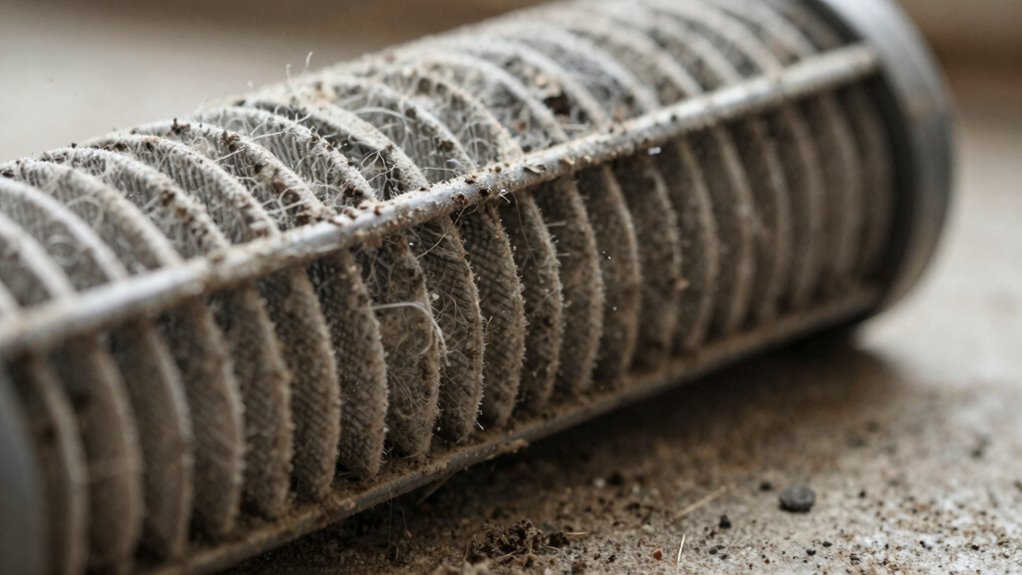
Your vacuum filter plays a crucial role in maintaining indoor air quality, but over time, it can become clogged or worn out, leading to health issues and reduced cleaning efficiency. If you notice your vacuum isn’t performing as well as it used to, it might be a sign your filter needs attention. One key aspect to watch for is issues related to HEPA filter maintenance. HEPA filters are designed to trap tiny particles, including dust, pollen, pet dander, and allergens, helping you breathe easier. However, when these filters aren’t maintained properly, dust particle buildup can occur, which diminishes their effectiveness. When dust accumulates on the filter, it can cause airflow restrictions, making the vacuum work harder and less effectively.
You might also notice that your vacuum releases more dust back into the air during or after cleaning. This is a clear sign that the filter is no longer functioning properly. Dust particles that should be trapped are slipping through or resuspending into the air, which can aggravate allergies or respiratory issues. If you find yourself frequently cleaning or replacing filters, it’s a sign that you should check your HEPA filter’s condition and perform regular maintenance. Neglecting HEPA filter maintenance means dust particle buildup continues unchecked, reducing the filter’s ability to capture airborne pollutants. As a result, your indoor air quality suffers, and you might notice more sneezing, coughing, or irritated eyes. Additionally, understanding the importance of air quality can help motivate timely filter maintenance to keep your environment healthier.
Another indication your vacuum filter is hurting air quality is if your vacuum’s suction power drops markedly. When filters become clogged with dust and debris, airflow decreases, and the vacuum can’t pick up dirt as efficiently. This not only reduces cleaning effectiveness but also means dust and allergens remain in the environment longer. If you’re noticing a decline in performance, it’s time to inspect and replace or clean your filter. Regularly checking your HEPA filter and replacing it when necessary ensures you prevent excessive dust particle buildup. This proactive approach is especially important because filter lifespan can vary based on usage and environment, affecting overall performance. It also allows your vacuum to run at peak efficiency, which directly benefits your indoor air quality.

6 Pack FSV001 HEPA Filter Compatible with Fabuletta FSV101, FSV001, Girnoor G160&G165, Afoddon A300, Lubluelu 202, Oraimo OSV-102/225A, Besswin W26 Cordless Stick Vacuum Cleaners, Nequare Vacuum S181
Compatibility Modles: 6 Pack FSV001 Filters Fit for Fabuletta FSV001 FSV101 Cordless Stick Vacuum Cleaners Series and Girnoor…
As an affiliate, we earn on qualifying purchases.
As an affiliate, we earn on qualifying purchases.
Frequently Asked Questions
Can a Dirty Vacuum Filter Affect Allergy Symptoms?
Yes, a dirty vacuum filter can worsen allergy symptoms. It fails to trap airborne allergens effectively, allowing dust, pet dander, and pollen to circulate in your air. This increases respiratory irritation and triggers allergy flare-ups. To keep your air quality high and minimize symptoms, regularly replace or clean your vacuum filter. Proper maintenance guarantees allergens stay trapped, supporting healthier indoor air and easing your allergy discomfort.
How Often Should I Replace My Vacuum Filter?
You should replace your vacuum filter every 3 to 6 months for effective filter maintenance. Ironically, neglecting this simple task lets dirt and allergens escape, worsening your air quality. Regular replacement frequency keeps your vacuum running efficiently and guarantees it doesn’t become a source of airborne pollutants. Don’t wait until your filter looks grimy—timely swaps help maintain a healthy, allergen-free environment and extend your vacuum’s lifespan.
Are HEPA Filters Better for Air Quality?
Yes, HEPA filters are better for air quality because they have higher HEPA efficiency, capturing 99.97% of particles as small as 0.3 microns. This means they effectively trap allergens, dust, and pollutants, improving indoor air. However, their filter lifespan depends on usage and maintenance. You’ll need to replace or clean them more frequently than standard filters to guarantee they continue providing peak air quality.
What Signs Indicate My Vacuum Filter Needs Cleaning?
A stitch in time saves nine, and that’s true for filter maintenance too. If you notice decreased suction, increased dust around your home, or must empty the bin more often, your vacuum filter likely needs cleaning. These signs indicate it’s struggling to trap airborne pollutants effectively. Regularly checking and cleaning your filter helps keep the air cleaner and your vacuum working efficiently, preventing buildup of harmful particles.
Does Vacuum Filter Type Impact Indoor Air Pollution?
Yes, vacuum filter type impacts indoor air pollution. Different filters, like HEPA or foam, affect airflow efficiency and how well they trap particles. HEPA filters excel at capturing tiny allergens, improving air quality, while cheaper filters may allow pollutants to escape back into your home. Choosing the right filter material guarantees better airflow and cleaner indoor air, helping you breathe easier and maintain a healthier environment.
![[4 Pack] Replacement for Shark Odor Neutralizer Cartridge, Odor Elimination Replacement for Shark LA702 ZU102 Vacuum Cleaner Accessories AZ3002 air Purifier HP302. -1541fc3000,Teal](https://m.media-amazon.com/images/I/41hLdYQrOuL._SL500_.jpg)
[4 Pack] Replacement for Shark Odor Neutralizer Cartridge, Odor Elimination Replacement for Shark LA702 ZU102 Vacuum Cleaner Accessories AZ3002 air Purifier HP302. -1541fc3000,Teal
【Compatible Model】The odor neutralizer cartridge is compatible for shark AZ3000, AZ3002, HZ3000, HZ3002, ZD550, IZ862H, IZ562H Vacuum Cleaner.
As an affiliate, we earn on qualifying purchases.
As an affiliate, we earn on qualifying purchases.
Conclusion
So, next time you notice a musty smell or dust lingering after vacuuming, it’s no coincidence—your filter might be the culprit. Remember, a clean filter doesn’t just keep your vacuum running smoothly; it also safeguards your air quality. Don’t overlook those subtle signs. When you take care of your vacuum, you’re also taking care of your home’s air. Coincidence? Maybe. But better safe than sorry, right?

Acxico 2Pcs Vacuum Cleaner Hepa Filter Replacement Accessory for Midea Sc861 Sc861A
Vacuum Cleaner Parts,easy to install and easy to replace,for Midea SC861 SC861A
As an affiliate, we earn on qualifying purchases.
As an affiliate, we earn on qualifying purchases.
6 Pack FSV001 HEPA Filter Compatible with Fabuletta FSV101, FSV001, Girnoor G160&G165, Afoddon A300, Lubluelu 202, Oraimo OSV-102/225A, Besswin W26 Cordless Stick Vacuum Cleaners, Nequare Vacuum S181
Compatibility Modles: 6 Pack FSV001 Filters Fit for Fabuletta FSV001 FSV101 Cordless Stick Vacuum Cleaners Series and Girnoor…
As an affiliate, we earn on qualifying purchases.
As an affiliate, we earn on qualifying purchases.