To reduce indoor pollen, start by using air purifiers with HEPA filters and keeping them running during peak pollen season. Regularly dust and vacuum with HEPA-filter vacuums, using damp cloths to capture allergens instead of spreading them. Wash your bedding weekly in hot water and use allergen-proof covers. Keep windows closed and use doormats to minimize pollen entry. Implementing these smart cleaning strategies can substantially improve your home’s air quality. There’s more to discover on enhancing your environment!
Key Takeaways
- Use HEPA-filter air purifiers in high-traffic rooms and run them continuously during peak pollen seasons to improve indoor air quality.
- Regularly dust and vacuum using damp cloths and HEPA-filter vacuums to effectively trap and remove indoor allergens like pollen.
- Wash bedding weekly in hot water and use allergen-proof covers on pillows and mattresses to reduce allergen accumulation.
- Keep windows and doors closed during high pollen times and use doormats to minimize pollen tracked into the home.
- Invest in quality cleaning tools and resources to optimize your cleaning routine for effective pollen reduction.
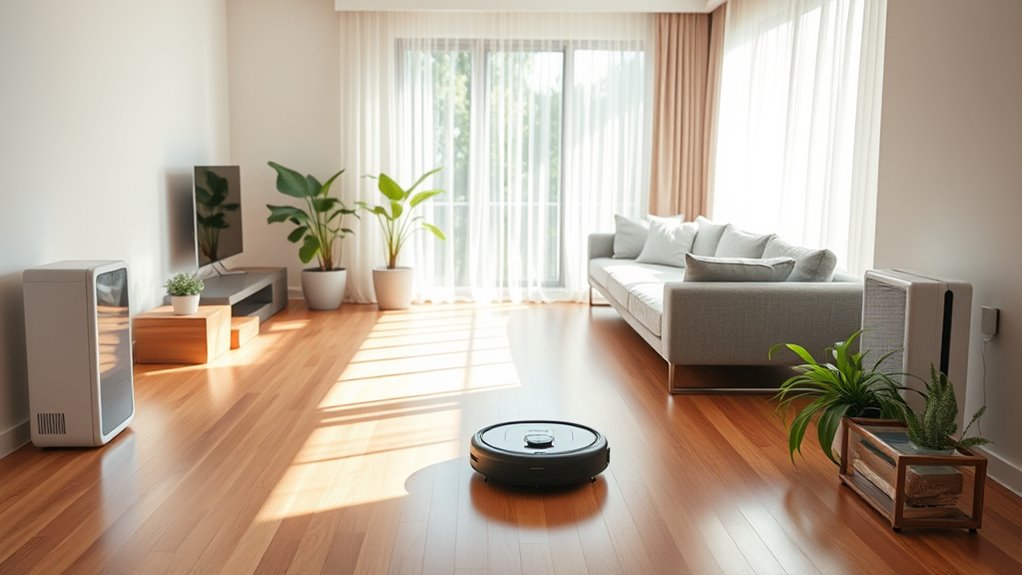
As spring arrives and pollen levels rise, you might find yourself sneezing more than usual indoors. The influx of pollen can make your home feel less like a sanctuary and more like a sneeze-inducing trap. Thankfully, with a few smart cleaning strategies and tools, you can substantially reduce indoor pollen and create a healthier living space.
First, consider the effectiveness of air purifiers. An air purifier can dramatically improve your indoor air quality by trapping airborne allergens, including pollen. When choosing one, look for models with HEPA filters, as they’re designed specifically to capture tiny particles, including pollen grains. To maximize air purifier effectiveness, place the unit in high-traffic areas or rooms where you spend the most time, like your bedroom or living room. Make sure to keep the purifier running continuously during peak pollen seasons for the best results.
Consider investing in an air purifier with HEPA filters to significantly improve indoor air quality and reduce pollen.
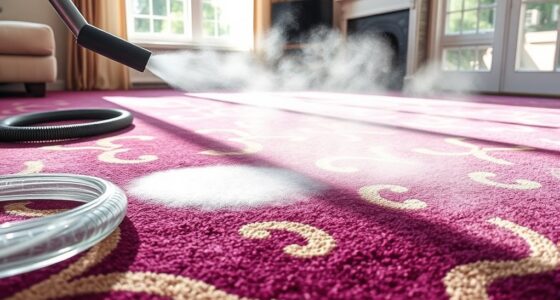
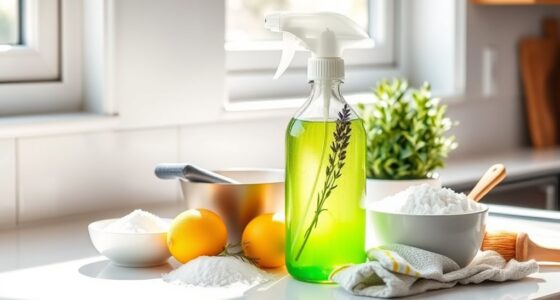
Next, focus on allergy-friendly cleaning practices. Regular dusting and vacuuming are essential, but not all cleaning methods are created equal. Avoid using traditional cleaning products that may release harmful chemicals or irritants. Instead, opt for natural or hypoallergenic cleaning solutions that won’t exacerbate your allergies. When you dust, use a damp cloth to trap dust and pollen instead of sending it flying into the air.
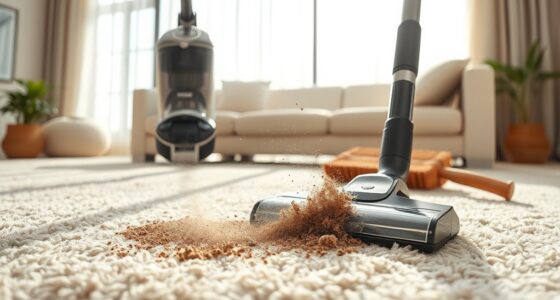
When it comes to vacuuming, invest in a vacuum cleaner with a HEPA filter to guarantee you’re not just stirring up allergens but actually removing them from your home. Pay special attention to carpets, rugs, and upholstered furniture, as they can harbor a considerable amount of dust and pollen.
Changing your bedding frequently also plays a vital role in reducing indoor pollen. Wash your sheets and pillowcases in hot water at least once a week to eliminate any pollen that may have settled there. Consider using allergen-proof covers for pillows and mattresses to create an additional barrier against airborne particles.
Finally, keep windows and doors closed during high pollen times, and consider using a doormat to limit pollen from entering your home. By implementing these tips, you can greatly reduce indoor pollen levels, allowing you to breathe easier and enjoy your space without the constant irritation of allergies. With a little effort, you can transform your home into a pollen-free zone this spring. Additionally, empowering independent sellers can provide you with various tools and resources to enhance your cleaning routine.
Frequently Asked Questions
Can Indoor Plants Contribute to Pollen Levels?
Yes, indoor plants can contribute to pollen levels. While many plants are generally beneficial, some produce plant allergens that may trigger allergies in sensitive individuals. When these plants release pollen, it can lead to increased pollen dispersion in your home. To minimize this, choose low-pollen varieties and keep your plants well-maintained. Regularly cleaning their leaves can also help reduce the presence of any allergens, creating a healthier indoor environment for you.
How Often Should I Wash My Curtains for Pollen Reduction?
Imagine your curtains as a cozy blanket, trapping dust and pollen like a net. To keep them fresh and minimize pollen buildup, you should wash your curtains every three to four months. This curtain washing frequency helps prevent allergens from settling in your home. If you notice high pollen counts outside, consider washing them more often. Your space will feel lighter and cleaner, making it a sanctuary from sneezes and sniffles.
Are There Specific Vacuum Cleaners That Effectively Reduce Pollen?
Yes, there are specific vacuum cleaners that effectively reduce pollen. Look for models with HEPA filters, as they trap tiny particles and prevent them from being released back into the air. Robotic vacuums are also a great choice since they can clean regularly without you having to lift a finger. Just set a schedule, and you’ll enjoy cleaner air and reduced pollen levels in your home. Don’t forget to empty the dustbin frequently!
Does Air Conditioning Help in Reducing Indoor Pollen?
Yes, air conditioning can help reduce indoor pollen. When you use a system with good pollen filtration, it actively removes allergens from the air, improving air conditioning efficiency. Make sure your filters are high-quality and regularly replaced to maximize their effectiveness. Keeping windows closed while running your AC also prevents outdoor pollen from entering your home. So, by maintaining your system, you can enjoy cleaner air and a more comfortable indoor environment.
What Are the Best Cleaning Products for Allergy Sufferers?
Did you know that nearly 50 million Americans suffer from allergies? To make your home more comfortable, opt for hypoallergenic detergents that minimize irritants during laundry. Natural cleaning agents, like vinegar and baking soda, can effectively tackle dust and allergens without harsh chemicals. These products help you maintain a clean environment while reducing allergy symptoms. So, stock up on these allergy-friendly options to breathe easier and enjoy your space more!
Conclusion
You might think it’s impossible to keep indoor pollen at bay, but with smart cleaning techniques, it’s easier than you think. Regularly using high-efficiency air purifiers and vacuuming with HEPA filters can dramatically reduce allergens in your home. Plus, incorporating a routine that includes dusting and washing fabrics can make a noticeable difference. You’ll breathe easier and enjoy your space more. So, why not give it a try? Your comfort and health are worth the effort!