
To reduce dander build-up in a multi-pet home, keep your space clean by frequently vacuuming with HEPA filters and washing pet bedding. Regular grooming outside or in well-ventilated areas helps remove loose fur and skin flakes. Create pet-free zones, especially in bedrooms, and maintain proper ventilation. Use air purifiers and monitor indoor air quality to trap airborne allergens. Keep a consistent cleaning and grooming schedule—there’s more to making your environment dander-free if you look further into effective strategies.
Listen free for 30 days with Audible
Thousands of audiobooks and originals — cancel anytime.
As an affiliate, we earn on qualifying purchases.
Key Takeaways
- Regularly groom pets outside and use appropriate brushes to remove loose fur and dander effectively.
- Maintain a strict cleaning schedule, including vacuuming with HEPA filters and frequent washing of pet bedding.
- Create designated pet-free zones, especially in bedrooms, to reduce allergen accumulation.
- Use air purifiers with HEPA filters and monitor indoor air quality to minimize airborne dander.
- Establish consistent grooming routines and clean grooming tools after each use to prevent allergen spread.
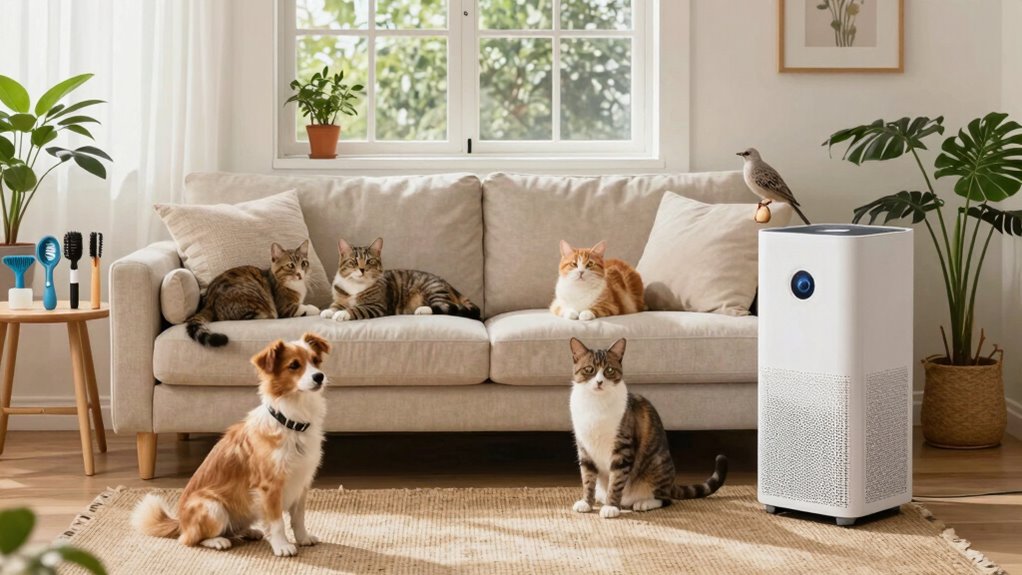
Living with multiple pets can bring joy, but it also increases the amount of dander in your home, which can trigger allergies and cause discomfort. Managing this dander is vital to maintaining a healthy, comfortable environment for everyone. One of the most effective ways to do this is through proper allergy management techniques. Regular cleaning, using high-efficiency particulate air (HEPA) filters, and establishing a routine for pet care can make a substantial difference. Vacuum your carpets and upholstery frequently, as these are prime dander collectors. Consider washing your pet’s bedding often, and keep clutter to a minimum to reduce areas where dander can settle. Additionally, maintaining good indoor air quality with air purifiers can help trap airborne allergens, reducing their circulation throughout your home. Research shows that air filtration technology significantly reduces airborne particles and allergen levels indoors. Incorporating air quality monitoring devices can also help you track allergen levels and adjust your cleaning routines accordingly. Regularly replacing filters in your HVAC system ensures consistent filtration and enhances overall air quality. Using proper ventilation methods can also aid in reducing indoor allergen concentrations and improving airflow.
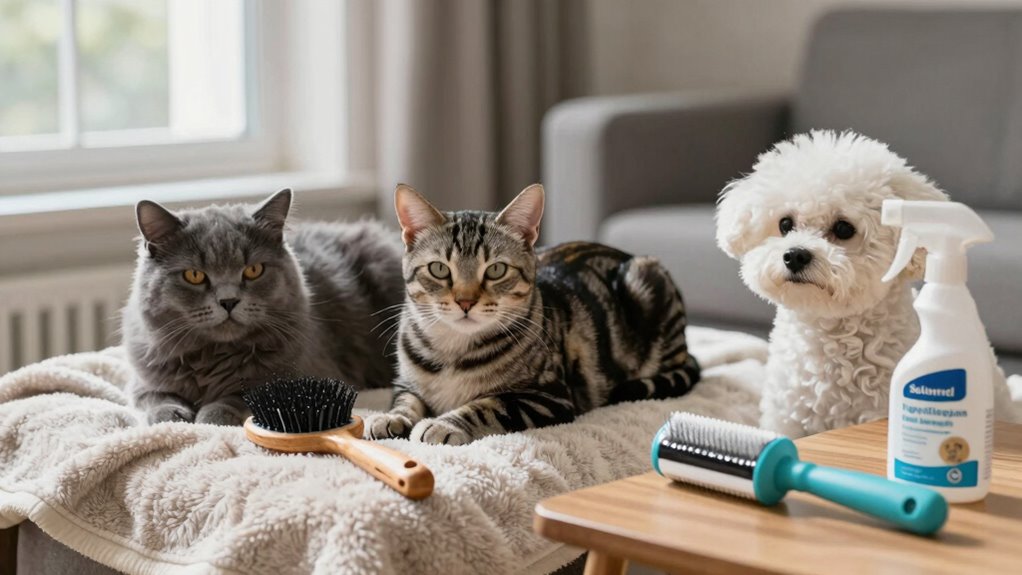
Pet grooming techniques play a key role in controlling dander buildup. Regular grooming removes loose fur and skin flakes that contain allergens, preventing them from spreading into your living space. Brush your pets frequently, ideally outside or in well-ventilated areas, to minimize the spread of dander indoors. Use a brush suited to your pet’s coat type to ensure effective removal of loose hair and skin. Bathing your pets regularly with a vet-recommended shampoo can also help reduce dander. Be cautious not to overbathe, as it can dry out your pet’s skin and potentially increase shedding, but consistent grooming is essential. For pets prone to heavy shedding, specialized grooming techniques like deshedding treatments or trimming can greatly reduce loose fur. Incorporating proper grooming techniques can further prevent allergen buildup and improve your pet’s overall health.
It’s important to establish a grooming routine tailored to each pet’s needs and coat type. If you have multiple animals, grooming all of them consistently can help prevent allergen accumulation. Keep grooming tools clean by washing them after each use to avoid spreading dander. Encourage family members and visitors to wash their hands after pet contact to reduce allergen transfer. Incorporating allergy management strategies into your daily routine, like designating pet-free zones, especially in bedrooms, to create allergen-free spaces. Regularly checking for signs of skin irritation or allergies in your pets can also help catch issues early and adjust grooming routines accordingly. Being aware of allergen sources such as dander and skin flakes can help you better target your cleaning and grooming efforts for maximum effectiveness.
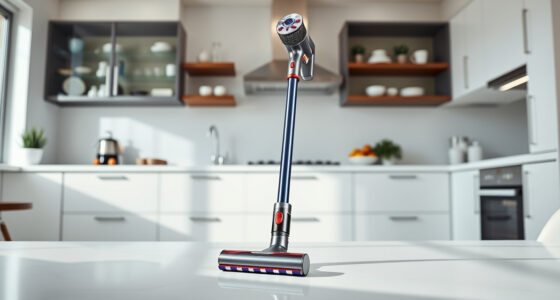
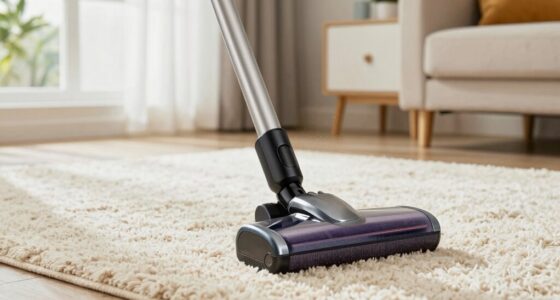
HEPA filter vacuum cleaner for pet dander
As an affiliate, we earn on qualifying purchases.
As an affiliate, we earn on qualifying purchases.
Frequently Asked Questions
Can Specific Diets Reduce Pet Dander Effectively?
Yes, specific diets can effectively reduce pet dander. Diet modification focusing on hypoallergenic ingredients helps decrease allergen production and improves skin health. Look for foods with omega-3 fatty acids, limited fillers, and novel protein sources to promote a healthier coat and reduce dander. Consistently feeding these diets supports allergen reduction, making your home more comfortable for allergy sufferers and minimizing dander buildup over time.
How Often Should I Replace Air Filters in My Home?
You should replace your air filters every 30 to 60 days to maintain good air quality, especially in a multi-pet home. Regular air purifier maintenance is essential; clean or replace filters as recommended. Incorporate carpet cleaning techniques like deep vacuuming and steam cleaning weekly to reduce dander buildup. These steps help keep your indoor air fresh, minimizing allergens and making your space healthier for everyone.
Are There Natural Remedies to Minimize Pet Dander?
Yes, there are natural remedies to minimize pet dander. You can use pet hypoallergenic sprays or add a teaspoon of apple cider vinegar to your pet’s water for dander prevention. Regular grooming helps reduce dander build-up, and maintaining a clean home with frequent vacuuming, especially with a HEPA filter, also aids in dander control. These simple steps support a healthier environment and lessen allergy symptoms.
How Does Humidity Affect Dander Accumulation?
Sure, cranking up humidity levels turns your home into a pet dander spa. Higher humidity helps keep dander particles heavy and settled, making dander control easier. But beware—excess moisture invites mold and mildew, turning your sanctuary into a pet allergy nightmare. Keep humidity balanced, around 40-50%, to reduce dander buildup without creating a damp disaster. Now, your home’s dander drama just got a little less dramatic!
Can Regular Grooming Completely Eliminate Dander?
Regular grooming considerably reduces pet dander, but it can’t completely eliminate it. If you or someone in your home has a pet allergy, daily brushing and bathing help prevent dander buildup and improve air quality. Incorporate dander prevention strategies like using HEPA filters and cleaning frequently. Consistent grooming minimizes allergen levels, making your environment more comfortable, but some allergens may still remain. Combining methods offers the best relief.
Conclusion
By staying consistent with grooming, cleaning, and using air purifiers, you can greatly reduce dander in your multi-pet home. Imagine Sarah’s family, who struggled with allergies until she implemented weekly baths for her cats and frequent vacuuming. Within weeks, her allergy symptoms eased, making her home more comfortable for everyone. Remember, small daily efforts add up, creating a healthier environment. Your commitment to these habits can make a real difference for your family’s comfort and well-being.
NFL season / tailgating Picks
team gear
As an affiliate, we earn on qualifying purchases.