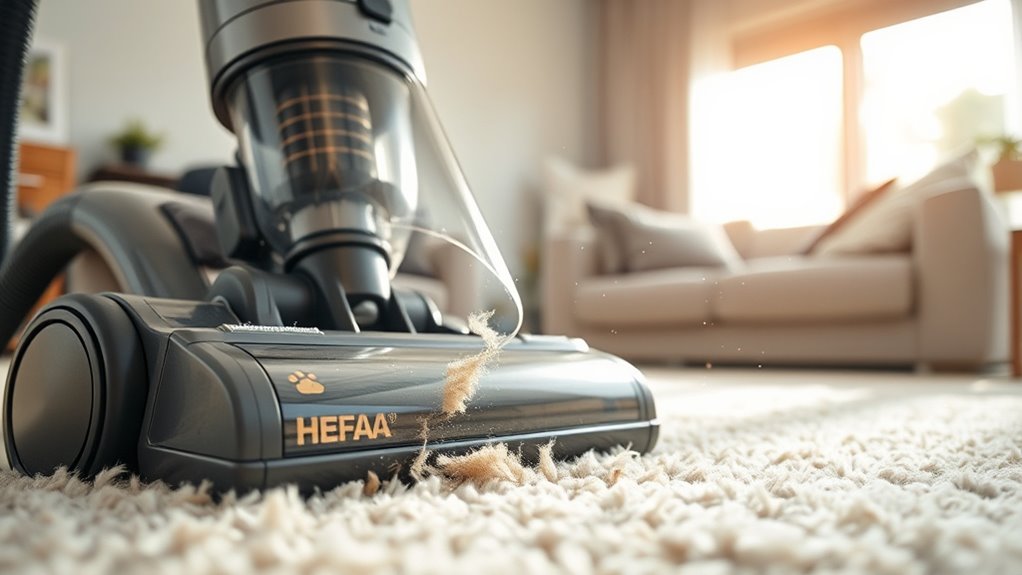

To reduce pet dander allergies, use a vacuum with a true HEPA filter that traps tiny particles and prevents allergens from recirculating. Vacuum thoroughly at least twice a week, especially in high-traffic and pet-loved areas, and focus on edges and corners. Regularly empty your canister or change the bag outside and keep the filters well-maintained. Combining this routine with deep cleanings can make a big difference—learn more to optimize your method.

Get cleaning gear delivered free with Prime
- Fast, free delivery on millions of items
- Prime Video, Amazon Music and more included
- Member-only deals all year
Key Takeaways
- Use a vacuum with a true HEPA filter to effectively trap pet dander and prevent allergen recirculation.
- Vacuum carpets at least twice weekly, focusing on high-traffic and pet-loved areas for thorough allergen removal.
- Empty vacuum canisters or replace bags regularly, especially with multiple pets, to prevent allergen buildup inside the vacuum.
- Combine routine vacuuming with periodic professional deep cleaning or steam cleaning to remove embedded pet dander.
- Maintain and clean vacuum filters and brushes regularly to ensure optimal performance and better indoor air quality.
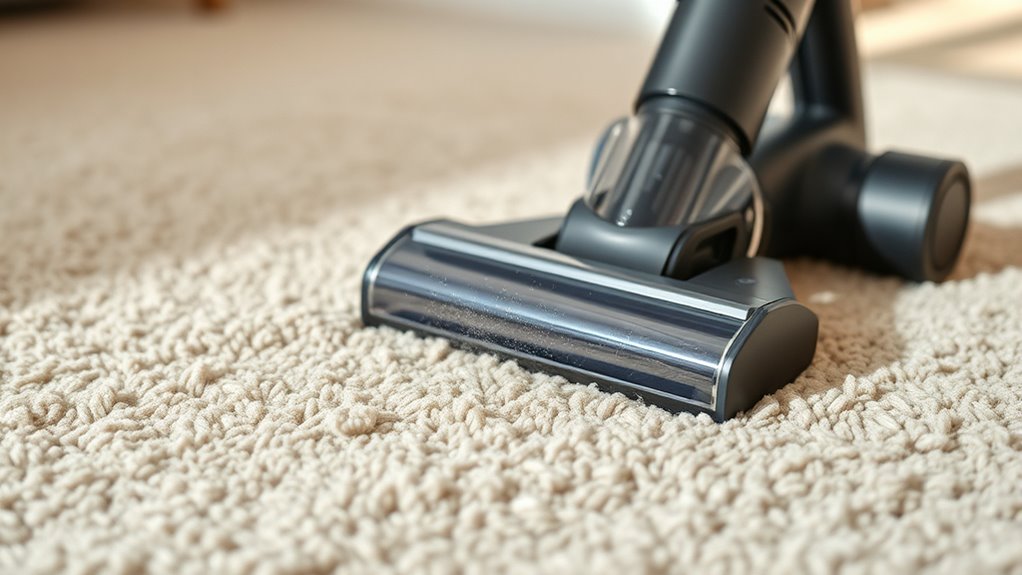
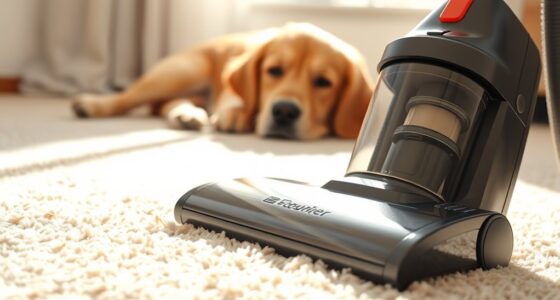
If you suffer from pet dander allergies, regular vacuuming can make a noteworthy difference in reducing your symptoms. One of the most effective ways to do this is by using a vacuum equipped with HEPA filters. These filters are designed to trap tiny particles like pet dander, pollen, and dust mites, preventing them from being recirculated into the air. When vacuuming, make sure your device has a true HEPA filter, not a standard or disposable one, as this guarantees you’re capturing the allergens rather than just moving them around. Using a vacuum with HEPA filtration is especially essential for carpets, which tend to trap dander more than hard floors.
Carpet cleaning plays a key role in allergen control because carpets provide a cozy environment for pet dander to settle and accumulate. Regularly cleaning your carpets with a vacuum that has HEPA filters can considerably cut down on airborne allergens. For best results, vacuum at least twice a week, focusing on high-traffic areas and spots where your pet spends a lot of time. When vacuuming, take your time to go over each section thoroughly, as quick passes might leave some allergens behind. Don’t forget to pay attention to edges and corners, where pet hair and dander tend to gather.
In addition to daily vacuuming, periodic deep cleaning of your carpets can help remove embedded pet dander that regular vacuuming might miss. Professional carpet cleaning services often use steam cleaning or hot water extraction methods, which can eliminate allergens deep within the fibers. If you prefer DIY, consider renting or investing in a carpet cleaner with powerful suction and specialized cleaning solutions designed to neutralize pet dander.
Another tip is to replace your vacuum bags or empty the canister frequently, especially if you have multiple pets or heavy shedding. This prevents the buildup of trapped allergens inside your vacuum, which could be released back into the air during future use. Always empty the vacuum outside your living space to avoid spreading allergens indoors. Additionally, maintain your vacuum regularly by checking filters and cleaning brushes to guarantee top performance. Proper maintenance of your vacuum cleaner is crucial for effective allergen control and air quality in your home.
HEPA filter vacuum for pet dander
As an affiliate, we earn on qualifying purchases.
As an affiliate, we earn on qualifying purchases.
Frequently Asked Questions
How Often Should I Replace My Vacuum Filters for Allergen Control?
You should replace your vacuum filters every 3 to 6 months for maximum allergen control. Regular air purifier maintenance also helps reduce pet hair removal and dander in your home. Changing filters frequently ensures your vacuum continues to trap allergens effectively, preventing buildup that can worsen allergies. Keep an eye on filter indicators, and don’t forget to clean or replace filters promptly to maintain a healthier environment for you and your pets.
Are Handheld Vacuums Effective Against Pet Dander Allergies?
Handheld vacuums can help with pet dander removal, but they have limitations. You might find them convenient for quick cleanups, yet their smaller size and weaker suction often mean they’re less effective at deep cleaning carpets and upholstery. To truly reduce pet dander, use a high-efficiency vacuum with a HEPA filter. Handhelds are useful for spot-cleaning, but for thorough allergen control, rely on a full-sized, HEPA-filtered vacuum.
Can Vacuuming Alone Eliminate All Pet Dander From My Home?
Oh, sure, vacuuming alone will banish all pet dander—said no expert ever. You might think it’s magic, but pet hair removal techniques and air purifier compatibility matter more. Vacuuming helps, but you’ll need HEPA filters, frequent washing, and air purifiers to truly cut down allergens. Sorry to burst your bubble, but eliminating all pet dander? That takes a team effort, not just a vacuum.
What Vacuum Features Are Best for Allergy Sufferers?
When choosing a vacuum for allergy relief, look for models with strong suction and HEPA filters to trap pet dander effectively. You’ll want a lightweight vacuum, so it’s easier to maneuver without causing fatigue. Also, consider vacuum noise levels; quieter models make the process more comfortable. A vacuum that’s easy to handle and powerful enough to pick up allergens will help you breathe easier and reduce allergy symptoms at home.
Does Vacuuming Reduce Pet Dander in Upholstery and Carpets Effectively?
Think of vacuuming as a broom sweeping away the fog of pet dander from your home. Regular vacuuming, especially with a HEPA filter, can remarkably reduce pet dander in upholstery and carpets. For best results, combine vacuuming with air purifier benefits and pet grooming tips, like bathing your pet regularly. This multi-layered approach helps clear the air, making your space healthier and more comfortable for allergy sufferers.
Conclusion
Vacuuming can considerably reduce pet dander and improve your allergy symptoms, but consistency is key. Did you know that regular vacuuming can decrease airborne pet allergens by up to 50%? By sticking to a cleaning routine and using HEPA filters, you create a cleaner environment for yourself and your pets. Remember, small daily efforts make a big difference in managing pet dander allergies so you can breathe easier and enjoy your time at home.
Evergreen bestsellers Picks
bestsellers
As an affiliate, we earn on qualifying purchases.