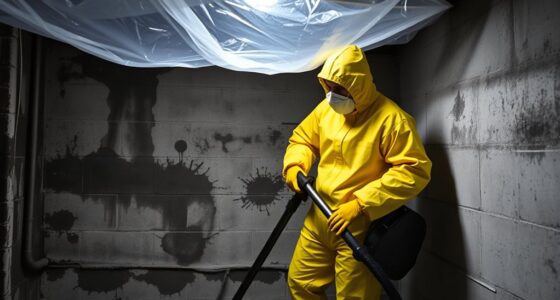

HEPA filters are essential for allergy sufferers because they trap tiny airborne particles like pollen, pet dander, and dust mites that standard filters often miss. While standard filters mainly block larger debris and protect HVAC systems, HEPA filters are designed to remove allergens effectively, improving indoor air quality and reducing allergy symptoms. Choosing the right filter can make a big difference—stick around to discover how proper maintenance maximizes these benefits for your health.

Get cleaning gear delivered free — and shop member deals
- Fast, free delivery on millions of items
- Access to Prime Big Deal Days deals on October 6–7
- Prime Video, Amazon Music and more included
Key Takeaways
- HEPA filters trap microscopic allergens like pollen, pet dander, and dust mites, improving indoor air quality significantly.
- Standard filters mainly block large debris and do not effectively remove airborne allergens that trigger allergies.
- Proper maintenance and regular replacement of HEPA filters ensure optimal allergen removal and healthier indoor environments.
- Neglecting filter replacement can lead to mold or bacteria growth, which may worsen allergy symptoms and air quality.
- Choosing HEPA filters over standard filters provides better protection for allergy sufferers and enhances overall indoor air health.
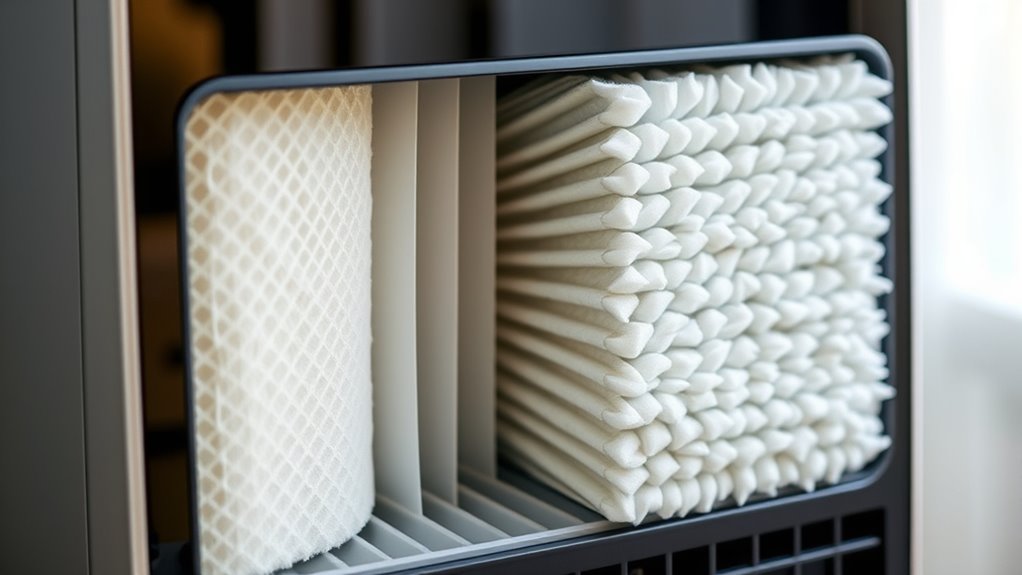
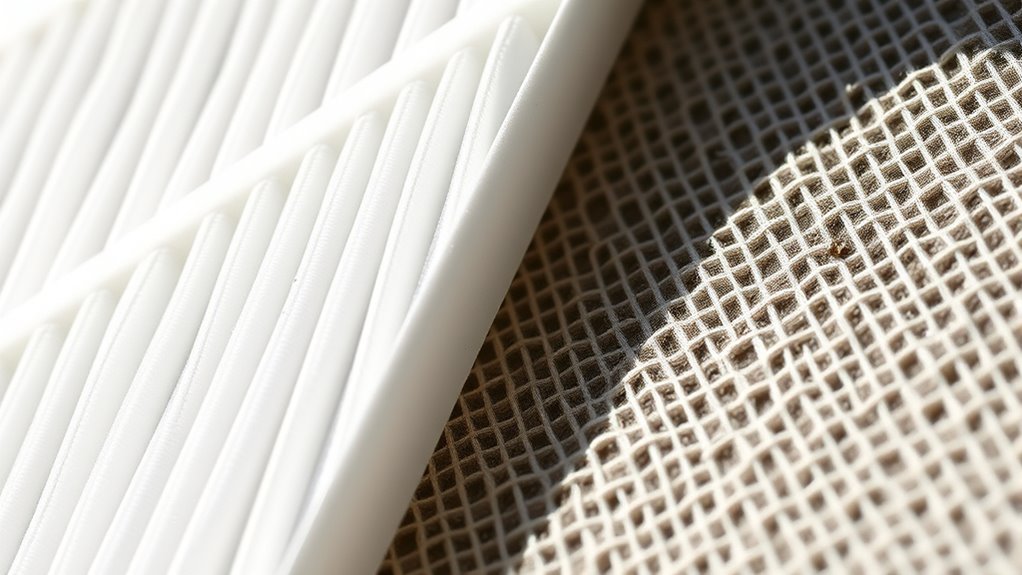
When choosing air filters, understanding the difference between HEPA and standard filters is crucial for ensuring clean indoor air. If you suffer from allergies or asthma, knowing how each filter type impacts air purification can make a real difference in your comfort and health. HEPA filters are designed to trap tiny particles, including allergens like pollen, pet dander, and dust mites, which often escape standard filters. These filters are constructed with dense fibers that create a maze, forcing air to pass through small openings and capturing even microscopic particles. Standard filters, on the other hand, typically have a looser weave and are mainly intended to protect HVAC systems from large debris, such as lint and larger dust particles. They don’t do as well at removing the allergens that can trigger allergy symptoms.
Choosing a HEPA filter can substantially improve the quality of the air you breathe indoors. When you prioritize air purification, you’ll notice a decrease in allergy symptoms and cleaner air overall. But it’s not just about selecting the right filter; maintaining it properly is equally important. Regular filter maintenance ensures that your HEPA filter remains effective over time. A clogged or dirty filter won’t trap airborne particles efficiently, which can actually worsen air quality and put additional strain on your HVAC system. You should check your filters every few months and replace them according to the manufacturer’s recommendations. This simple step keeps your air purifier working at peak performance and helps you breathe easier.
Furthermore, understanding the importance of filter maintenance helps you avoid unnecessary costs and health risks. Neglecting to replace filters can lead to mold growth or bacteria buildup within the filter media, potentially releasing harmful particles back into your indoor environment. When you invest in a HEPA filter, you’re also investing in the longevity of your air purification system. Regular upkeep ensures that you continue to reap the benefits of cleaner air and allergy relief. If you have pets or live in a dusty environment, more frequent replacements might be necessary. It’s a small effort that pays off in better health and improved air quality.
Additionally, incorporating AI-based monitoring can help optimize filter replacement schedules and maintain indoor air quality more effectively.
HEPA air purifier filters for allergies
As an affiliate, we earn on qualifying purchases.
As an affiliate, we earn on qualifying purchases.
Frequently Asked Questions
Can HEPA Filters Remove All Types of Airborne Allergens?
HEPA filters can remove most airborne particles, including common allergens like pollen, pet dander, and dust mites. However, they can’t eliminate all types of airborne allergens, especially those that are gaseous or microscopic, like certain mold spores or chemical fumes. Keep in mind that filter limitations mean some particles might slip through, so combining HEPA with other air purification methods can offer better overall allergen control in your space.
How Often Should HEPA Filters Be Replaced?
You should replace HEPA filters every 6 to 12 months for ideal filter maintenance. The replacement frequency depends on your usage, air quality, and manufacturer’s guidelines. Regularly check the filter’s condition, especially if you notice reduced airflow or persistent allergies. Keeping up with these replacements ensures your HEPA filter continues to trap airborne allergens effectively, maintaining a healthier indoor environment and reducing allergy symptoms.
Are HEPA Filters Effective Against Bacteria and Viruses?
Yes, HEPA filters are highly effective against airborne pathogens, including bacteria and viruses. They trap tiny particles that can cause illness, providing a safer environment. To maintain their effectiveness, regular filter maintenance is essential—replacing filters when needed guarantees peak performance. By choosing HEPA, you actively reduce the risk of airborne infections, creating a healthier space for yourself and those around you.
Do HEPA Filters Produce Any Harmful Emissions?
No, HEPA filters don’t produce harmful emissions or chemical off-gassing. They work by physically trapping particles like dust, pollen, bacteria, and viruses, so they don’t emit chemicals or toxins into the air. You can confidently use them in your home without worrying about filter emissions or chemical off-gassing. Just make sure to keep your filter clean and replace it as recommended for peak air quality and safety.
Can HEPA Filters Improve Indoor Air Quality in Large Spaces?
Yes, HEPA filters can improve indoor air quality in large spaces. They efficiently capture airborne particles, enhancing airflow patterns and reducing allergens. To keep their performance at its best, you need to perform regular filter maintenance. Properly maintained HEPA filters ensure cleaner air, making large environments healthier and more comfortable for everyone. Just remember, consistent maintenance and good airflow management are key to maximizing their benefits.
Conclusion
Choosing a HEPA filter is like installing a mighty guardian at your doorstep, fiercely battling tiny invaders that cause allergies. Standard filters are like old, worn-out nets, letting allergens slip through unnoticed. By upgrading to HEPA, you’re arming yourself with a powerful shield that captures even the sneakiest particles, transforming your space into a safe haven. Don’t settle for less—let HEPA be the vigilant protector that keeps your air pure and your allergies at bay.
Fall Picks
fall essentials
As an affiliate, we earn on qualifying purchases.