
When choosing vacuum bags and filters for allergy relief, you should look for hypoallergenic options that trap microscopic particles. HEPA filters can considerably enhance allergen capture, preventing dust mites, pollen, and pet dander from circulating in your home. Brands like Dyson, Miele, and Shark offer specialized designs focusing on allergy relief. Regularly maintain and replace these components to guarantee peak performance. Discovering additional strategies can further improve your home’s air quality.
Key Takeaways
- Choose hypoallergenic or allergy relief vacuum bags to effectively trap microscopic allergens and improve air quality.
- Opt for vacuums with HEPA filters, which enhance allergen capture, including dust mites, pet dander, and pollen.
- Consider brands known for allergy-focused vacuums, such as Dyson, Miele, and Shark, for optimal performance.
- Regularly replace vacuum bags and filters to maintain peak filtration efficiency and prevent allergen leakage back into your home.
- Integrate an air purifier with your vacuuming routine to further reduce lingering indoor allergens and improve overall air quality.

If you’re struggling with allergies, using the right vacuum bags and filters can make a vital difference in your home’s air quality. You might not realize it, but the vacuum you choose and the bags and filters it uses play a pivotal role in reducing allergens like dust mites, pet dander, and pollen. Opting for high-efficiency particulate air (HEPA) filters can greatly improve your vacuum’s ability to capture these irritants, providing you with a cleaner and healthier living environment.
Using the right vacuum bags and HEPA filters is crucial for reducing allergens and improving your home’s air quality.
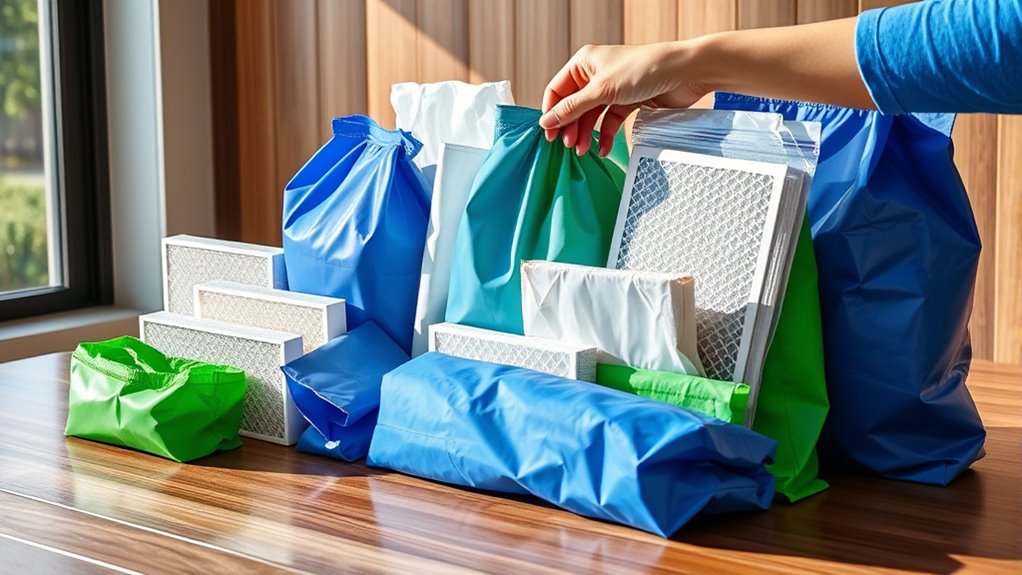
When selecting vacuum bags, look for those labeled as hypoallergenic or designed specifically for allergy relief. These bags trap microscopic particles that could otherwise escape into the air. Many allergy-friendly vacuum brands offer bags that feature multiple layers of filtration, ensuring that allergens remain contained. Brands like Dyson, Miele, and Shark are known for their commitment to creating vacuums that cater to allergy sufferers. By investing in a model from one of these allergy-friendly vacuum brands, you not only improve your vacuum’s performance but also your overall home environment.
Integrating an air purifier with your vacuuming routine is another effective strategy to combat allergens. While your vacuum helps to remove dirt and allergens from floors and surfaces, an air purifier works to cleanse the air in your home. Many modern vacuums come with air purifier integration features, allowing them to filter particles as you clean. This combination can drastically reduce the allergens that linger in your indoor air. When vacuuming, consider running your air purifier simultaneously to enhance the effect. Additionally, using a vacuum with HEPA filtration can significantly improve your home’s air quality by capturing even the smallest allergens.
It’s also important to remember that regular maintenance of your vacuum is key. Changing the vacuum bags and filters frequently ensures peak performance. Clogged or dirty filters can release trapped allergens back into your home, negating all the hard work you put into cleaning. Make it a habit to check and replace these components as needed, and you’ll notice a noteworthy improvement in your overall air quality.
Frequently Asked Questions
How Often Should I Replace Vacuum Bags and Filters?
You should replace vacuum bags and filters every 1 to 3 months, depending on usage. Regular vacuum maintenance is key to ensuring ideal performance and air quality. If you notice reduced suction or increased dust, it might be time to check your filter lifespan. Keeping track of your vacuum’s needs can help you maintain a clean environment and reduce allergens. Don’t wait too long—stay proactive for the best results!
Can I Wash Reusable Vacuum Filters?
Yes, you can wash reusable vacuum filters. Think of your filter as a garden; regular maintenance helps it flourish. To keep it performing well, follow these cleaning tips: rinse it gently under cool water, avoiding harsh chemicals. Let it dry completely before reinserting, as moisture can lead to mold. Regular filter maintenance not only extends its life but also guarantees your vacuum remains efficient, helping you breathe easier in your home!
Are There Specific Brands Recommended for Allergy Sufferers?
Yes, there are specific brands that allergy sufferers often recommend. Look for vacuum cleaners from brands like Dyson, Shark, or Miele, as they offer allergy-friendly options with HEPA filters. These filters capture small particles, helping reduce allergens in your home. Additionally, check out brands like Bissell for their allergen-specific models. Investing in these brands can make a noticeable difference in your indoor air quality and overall comfort.
Is It Safe to Use Second-Hand Vacuum Bags?
Using second-hand vacuum bags isn’t safe, is it? You can’t be sure they’ve been properly cleaned or stored, which could expose you to allergens and bacteria. Used vacuum bags may carry lingering particles that can worsen your allergies. It’s better to invest in new bags that guarantee cleanliness and effectiveness. Protect your health by choosing quality over cost when it comes to vacuum bags. Your well-being deserves that extra care!
What Is the Cost Difference Between Standard and Allergy-Specific Vacuum Bags?
The cost difference between standard and allergy-specific vacuum bags can be significant. Typically, allergy bags cost more due to their specialized materials and filtration capabilities. When you’re making a cost comparison, consider your budget and how much you value effective allergen removal. While standard bags might save you money upfront, investing in allergy-specific bags could provide better health benefits, ultimately justifying the higher price in the long run.
Conclusion
By choosing the right vacuum bags and filters, you’re taking a powerful step towards a cleaner, healthier home, much like finding the perfect key to open fresh air. Remember, high-efficiency options can trap allergens effectively, making your living space a sanctuary from dust and pollen. Regularly replacing these bags and filters guarantees they work at their best. So, invest in quality products, and breathe easier knowing you’re actively fighting against allergens in your environment.