In shared living spaces, choosing a quiet robot vacuum is key to keeping peace and relaxation. Look for models with low noise levels, advanced sensors, and adaptive navigation to avoid bumping into furniture or causing disruptions. Compatibility with smart home systems and easy app control make scheduling simple. By selecting a device that navigates smoothly and operates quietly, you can maintain a calm environment. Want to discover the best options and tips? Keep exploring for more helpful insights.
Key Takeaways
- Choose vacuums with low decibel ratings to minimize noise disturbance in shared living environments.
- Ensure compatibility with various flooring types and smart home systems for seamless operation.
- Prioritize models with advanced sensors for obstacle avoidance and gentle navigation around furniture.
- Read reviews to confirm the vacuum’s quiet operation and effective obstacle handling in cluttered spaces.
- Opt for adaptive navigation features to maintain cleaning efficiency without disrupting residents.
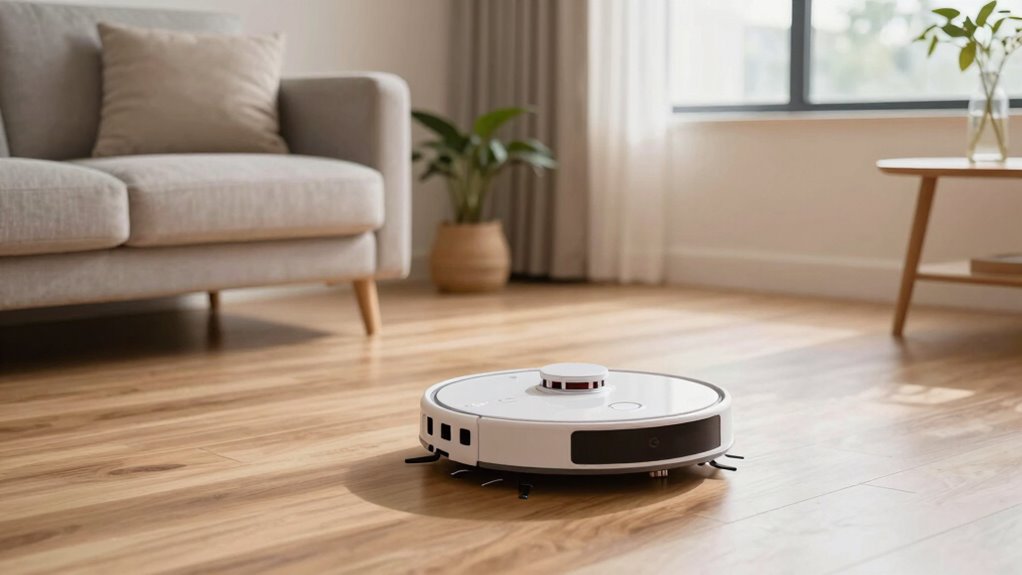
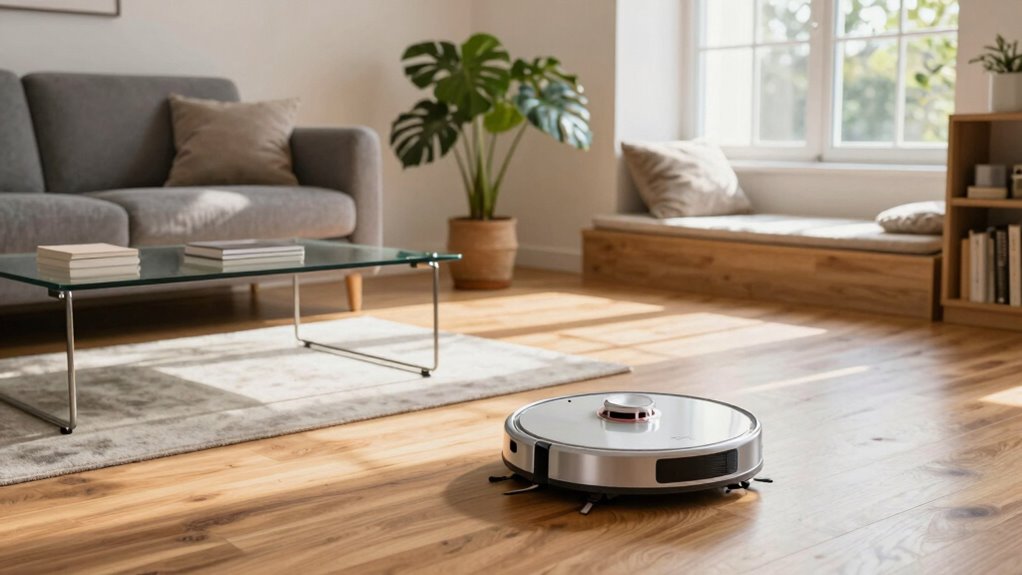
Living in shared spaces means balancing cleanliness with regard for others, and quiet robot vacuums can be a game-changer. These devices help keep your living area tidy without disrupting the peace, which is especially important in environments where noise can easily disturb roommates or neighbors. When selecting a quiet robot vacuum, you’ll want to pay close attention to noise levels. Models designed for quiet operation emit minimal sound, often comparable to a soft conversation or background music. This makes it easier for you to work, relax, or sleep while the vacuum does its job. Reduced noise levels are essential if your shared space includes individuals sensitive to loud sounds or if you’re living in a dorm, apartment, or co-living setup where tranquility is valued. Additionally, considering noise levels and how they impact others can help you choose a more considerate option. Compatibility concerns are another critical factor *to evaluate*. Not all robot vacuums work seamlessly with every type of flooring or smart home system. If your shared space has a mix of carpets, hardwood, or tile, you’ll need a model that can adapt to different surfaces without getting stuck or missing spots. Additionally, if you use voice assistants like Alexa or Google Home, ensure the vacuum you select is compatible, so you can control it effortlessly through your smart devices. Some models also connect via app, allowing you to schedule cleanings or monitor progress remotely, which can be a real convenience in shared living arrangements where schedules often clash. Checking compatibility concerns beforehand saves you from potential frustrations and ensures the vacuum integrates smoothly into your existing setup. In shared spaces, being considerate also means choosing a quiet robot vacuum that can navigate around furniture and other obstacles efficiently. Many modern models feature advanced sensors to avoid collisions and falls, which is essential when multiple people and belongings clutter your environment. These sensors also help minimize disturbances and prevent the vacuum from bumping into items or making excessive noise. In fact, sensor technology plays a crucial role in maintaining both cleanliness and peace. To further ensure a peaceful environment, selecting a model with quiet operation features can make a significant difference. When considering your options, look for reviews that highlight the vacuum’s ability to operate quietly and navigate smoothly in complex environments. This way, you’ll not only keep your space clean but also maintain a peaceful atmosphere for everyone living there. Additionally, choosing a model with adaptive navigation can enhance its ability to handle cluttered or unpredictable shared spaces more effectively.

MONSGA Robot Vacuum and Mop Combo, 90 Days Self-Emptying with 8000Pa Suction, LiDAR Smart Mapping, Dual Anti-Tangle for Pet Hair, Carpet and Hard Floor
8000Pa Max Suction Meets Dual Anti-Tangle Design: From scattered crumbs to fluffy pet fur, this robot vacuum handles…
As an affiliate, we earn on qualifying purchases.
As an affiliate, we earn on qualifying purchases.
Frequently Asked Questions
How Do Quiet Robot Vacuums Handle Pet Hair Effectively?
Quiet robot vacuums handle pet hair effectively by using strong suction power designed specifically for pet hair removal. You’ll notice that they effortlessly pick up hair from carpets and hard floors without disturbing your household. Their quiet operation won’t scare your pets, and their advanced brushes help lift and trap stubborn pet hair even in tight corners. Overall, their combination of suction power and gentle noise makes cleaning pet hair less stressful.
Are Quiet Vacuums Suitable for Hardwood and Carpeted Floors?
You’ll find quiet vacuums work well on hardwood and carpets, proving that silence isn’t golden when cleaning. They handle different surfaces with ease, thanks to adjustable settings. With lower noise levels, you won’t disturb your household, and impressive battery life ensures thorough cleaning sessions. Just keep in mind, a little maintenance guarantees a long-lasting performance, so your vacuum keeps humming smoothly through every corner and crack.
What Maintenance Is Required for Long-Term Quiet Vacuum Operation?
To keep your quiet robot vacuum running smoothly, regularly check the battery lifespan and replace it when it shows signs of weakening. Empty the dustbin capacity after each use to prevent clogs and maintain peak suction. Clean the brushes and filters weekly, and inspect for tangled hair or debris. These simple maintenance steps ensure long-term operation, keeping your vacuum quiet and effective in shared living spaces.
Can Quiet Robot Vacuums Be Programmed for Multiple Cleaning Schedules?
Can you program quiet robot vacuums for multiple cleaning schedules? Absolutely! Most models let you set various cleaning modes and schedules tailored to your routine. With efficient battery life, they can handle different chores throughout the day. Imagine waking up to a freshly cleaned space—don’t you want a vacuum that adapts to your busy life? Programming multiple schedules makes maintaining a tidy home effortless and convenient.
Do Quiet Vacuums Have Any Impact on Wi-Fi or Smart Home Devices?
Quiet vacuums generally don’t cause Wi-Fi interference or signal disruption, but some models with strong wireless signals might slightly affect your smart home devices. If your vacuum uses Wi-Fi to connect, it could potentially interfere with other wireless gadgets, especially if multiple devices compete for the same bandwidth. To prevent issues, guarantee your Wi-Fi network has enough bandwidth and use a dual-band router to minimize signal disruption.

Shark AV2501S AI Ultra Robot Vacuum, with Matrix Clean, Home Mapping, 30-Day Capacity HEPA Bagless Self Empty Base, Perfect for Pet Hair, Wifi, Dark Grey
INCREDIBLE SUCTION: Powerful Shark suction picks up dirt and debris on all floor types—tackling even the toughest of…
As an affiliate, we earn on qualifying purchases.
As an affiliate, we earn on qualifying purchases.
Conclusion
In shared living spaces, a quiet robot vacuum can be a game-changer, keeping your environment clean without disturbing others. It’s essential to choose one that operates silently and efficiently, making your daily chores easier. Remember, “A little noise, a lot of comfort,” so invest in a model that balances power and quietness. By doing so, you’ll foster harmony and enjoy a cleaner, more peaceful home for everyone.

ROPVACNIC Robot Vacuum Cleaner Robot Vacuum and Mop Combo with 5200Pa Suction, Personalized Cleaning Adjustments, Self-Charging Robotic Vacuum Cleaner, Advanced Obstacle Avoidance
【2-in-1 Mopping and Vacuuming】 The ROPVACNIC Robot S1 integrates advanced electronically controlled mopping technology, significantly enhancing both cleaning…
As an affiliate, we earn on qualifying purchases.
As an affiliate, we earn on qualifying purchases.

iRobot Roomba 105X Robot Vacuum, Smart LiDAR Mapping, 70X Power‑Lifting Suction, Custom Room Cleaning, App & Voice Control, Auto Recharge, Great for Homes with Pets & Kids
POWERFUL CLEANING YOU CAN SEE—AND FEEL. The Roomba 105X devours dirt with 70X more power‑lifting suction* to pull…
As an affiliate, we earn on qualifying purchases.
As an affiliate, we earn on qualifying purchases.