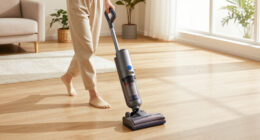
To boost air freshness with better floor cleaning, start by regularly sweeping, vacuuming with a HEPA filter, and deep cleaning with eco-friendly solutions like vinegar or baking soda. Guarantee good ventilation during and after cleaning to dissipate fumes, and use air purifiers to remove airborne particles. Choosing low-VOC products helps prevent chemical residues from lingering. Keeping these habits consistent keeps your indoor air cleaner and healthier—discover more tips to maintain a fresher environment.
Key Takeaways
- Use natural, non-toxic cleaning agents like vinegar and baking soda to eliminate odors without chemical residues.
- Regularly sweep, vacuum with HEPA filters, and deep clean floors to remove dust and airborne particles.
- Improve ventilation during and after cleaning by opening windows and using exhaust fans to disperse fumes.
- Incorporate air purifiers to capture airborne pollutants and enhance overall indoor air quality.
- Establish a consistent cleaning routine and choose low-VOC products to maintain long-term air freshness.
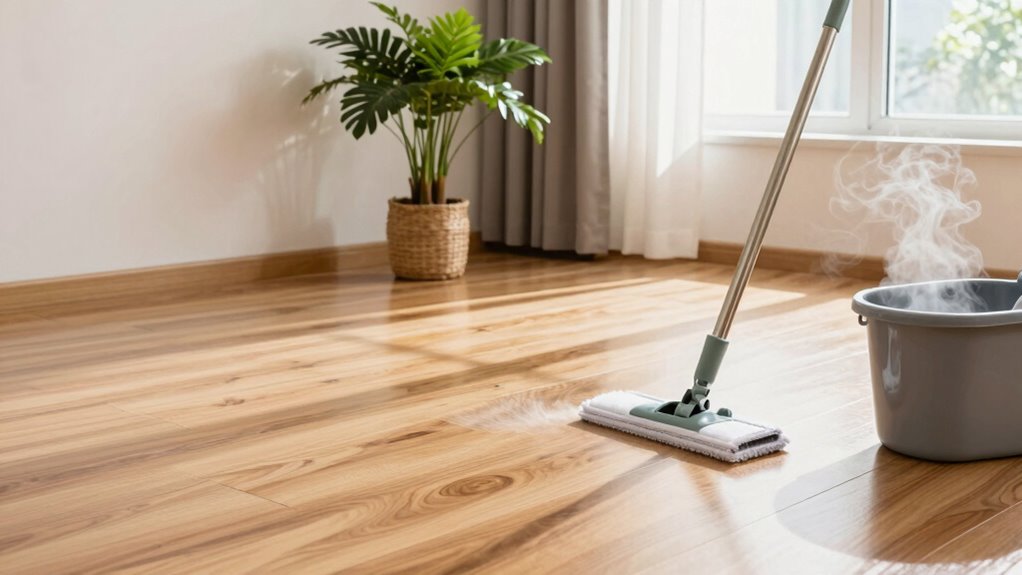
A fresh, clean home starts from the ground up, and improving air quality often begins with better floor cleaning. Your floors are the foundation of your space, and they can trap dust, dirt, pet dander, and other airborne particles that impact the air you breathe. When you prioritize thorough cleaning, you’re actively reducing these sources of indoor pollution, making your environment healthier and more comfortable. Using the right cleaning agents is essential because some products can leave behind residues or fumes that diminish air quality. Opt for eco-friendly, non-toxic cleaning solutions that are designed to clean effectively without introducing harsh chemicals into your home. Natural options like vinegar and baking soda not only clean well but also leave no lingering odors or chemical residues, which helps improve overall air freshness.
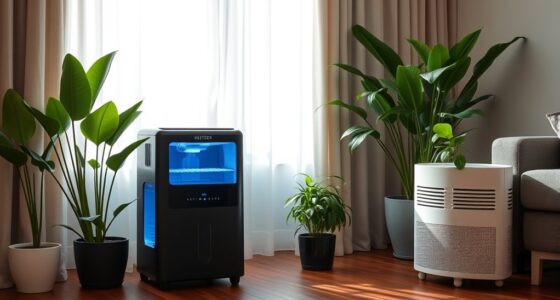
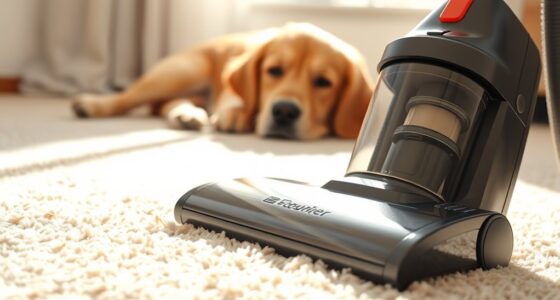
Regular sweeping and vacuuming are fundamental first steps because they remove loose debris that can become airborne when disturbed. Invest in a vacuum cleaner with a HEPA filter, which captures tiny particles and prevents them from recirculating into the air. For mopping, choose cleaning agents that are specifically formulated to pick up dirt without leaving behind residue. When mopping, avoid overly fragrant or chemically laden products; instead, use gentle, natural solutions that won’t compromise your indoor air quality. Remember, the goal is to eliminate dirt and contaminants, not just move them around or mask odors with artificial fragrances. Incorporating air purifying tools such as air purifiers can further enhance indoor air quality by capturing airborne pollutants that settle on floors and surfaces. Additionally, proper ventilation helps to dissipate fumes and maintain a healthier indoor environment.
Deep cleaning your floors periodically is another key to maintaining air freshness. Use steam mops or deep-cleaning machines with natural cleaning agents to reach beneath surface layers and remove embedded dirt. This process not only refreshes your floors but also reduces the accumulation of dust and allergens that could otherwise become airborne. Proper ventilation during and after cleaning helps dissipate any fumes from cleaning agents, further improving indoor air quality. Keep windows open when possible and use exhaust fans to move stale air out and bring in fresh air. Additionally, choosing airless paint spraying tools for certain cleaning projects can help minimize airborne dust and debris during renovations or touch-ups.
Finally, consistency is vital in maintaining a healthier environment. Establish a routine cleaning schedule that includes both regular sweeping and periodic deep cleaning. Over time, this habit reduces the buildup of airborne particles and minimizes the need for heavy-duty cleaning. When selecting cleaning agents, always read labels carefully and choose products that are low in volatile organic compounds (VOCs). Proper cleaning practices and the use of air quality improvement methods ensure that your efforts to keep your floors spotless won’t compromise the air you breathe, resulting in a fresher, healthier home environment.

Shark Navigator Lift-Away Vacuum, HEPA, Carpet and Pet Hair, Blue, NV360
- Powerful Multi-Surface Suction: Cleans carpets and hard floors effectively
- Lift-Away for Above-Floor Cleaning: Detachable pod for stairs and furniture
- Pet Hair Removal: Specialized tools for pet hair cleanup
As an affiliate, we earn on qualifying purchases.
As an affiliate, we earn on qualifying purchases.
Frequently Asked Questions
Can Specific Floor Cleaning Products Eliminate All Odors?
Specific floor cleaning products can markedly reduce odors, but they might not eliminate all of them completely. Look for products with odor absorption properties to effectively neutralize smells. However, be cautious of chemical residues left behind, which can sometimes contribute to lingering odors or irritate your indoor air. For the best results, regularly deep clean and ventilate your space, and consider using natural deodorizing solutions alongside your chosen cleaner.
How Often Should I Deep Clean My Floors for Optimal Freshness?
You should deep clean your floors every 4 to 6 weeks to maintain ideal freshness. Regular mopping frequency depends on foot traffic—aim for at least once a week, or more if you have pets or kids. Sticking to a consistent cleaning schedule ensures odors don’t build up and keeps your living space smelling fresh. Don’t forget—deep cleaning removes hidden dirt and bacteria that regular mopping might miss.
Do Certain Flooring Types Trap More Odors Than Others?
Yes, certain flooring types trap more odors than others. For example, carpet and cork floors absorb odors easily due to their porous nature, making them prone to trapping smells over time. Hardwood and tile floors, being less porous, resist odor absorption better. To keep your space fresh, choose flooring that suits your lifestyle, and regularly clean and ventilate your home to reduce odor buildup.
Can Air Purifiers Enhance the Effects of Floor Cleaning?
Imagine you’ve just deep-cleaned your floors, but odors linger. An air purifier can improve this effect by continuously filtering airborne particles and odors. Regular air purifier maintenance guarantees ideal performance, while air quality sensors help you monitor improvements. Using both, you create a healthier environment, especially in spaces prone to odors. This combination effectively boosts air freshness, making your home feel cleaner and more inviting.
Are There Natural or Homemade Solutions for Fresher Floors?
Yes, you can use DIY remedies to make your floors smell fresher. Mix a few drops of essential oils like lavender or lemon with water and a small amount of vinegar or baking soda for a natural cleaning solution. Spray this mixture onto your floors after cleaning, or add the oils to your mop water. This not only cleans but also leaves a pleasant, natural fragrance that improves air freshness.
Conclusion
By regularly deep-cleaning your floors with eco-friendly solutions, you can substantially boost your home’s air quality. Imagine stepping into a living room that smells fresh and feels inviting, thanks to your diligent cleaning routine. For instance, after switching to natural vinegar and baking soda, Sarah noticed her family’s allergy symptoms lessen and her space smelled cleaner than ever. Consistent effort not only keeps your floors sparkling but also creates a healthier, more invigorating environment for everyone.