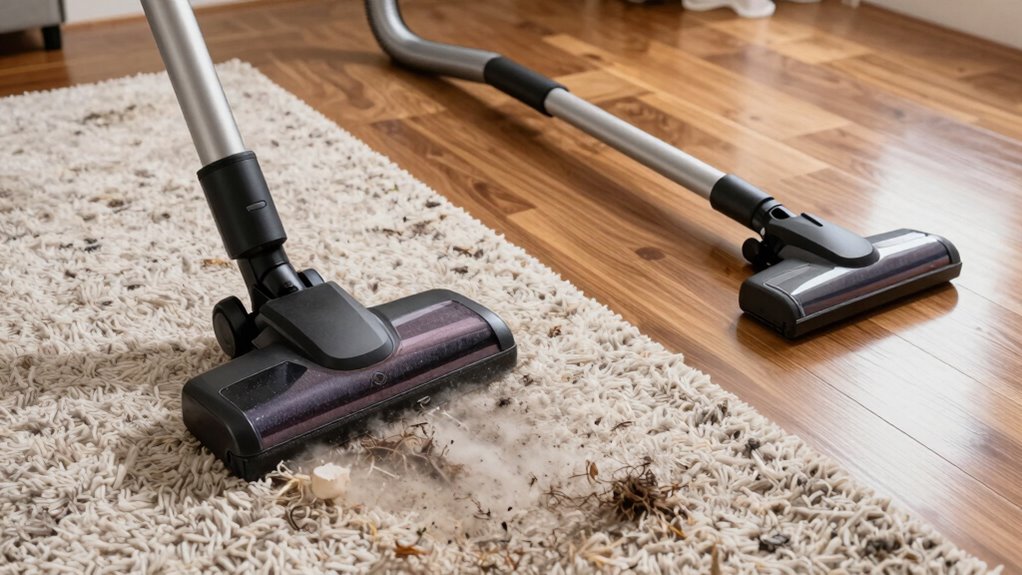
If your vacuum isn’t effectively cleaning different floors or causes damage, it might be the wrong fit for your needs. Look for signs like poor suction, difficulty shifting between surfaces, and uneven cleaning results. Check if it struggles with pet hair, crumbs, or dust, or if it leaves dirt behind. If you notice scratches on your hardwood or excessive noise, your vacuum may not be suitable. Keep going to uncover more tips on matching your vacuum to your floors.
Listen free for 30 days with Audible
Thousands of audiobooks and originals — cancel anytime.
As an affiliate, we earn on qualifying purchases.
Key Takeaways
- The vacuum leaves dirt behind or fails to thoroughly clean carpets and hard floors.
- It causes scratches, dullness, or damage to hardwood surfaces after use.
- Suction power is weak, inconsistent, or struggles across different floor types.
- It requires frequent adjustments or attachments, indicating poor adaptability.
- The vacuum produces excessive noise or clogs easily, signaling incompatibility with your flooring.
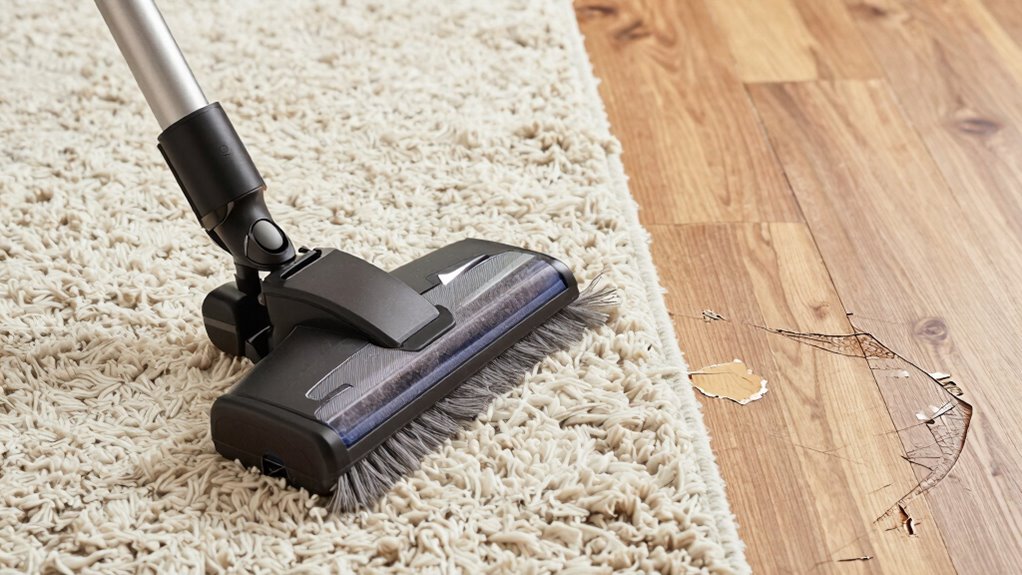
Choosing the right vacuum for your floors isn’t just about convenience—it’s essential for effective cleaning and protecting your surfaces. When your vacuum isn’t a good fit, you’ll notice it in how well it handles different flooring types, especially when it comes to carpet maintenance and hardwood cleaning. If your vacuum struggles to remove debris from carpets or leaves scratches on your hardwood floors, it’s a clear sign that you might need a different model or setting.
Choosing the right vacuum protects surfaces and ensures effective cleaning across different flooring types.
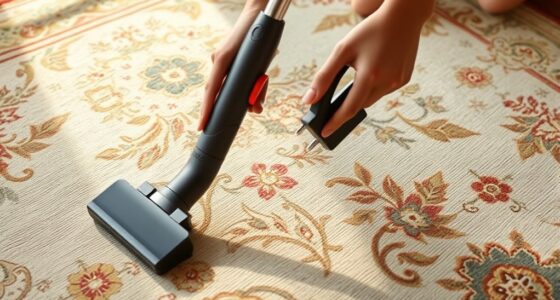
For carpets, a vacuum that isn’t suited for deep cleaning can leave dirt buried and reduce the longevity of your carpet fibers. If you find that your vacuum isn’t pulling up pet hair, crumbs, or dust effectively, it might lack the necessary power or proper brush roll for thorough carpet maintenance. A vacuum with a brush that’s too stiff can damage delicate fibers, while one with a brush that’s too soft won’t pick up dirt efficiently. If you notice uneven cleaning or that dirt remains after vacuuming, it’s a strong indication that your device isn’t optimized for your carpet type.
When it comes to hardwood cleaning, the wrong vacuum can cause more harm than good. If your hardwood floors develop scratches, gouges, or a dull appearance after vacuuming, your vacuum might have a beater bar or brush roll that’s too aggressive. Additionally, vacuums with poor filtration or inadequate suction can leave dust and debris behind, negatively impacting indoor air quality. A vacuum designed specifically for hardwood floors will have soft brush attachments or no brush at all, ensuring gentle but effective cleaning without scratching or damaging the surface. Understanding the horsepower of electric dirt bikes can help you appreciate the importance of choosing a vacuum with sufficient suction power to handle different floor types effectively. Moreover, selecting a vacuum with appropriate flooring compatibility can prevent damage and improve cleaning results.
You should also pay attention to how your vacuum handles transitions between different floors. If you have a mix of carpets and hardwood, an unsuitable vacuum might require frequent adjustments or cause inefficiency. If your vacuum keeps clogging, losing suction, or making excessive noise, these are signs it may not be well-matched to your flooring types. A model with adjustable height settings or multiple attachments can help, but if you’re constantly fighting your vacuum or seeing subpar results, it’s time to reconsider your choice. Additionally, a vacuum’s ability to transition smoothly across different surfaces can significantly influence cleaning efficiency. Choosing a vacuum with multi-surface compatibility and adjustable features can make a substantial difference in maintaining your floors effectively. Recognizing the importance of correct vacuum selection can save you time and prevent potential surface damage.
As an affiliate, we earn on qualifying purchases.
Frequently Asked Questions
Can Using the Wrong Vacuum Damage My Floors Permanently?
Using the wrong vacuum can damage your floors permanently, especially if it’s not compatible with your carpet or hard surfaces. For instance, a vacuum designed for carpets might be too harsh on delicate floors, causing scratches or wear. Also, a vacuum with an overly long cord can accidentally scratch or dent your floors if you’re not careful. Always check carpet compatibility and choose a vacuum with appropriate cord length to protect your floors.
How Often Should I Replace My Vacuum for Different Floor Types?
You should replace your vacuum every 3-5 years, depending on usage and maintenance. Regular vacuum maintenance, like cleaning filters and brushes, keeps it functioning well. If dust collection becomes less effective or it struggles with your floor type, it’s time for a new one. Different floors need specific vacuums; replacing it guarantees ideal cleaning and prevents damage, especially if your current model isn’t suited for your flooring.
Are There Specific Vacuums Better Suited for Hardwood Versus Tile?
Yes, some vacuums are better suited for hardwood than tile. Robot vacuums with adjustable suction and gentle brushes work well on hardwood, preventing scratches. For tile, look for models with strong suction and a good tile attachment to clean grout lines effectively. Using the right carpet attachments on hardwood can cause damage, so choose vacuums with specialized tools for each surface to keep your floors pristine.
What Signs Indicate My Vacuum Is Causing Floor Damage?
Signs your vacuum’s harming your floors include scratched surfaces, peeling finishes, or dullness. You might notice increased dust clearance struggles or scratch marks after cleaning. Regular vacuum maintenance can prevent damage, ensuring gentle yet effective dust clearance. If your vacuum’s brush rolls are too aggressive or wheels are rough, they can gouge or scuff flooring. Pay close attention to these signs and keep your vacuum properly maintained to protect your floors.
Does Vacuum Weight Affect Its Suitability for Certain Floors?
Yes, vacuum weight affects its suitability for certain floors. Heavier vacuums can damage delicate surfaces like hardwood or tile if they’re not designed for it. You might find it harder to maneuver or feel like you’re exerting too much pressure, which could scratch or dent your floors. For ideal floor suitability, choose a lightweight vacuum for delicate surfaces and a more powerful one for carpets, ensuring you protect your floors while cleaning effectively.
Conclusion
Choosing the right vacuum is like finding the perfect dance partner for your floors—when you’re in sync, cleaning feels effortless and graceful. If your vacuum struggles or leaves behind messes, it’s like trying to dance with the wrong partner—awkward and frustrating. Pay attention to those signs, and don’t settle for a mismatch. Finding the right fit guarantees your floors shine like stars, sparkling with every sweep, and your cleaning routine becomes a smooth, harmonious waltz.
Flea & tick season Picks
flea and tick prevention
As an affiliate, we earn on qualifying purchases.