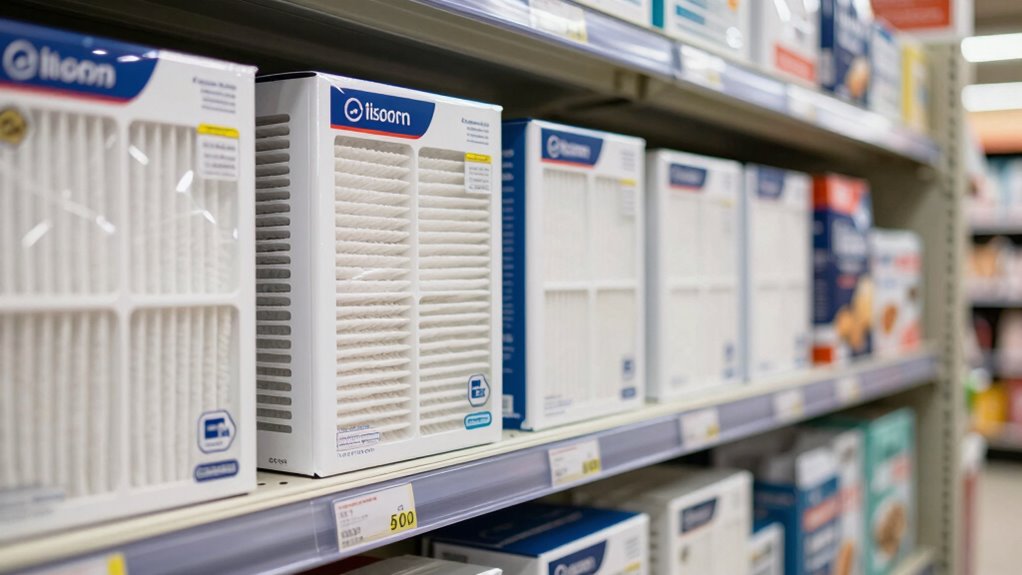

HEPA language can be confusing because manufacturers often use terms like “HEPA-like,” “HEPA-type,” or “HEPA-style” that suggest the filter is as effective as true HEPA but may not be. Vague labels and marketing buzzwords make it hard to tell real performance from imitation. Without clear certifications, you might overestimate a filter’s ability. If you want to protect yourself from misleading claims, understanding these terms can help you make better choices—more details ahead.
Key Takeaways
- Vague terms like “HEPA-like” or “HEPA-style” suggest high filtration but often lack verified performance.
- Manufacturers may omit strict standards, making it hard to verify true HEPA certification.
- Lack of clear labeling and certification marks leads consumers to rely on misleading marketing claims.
- Industry standards and testing procedures are not always transparently communicated or enforced.
- Consumers struggle to differentiate genuine HEPA filters from imitations without technical knowledge.
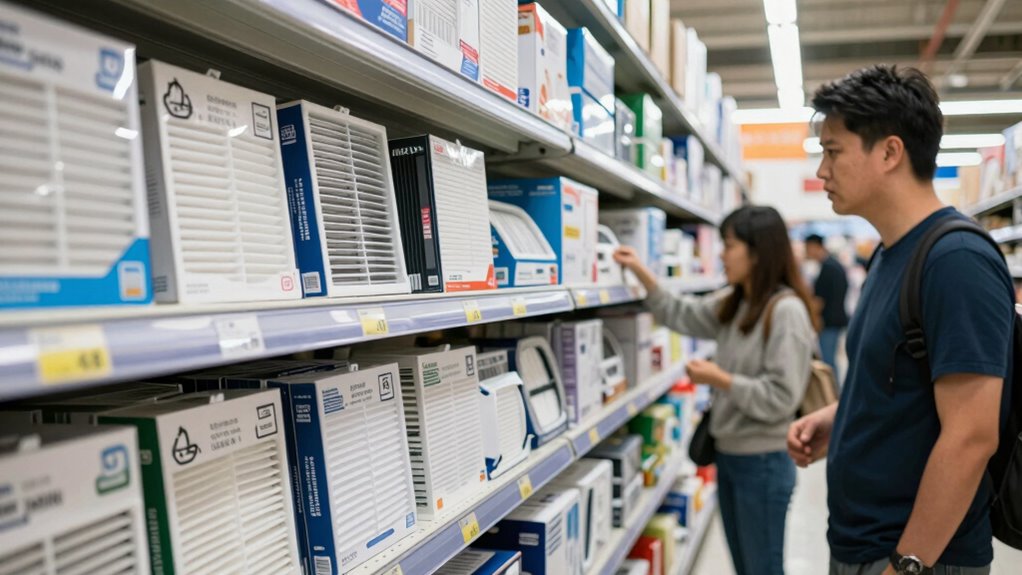
Many shoppers find themselves confused by the confusing language used to describe HEPA filters. When you’re trying to choose an air purifier, the terminology can seem overwhelming and inconsistent. This confusion often stems from how companies label and market their products, especially when it comes to air filtration capabilities. You might see terms like “HEPA-like,” “HEPA-type,” or “HEPA-style,” which can make it difficult to understand what you’re actually getting. These labels can be misleading, leading you to believe that all filters meeting those descriptions perform the same way, but that’s not always true. Clear product labeling is essential because it helps you compare products and understand their true performance. However, manufacturers don’t always follow strict standards when describing their filters, which leaves you guessing about their effectiveness. Recognizing the importance of verification standards can help you make more informed choices and avoid falling for misleading claims. Additionally, understanding filtration efficiency is crucial for assessing a filter’s true capability to remove airborne particles.
Understanding air filtration means recognizing what to look for on product labels. Genuine HEPA filters will usually include certification marks or specific mentions of meeting the U.S. Department of Energy or other recognized standards. When labels are vague or use ambiguous language, it’s a red flag. You need to read carefully and look beyond the marketing buzzwords, focusing instead on the technical details. Many manufacturers try to make their filters sound more powerful or advanced than they really are by using vague terminology, which adds to the confusion. This makes it difficult for you to make an informed choice based on actual performance rather than marketing hype. Knowing how to interpret product certification marks can greatly improve your ability to identify authentic HEPA filters. Additionally, understanding the industry standards helps ensure you’re not misled by products that only imitate the true HEPA filtration process. To further clarify, researching the testing procedures used for these filters can help you distinguish genuine HEPA filters from imitations. Ultimately, the language used in product labeling can obscure the truth about how well a HEPA filter works. If you want to guarantee you’re getting a true HEPA filter, you need to understand what the labels mean and look for clear, verifiable standards. By doing so, you can avoid being misled by misleading terminology and select an air filtration product that genuinely improves indoor air quality. The key is to educate yourself on the language used and to scrutinize the product details carefully.

MK06 MK01 True HEPA Replacement Filter Compatible with AROEVE MK01 MK06, VOOPNU DH-JH12, DH-JH01, Tolife TZ-K1 and FreAire KN6391 Air Purifier, Standard Version, 3 Pack
- Compatibility: Fits AROEVE, Kloudi, VOOPNU, Tolife, FreAire
- Aromatherapy Pads: Includes 10 pads for fragrant air
- Filtration Technology: 360° True HEPA and activated carbon
As an affiliate, we earn on qualifying purchases.
As an affiliate, we earn on qualifying purchases.
Frequently Asked Questions
What Does “Hepa” Stand for Exactly?
HEPA stands for High Efficiency Particulate Air, which is a standard for air filters. It means the filter meets strict HEPA standards for capturing at least 99.97% of particles that are 0.3 microns in size. These filters use special filter materials designed to trap tiny particles, including allergens, dust, and bacteria. When shopping, look for HEPA labels to guarantee you’re getting effective filtration according to these standards.
Are All HEPA Filters the Same Quality?
Not all HEPA filters are created equal—some are like sturdy shields, while others fade like mist. The quality varies with filter durability and allergen effectiveness. A high-quality HEPA filter captures tiny particles and lasts longer, providing better protection for your lungs. You want one that stands strong against allergens, ensuring cleaner air. So, don’t settle for just any filter; choose one that delivers true HEPA power.
How Often Should I Replace My HEPA Filter?
You should replace your HEPA filter every 6 to 12 months to maintain ideal air quality. The filter lifespan depends on factors like usage, air pollution levels, and pet dander. Regular replacement ensures your air purifier works efficiently, reducing allergens and pollutants. Keep an eye on the manufacturer’s recommendations, and if you notice decreased airflow or persistent odors, it’s time for a new filter to keep your indoor environment healthy.
Can HEPA Filters Remove All Types of Allergens?
You might find that HEPA filters work wonders for air purification, but they don’t catch every tiny allergen out there. While they excel at allergen removal for common particles like dust, pollen, and pet dander, some microscopic allergens, like certain bacteria or viruses, can slip through. So, for complete protection, combine HEPA filters with other cleaning methods to truly enhance your indoor air quality and reduce allergen exposure.
Do HEPA Filters Work for Odors and Gases?
HEPA filters primarily focus on air purification by capturing tiny particles like dust, pollen, and pet dander, but they don’t effectively eliminate odors and gases. For odor elimination, you’ll want to look for air purifiers that include activated carbon or charcoal filters, which absorb and neutralize smells and airborne gases. Combining a HEPA filter with an activated carbon filter provides thorough air purification and odor control.
Conclusion
Understanding HEPA language is like deciphering a secret code, but once you crack it, the fog lifts, and clarity shines through. Don’t let confusing labels weigh you down; instead, arm yourself with knowledge and confidence. Remember, once you get the hang of it, choosing the right air purifier becomes as natural as breathing. So, stay curious, ask questions, and let your understanding clear the air—literally and figuratively.