If you suffer from allergies, choose a vacuum with HEPA filters and a sealed system to effectively trap airborne allergens like dust mites, pet dander, pollen, and mold spores. These features prevent allergens from escaping back into your indoor air, helping reduce symptoms and improve air quality. Regular filter changes and proper maintenance keep your vacuum working at its best. Keep looking to discover how to select and use these vacuums for cleaner, healthier indoor environments.
Key Takeaways
- HEPA filters trap tiny allergens like pollen, dust mites, and pet dander, reducing airborne irritants effectively.
- Sealed vacuum systems prevent allergen escape during cleaning, ensuring containment and better indoor air quality.
- Vacuums designed for allergies include specialized tools to reach hard-to-access areas and remove embedded allergens.
- Integrating air purifiers with vacuums enhances allergen removal and maintains cleaner indoor environments.
- Regular filter replacement and maintenance are essential to sustain vacuum performance and prevent allergen leakage.
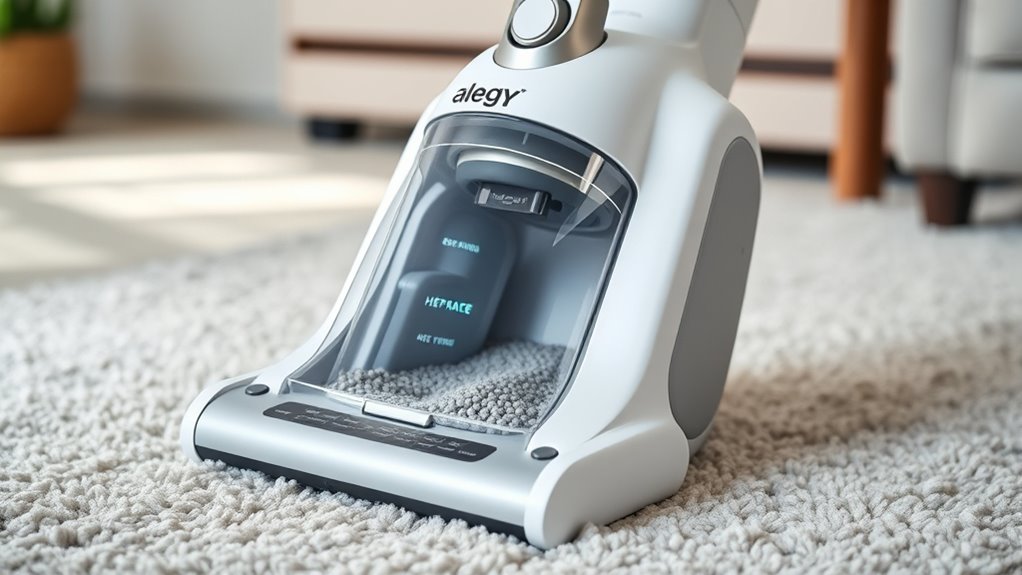
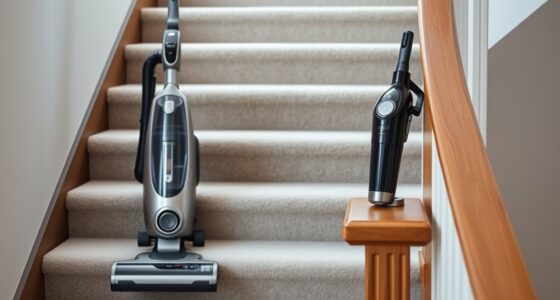
If you suffer from allergies, choosing the right vacuum can make a significant difference in your daily comfort. A vacuum with HEPA filters and a sealed system can trap allergens effectively, preventing them from recirculating into the air you breathe. These vacuums are designed to capture tiny particles like dust mites, pet dander, pollen, and mold spores, which are common triggers for allergy symptoms. When shopping for a vacuum, look for models that offer air purifier integration. This feature allows the vacuum to work seamlessly with your existing air purifier or even incorporate its own air cleaning capabilities, providing a two-pronged approach to allergen control. An air purifier integrated into your cleaning routine can help maintain cleaner indoor air, especially in spaces where allergens tend to accumulate. Proper maintenance and filter replacement are essential to ensure continued effectiveness and prevent the buildup of pollutants in the system. In addition to advanced filtration, allergy-friendly accessories can enhance your vacuum’s efficiency. These accessories include specialized brushes and nozzles designed to reach tight corners, upholstery, and delicate fabrics where allergens often hide. Using these tools ensures that you’re not just cleaning surfaces but also removing allergens from soft furnishings and hard-to-reach places. It’s essential to use the right attachments consistently to maximize allergen removal, especially in bedrooms and living areas where you spend the most time.
Choosing vacuums with HEPA filters and air purifier integration helps reduce allergens and improves indoor air quality.
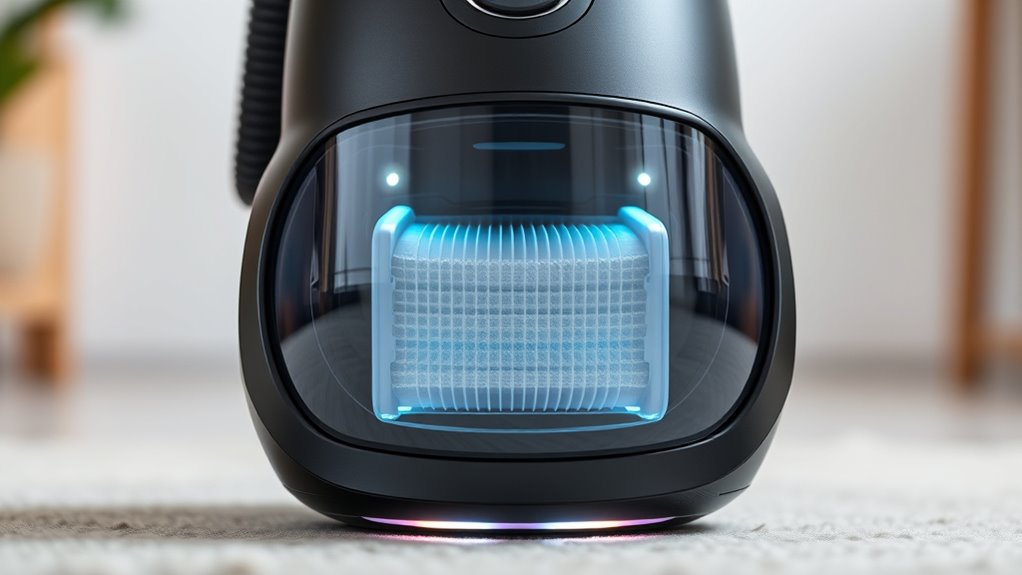
Sealed systems are critical because they prevent dust and allergens from escaping back into the environment during cleaning. When you operate a vacuum with a sealed system, the air is contained within the machine, and all debris is trapped inside a high-efficiency filter. This prevents allergens from leaking out through gaps or filters that aren’t properly sealed. Regularly replacing HEPA filters and maintaining the integrity of the system ensures your vacuum continues to perform at its best, safeguarding your indoor air quality. Choosing a vacuum with a sealed system is especially important for allergy sufferers, as it minimizes the risk of reintroducing allergens into your living space.
Frequently Asked Questions
Can HEPA Filters Remove Odors From Vacuuming?
Yes, HEPA filters can help remove odors from vacuuming, especially if your vacuum has good air purifier compatibility. While HEPA filters excel at trapping allergens, their effectiveness against odors depends on whether they include activated carbon or odor-absorbing layers. To truly eliminate odors, look for vacuums with sealed systems and filters designed for allergen trap effectiveness, ensuring both cleaner air and a fresher home environment.
How Often Should HEPA Filters Be Replaced?
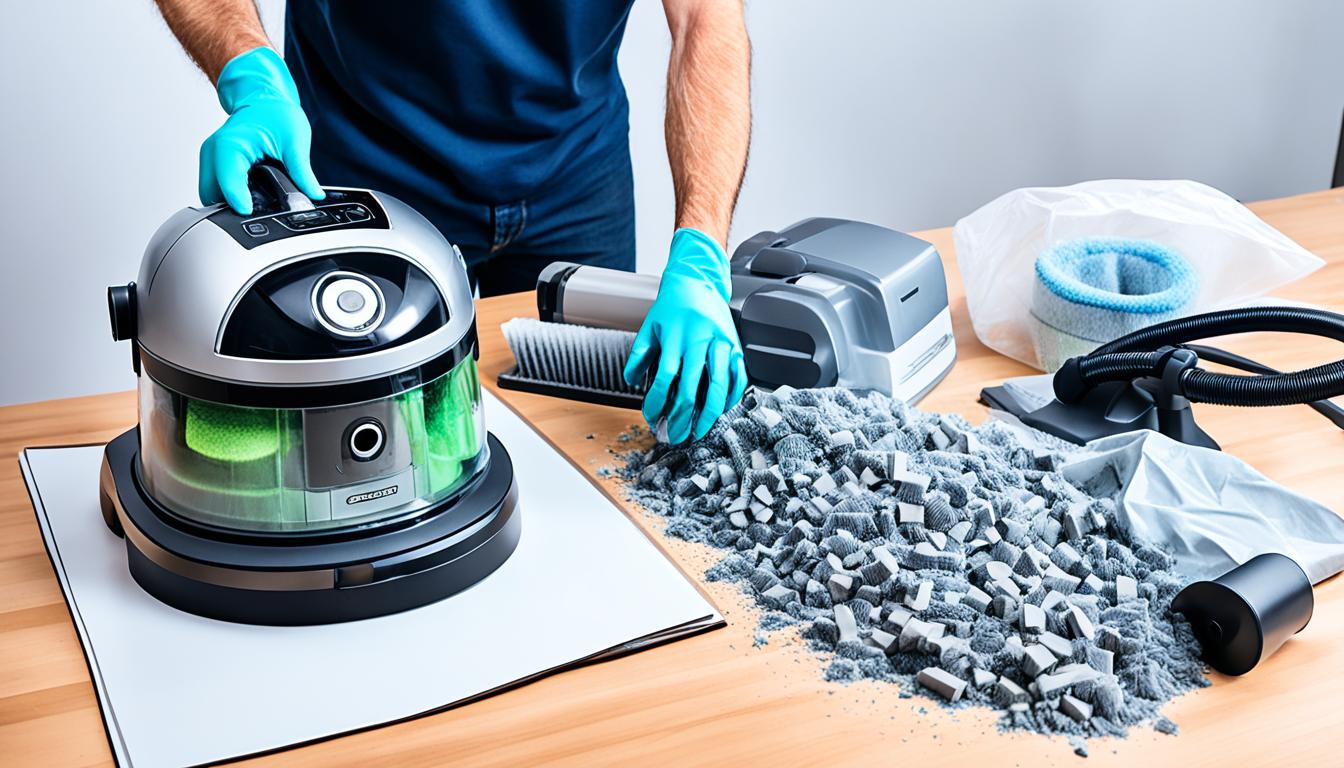
Changing your HEPA filter is like giving your vacuum a fresh breath. You should replace the filter every 6 to 12 months, depending on your usage and filter lifespan. Regularly checking it guarantees maximum allergy protection. If you notice decreased suction or persistent odors, it’s time for a replacement. Following the recommended replacement schedule keeps your vacuum working efficiently and maintains a healthier indoor environment.
Do Sealed Systems Prevent All Allergen Leaks?
Sealed systems considerably reduce allergen escape, but they can’t prevent all leaks entirely. With sealed containment, allergens stay trapped inside the vacuum, minimizing escape during use. However, if the system isn’t properly maintained or if seals wear out, some allergen escape might occur. To maximize protection, make sure your vacuum is well-sealed, and replace filters regularly. Proper maintenance helps keep allergens contained and your indoor air cleaner.
Are Bagless Vacuums Better for Allergy Sufferers?
Bagless vacuums can be allergy-friendly, especially if they have HEPA filters and sealed systems, but they aren’t always better for allergy sufferers. The advantages of bagless models include easy emptying and visibility of dirt, but they may release allergens if not properly maintained. To maximize allergy protection, choose a bagless vacuum with high-efficiency filters and make sure you regularly clean filters and components.
Can Vacuuming Reduce Allergy Symptoms Significantly?
Yes, vacuuming can considerably reduce allergy symptoms by removing airborne allergens like dust mites, pet dander, and pollen. To maximize benefits, you should vacuum regularly—ideally at least twice a week—and use a vacuum with a HEPA filter or sealed system. Consistent cleaning prevents allergen buildup, helping you breathe easier and minimize allergy flare-ups over time.
Conclusion
Choosing a HEPA-filtered, sealed system vacuum isn’t just about cleaning—it’s about reclaiming your space and breathing freely. Think of your home as a fortress, where allergens can’t breach your defenses. With the right vacuum, you turn the tide against dust and pet dander, transforming your environment into a sanctuary of health. Don’t just clean—conquer your allergies, and let your home breathe with renewed vigor. Your comfort is worth every effort.