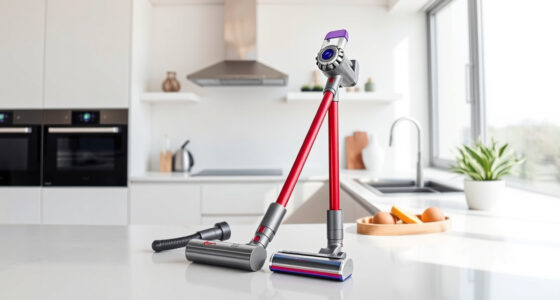
When choosing between bagged and bagless vacuums, consider your cleaning habits and dust management needs. Bagged vacuums offer superior dust capacity and minimize allergen exposure, making them ideal for allergy sufferers. On the other hand, bagless vacuums are more convenient, with no bags to replace, but require regular filter maintenance. Your decision should balance maintenance preferences and dust control. If you want to discover more details on their specific pros and cons, keep exploring further.

Get cleaning gear delivered free — and shop member deals
- Fast, free delivery on millions of items
- Access to Prime Big Deal Days deals on October 6–7
- Prime Video, Amazon Music and more included
Key Takeaways
- Bagged vacuums offer superior dust capacity, reducing the frequency of emptying and minimizing allergen exposure during disposal.
- Bagless vacuums are more convenient for maintenance, allowing easy visibility of dirt levels and hassle-free emptying.
- Bagged models incur ongoing costs for replacement bags, while bagless vacuums may require regular filter cleaning to maintain efficiency.
- Allergy sufferers benefit from bagged vacuums as they minimize dust clouds during emptying, making them ideal for sensitive environments.
- The choice between bagged and bagless vacuums depends on personal preferences for dust management, maintenance frequency, and cost considerations.
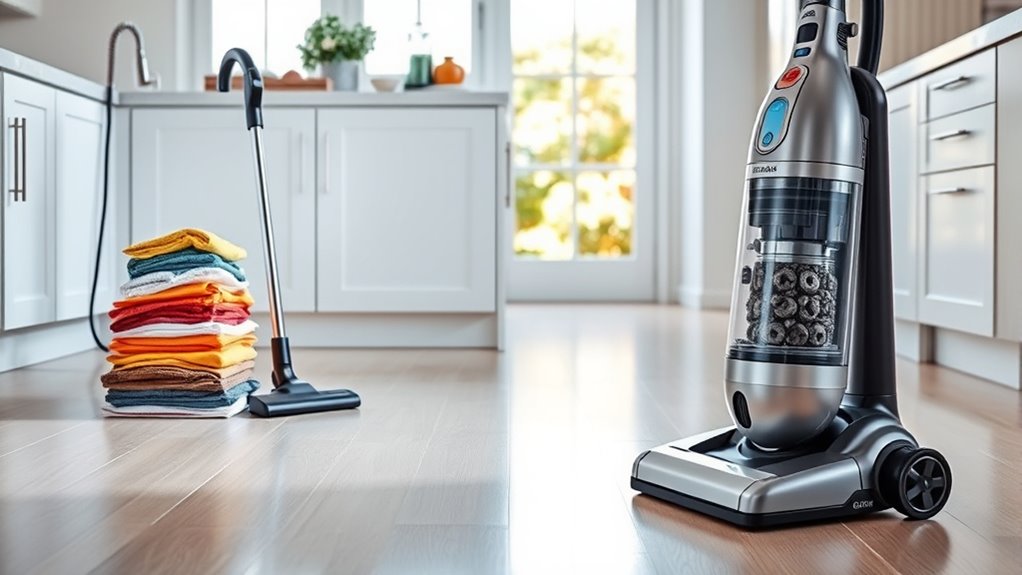
When you’re deciding between bagged and bagless vacuums, it’s essential to think about your cleaning habits and preferences. Each type has its own advantages and drawbacks that can profoundly impact your cleaning experience. If you’re someone who values convenience and hassle-free maintenance, bagless vacuums might catch your attention. However, if you’re concerned about allergens and dust capacity, bagged models might be the better fit for you.
Bagged vacuums generally offer superior dust capacity. The bags hold a considerable amount of dirt and debris, allowing you to clean for a longer period without needing to empty them. This is particularly useful if you’ve got pets or live in a dusty environment. You’ll find yourself changing the bags less frequently, which can save you time in the long run. Plus, when you do need to change the bag, you can do so without creating a cloud of dust. This can be a noteworthy advantage for allergy sufferers, as it minimizes exposure to allergens during the emptying process.
Bagged vacuums excel in dust capacity, making them ideal for pet owners and allergy sufferers who seek a cleaner environment.
On the flip side, bagless vacuums have become increasingly popular due to their lower ongoing costs. Since you won’t need to purchase bags, you might feel like you’re saving money over time. Additionally, many bagless models come equipped with transparent dust containers, allowing you to see when it’s time to empty them. This visibility can help you maintain your vacuum more effectively. However, keep in mind that filter maintenance can be a bit more involved with bagless models. You’ll need to regularly clean or replace the filters to ensure they work efficiently, which can add to your overall maintenance routine. Furthermore, electric dirt bikes have become increasingly popular for those who appreciate eco-friendly technology.
If you prioritize ease of use and don’t mind a bit of extra maintenance, a bagless vacuum could be ideal. Just remember that you’ll need to stay on top of filter cleanings. On the other hand, if you’re focused on minimizing dust and allergens in your home, a bagged vacuum could be worth the investment. Ultimately, your choice should reflect your cleaning habits, lifestyle, and how much time you want to dedicate to vacuum maintenance. Whichever you choose, understanding the pros and cons of each type will help you make an informed decision that best suits your needs.
As an affiliate, we earn on qualifying purchases.
Frequently Asked Questions
Which Type Is Better for Allergy Sufferers?
If you’re an allergy sufferer, bagged vacuums are often better for you. They usually come with HEPA filters that trap dust mites and other allergens effectively. When you empty or replace the bag, less dust escapes back into the air compared to bagless models. This means you can breathe easier and reduce allergy symptoms. So, choosing a bagged vacuum can help keep your home cleaner and your allergies at bay.
How Often Should I Change Bagged Vacuum Bags?
You might think your vacuum bags last forever, but they don’t! You should change bagged vacuum bags every 1-3 months, depending on how often you clean and the bag lifespan. If you notice decreased suction or the bag feels full, it’s time for a vacuum replacement. Keeping up with bag changes helps maintain your vacuum’s efficiency, ensuring you’re not just pushing dirt around your home! So, don’t let those bags collect dust!
Are Bagless Vacuums More Eco-Friendly?
Yes, bagless vacuums can be more eco-friendly. Since you don’t need to buy replacement bags, you reduce waste, and many bagless models have recyclable components. This means you’re contributing to recycling benefits while minimizing landfill contributions. Additionally, using bagless vacuums can lower chemical emissions associated with manufacturing and disposing of bags. So, if you’re looking to lessen your environmental impact, a bagless vacuum might be the better choice for you.
Can Bagged Vacuums Be Used on Carpets?
Absolutely, bagged vacuums work wonders on carpets like a trusted ally in battle against dirt. Their dust storage system traps debris efficiently, ensuring a thorough clean. You’ll find that maintaining these vacuums is straightforward, but don’t forget about filter replacement. Over time, filters can clog, impacting performance. So, keep an eye on that, and your carpet will stay fresh, free of allergens and grime, with the help of your trusty bagged vacuum.
Do Bagless Vacuums Require Special Maintenance?
Yes, bagless vacuums do require special maintenance. You’ll need to regularly empty the dust container to keep it functioning effectively. Additionally, filter replacement is essential; check and clean or replace the filters as recommended by the manufacturer. Neglecting these tasks can lead to decreased suction power and poor performance. So, stay on top of dust disposal and filter care to ensure your bagless vacuum works its best for you!
Conclusion
In the battle of bagged versus bagless vacuums, it really boils down to your needs. Bagged models offer cleanliness and less mess, like a knight in shining armor protecting your home from allergens. On the other hand, bagless vacuums provide convenience and cost savings, making them a tempting choice. Whichever you pick, consider your lifestyle and preferences. Ultimately, the right vacuum can make your cleaning routine as smooth as a well-oiled machine.
Fall Picks
fall essentials
As an affiliate, we earn on qualifying purchases.