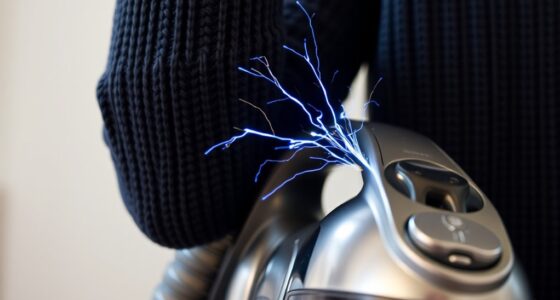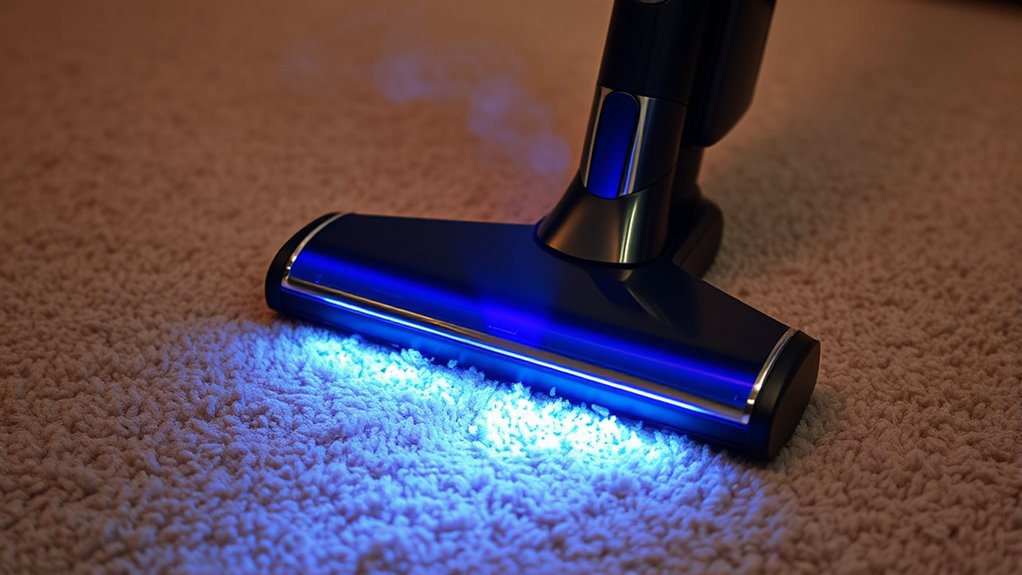
UV sanitization in vacuums works by using ultraviolet light to target and destroy germs, viruses, and mold spores at the molecular level during cleaning. As you vacuum, the UV light penetrates hard-to-reach areas, killing microbes and improving air quality. This technology offers a safer, deeper clean without chemicals or filters, actively reducing bacteria and viruses in your home. Interested in how this innovative feature can make your cleaning more effective? Keep exploring to find out more.
Key Takeaways
- UV technology in vacuums destroys bacteria and viruses at the DNA level during cleaning.
- It penetrates hard-to-reach areas, ensuring comprehensive germ elimination.
- UV sanitization provides an extra layer of hygiene beyond traditional suction.
- Modern UV vacuums are designed with safety features to prevent accidental UV exposure.
- Using UV in vacuums improves air quality and reduces microbial presence in the home.

UV sanitization in vacuums is transforming the way you clean your home by effectively eliminating bacteria, viruses, and mold from surfaces and air. This innovative feature uses UV technology to target germs at the molecular level, providing a deeper and more thorough cleaning experience. Instead of relying solely on traditional suction and brushes, UV-equipped vacuums shine ultraviolet light onto surfaces and into the air, neutralizing harmful microorganisms on contact. This process enhances germ elimination by destroying the DNA of bacteria and viruses, rendering them inactive and preventing their reproduction.
UV sanitization in vacuums destroys bacteria, viruses, and mold for a safer, deeper clean.
When you choose a vacuum with UV sanitization, you’re adopting a smarter approach to hygiene. UV technology is highly effective against common household pathogens, including influenza viruses, cold viruses, and mold spores. These microorganisms often hide in cracks, upholstery fibers, or deep within carpets, making them difficult to remove with regular cleaning methods. The UV light penetrates these hard-to-reach areas, killing germs that might otherwise linger and multiply. As a result, you’re not only cleaning surfaces but also improving the overall air quality in your home. This dual-action germ elimination helps reduce allergy triggers, respiratory issues, and the spread of illnesses, especially in households with children or pets.
Using a vacuum with UV sanitization is straightforward. Typically, you activate the UV feature before or during your cleaning session. The UV light emits a safe, targeted beam that disinfects as the vacuum operates. You don’t need to change filters or use additional chemicals, making it a convenient and eco-friendly choice. furthermore, UV technology is silent and quick, so it integrates seamlessly into your routine without extra effort or noise. Its ability to kill germs in real-time means you’re continuously reducing microbial presence while cleaning your floors, upholstery, or bedding.
Modern UV sanitization systems are also designed with safety features that prevent accidental UV exposure, ensuring your skin and eyes stay protected. The durability and safety of UV sanitization are also significant. Modern UV vacuums are designed with safety features that prevent accidental exposure to UV light, ensuring your skin and eyes stay protected. They are built with sealed chambers or automatic shut-offs if the UV lamp is accidentally opened. This reliability means you can trust that your cleaning process remains both effective and safe.
In essence, UV sanitization in vacuums elevates your cleaning routine by adding a powerful layer of germ elimination. It combines traditional suction power with cutting-edge UV technology to make your home healthier and cleaner. By integrating UV light into your vacuum, you’re not just removing dirt—you’re actively destroying germs and mold, creating a safer environment for everyone under your roof.
Frequently Asked Questions
How Effective Are UV Sanitizers Against Viruses Like COVID-19?
UV sanitizers are quite effective against viruses like COVID-19 when used correctly. Their UV efficacy involves destroying the virus’s DNA or RNA, preventing it from replicating. You can improve virus elimination by ensuring the UV light reaches all contaminated surfaces directly. Keep in mind, UV sanitizers work best as a supplementary cleaning method and shouldn’t replace traditional cleaning, but they can profoundly reduce the presence of harmful viruses when used properly.
Are UV Vacuums Safe to Use Around Children and Pets?
UV vacuums are generally safe around children and pets when used properly. You should avoid direct UV light exposure, as it can be harmful to skin and eyes. Always follow the manufacturer’s safety instructions, such as turning off the UV feature when not in use. By doing so, you protect child safety and pet safety, ensuring effective sanitization without risking accidental exposure to harmful UV rays.
Do UV Sanitization Features Increase Vacuum Noise Levels?
Sure, UV sanitization features do bump up the noise levels, making your vacuum sound more like a spaceship than a cleaning tool. It’s a small price to pay for germ-killing power, right? The added feature complexity often means louder operation, but hey, who wouldn’t want a high-tech gadget that cleans and sanitizes while making noise? Just brace yourself for the extra decibels—your ears might need a break!
How Often Should UV Bulbs Be Replaced in a Vacuum?
You should replace the UV bulb in your vacuum roughly every 6 to 12 months, depending on the UV bulb lifespan and usage. Regular replacement guarantees effective germ-killing and peak sanitization. Check your vacuum’s user guide for specific replacement frequency recommendations, as some bulbs may last longer or shorter. Keep an eye on UV effectiveness; if sanitization seems reduced, it’s time for a new bulb to maintain cleaning performance.
Can UV Vacuums Eliminate Allergens and Dust Mites?
Did you know that UV vacuums can eliminate up to 99% of allergens and dust mites? By using UV light, you promote allergen removal and dust mite elimination effectively. You’ll notice cleaner air and less sneezing after regular use. UV vacuums target these tiny pests and their allergens, making your home healthier. So, if you’re battling allergies, investing in a UV vacuum can considerably improve your indoor environment.
Conclusion
Now that you know how UV sanitization in vacuums can effectively kill germs while cleaning, aren’t you ready to upgrade your cleaning routine? Imagine a cleaner home and healthier environment with just a simple switch. UV technology makes it easy to eliminate bacteria and viruses without extra effort. So, why settle for less when you can enjoy a more hygienic space effortlessly? Your home deserves the best—are you ready to make the switch today?