
Smart dustbins with compaction and capacity sensors play a vital role in efficient waste management. They monitor fill levels in real-time, allowing you to prioritize pickups and optimize collection routes. Proper calibration ensures sensor accuracy, which prevents missed or overflowing bins. By integrating this data into centralized systems, you can improve planning, reduce costs, and lower environmental impact. Keep exploring to discover how these smart systems transform waste management and boost operational efficiency.
Key Takeaways
- Compaction sensors in smart dustbins optimize waste volume by compressing waste, extending bin capacity and reducing collection frequency.
- Capacity sensors monitor fill levels in real-time, ensuring timely pickups and preventing overflows.
- Accurate sensor calibration maintains data reliability, accounting for dust, debris, and sensor wear over time.
- Integration of sensor data into management platforms enables efficient route planning and operational decision-making.
- Proper sensor functionality supports sustainability by reducing unnecessary collection trips and lowering environmental impact.
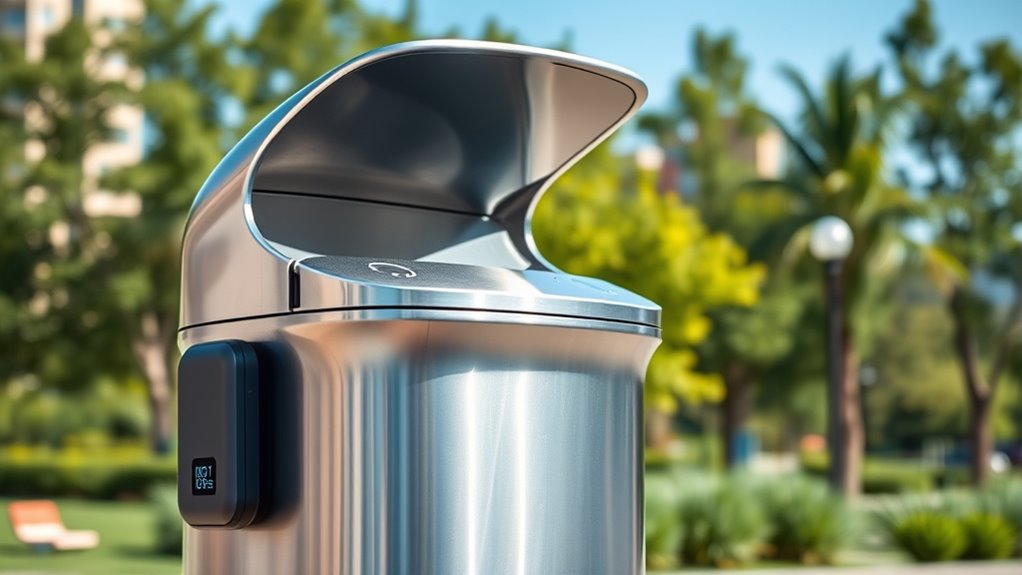
Smart dustbins are revolutionizing waste management by incorporating sensors and automation to optimize collection and disposal processes. One of the key features driving this innovation is the use of compaction and capacity sensors. These sensors detect the level of waste inside the bin, providing real-time data that helps determine when a dustbin is full or nearing capacity. By doing so, waste collection teams can prioritize pickups, reducing unnecessary trips and lowering operational costs. With accurate sensor data, you can guarantee that collection routes are optimized, which not only saves time but also minimizes environmental impact through fewer emissions.
A critical aspect of making these sensors work effectively is sensor calibration. Proper calibration ensures that the sensors provide precise readings over time, accounting for factors like dust, debris, or wear that could distort measurements. Regular sensor calibration helps maintain data accuracy, so your waste management system remains reliable. When sensors are properly calibrated, they deliver consistent data, enabling smarter decision-making. This precision directly impacts how efficiently your waste collection services operate, preventing over- or under-collection and reducing the risk of missed pickups or overflowing bins.
Data integration is another essential component that enhances the effectiveness of smart dustbins. When sensor data is seamlessly integrated into a centralized management platform, you gain a thorough view of waste levels across multiple locations. This integration allows for real-time monitoring and analysis, giving you the ability to make quick adjustments to collection schedules. With data integration, you can also combine waste level information with other operational data, such as vehicle routes and maintenance logs. This holistic view improves overall efficiency, helps identify patterns, and supports better planning for future waste management needs. Incorporating environmental considerations into your system can further improve sustainability and reduce ecological impact.

Bigacc Kitchen Trash Can | Stainless Steel 13 Gallon Trash Can | 50L Touch Free Garbage Can with Lid | Electronic Sensor High Capacity Trash Bin for Bathroom Kitchen Office, Silver
Brushed Stainless steel: Stainless steel material is polished, with stainless steel wire drawing, it shows that it is…
As an affiliate, we earn on qualifying purchases.
As an affiliate, we earn on qualifying purchases.
Frequently Asked Questions
How Long Do Smart Dustbin Batteries Typically Last?
Your smart dustbin batteries typically last between 6 to 12 months, depending on usage and power management. Efficient power management features, like low-power sensors and optimized data transmission, help prolong battery lifespan. Regular maintenance and timely replacements ensure smooth operation. Keep an eye on battery status reports, so you can plan for replacements before the batteries run out, maintaining the dustbin’s smart functionality without interruptions.
Are Smart Dustbins Suitable for Outdoor Environments?
Think of smart dustbins as sturdy trees in a storm—they’re built with outdoor durability and weather resilience in mind. You’ll find they stand firm against rain, wind, and sun, making them perfect for outdoor environments. Their robust design ensures sensors and electronics stay protected, so you don’t need to worry about weather damage. With proper maintenance, these smart bins can serve you reliably, rain or shine.
What Maintenance Is Required for Smart Dustbin Sensors?
You need to regularly check and calibrate your smart dustbin sensors to guarantee accurate readings. Keep an eye out for dirt, debris, or damage that could affect sensor performance. To prevent vandalism, consider installing protective covers or placing them in secure locations. Routine maintenance also involves inspecting wiring and connections, cleaning sensors gently, and scheduling calibration sessions as recommended by the manufacturer to maintain peak functionality.
Can Smart Dustbins Be Integrated With Existing Waste Management Systems?
Yes, you can integrate smart dustbins with your existing waste management systems, but watch out for integration challenges like compatibility issues between hardware and software. You’ll need to guarantee seamless data flow, which might require some updates or custom interfaces. Also, consider data privacy concerns, especially if sensitive information is involved. Proper planning and secure data management will help you maximize benefits without compromising privacy or system stability.
What Are the Costs Associated With Installing Smart Dustbin Technology?
Think of smart dustbins as the shiny new gears turning your waste management machine. The costs vary, with a cost comparison showing moderate investment for sensors and setup. You might face installation challenges like integrating with existing systems or training staff. However, the long-term savings from efficient pickups and reduced overflow make the initial expense worthwhile. Overall, expect an upfront investment but a smoother, smarter waste system in the long run.
waste management compaction sensor
As an affiliate, we earn on qualifying purchases.
As an affiliate, we earn on qualifying purchases.
Conclusion
So, next time you see a smart dustbin, don’t just toss your trash and walk away. Thanks to its compaction and capacity sensors, it’s probably more aware of your habits than you are. Maybe it’ll even remind you to recycle or recycle better. After all, who knew that a trash can could be smarter than us? Irony’s sweet, isn’t it? Now, let’s hope it doesn’t start judging your wasteful ways.

T Ultrasonic Radar Level Sensor IP68 Waterproof Waste Bin Fill-Level Smart City IoT Garbage Management
Pressure Sensors
As an affiliate, we earn on qualifying purchases.
As an affiliate, we earn on qualifying purchases.

Dingtek DF703-US915 LoRaWAN Smart Waste Bin Sensor | Ultrasonic Level Detects Full/Empty/Fire/Tipping | 4-Meter Max. Detection
⛈️ Rugged: IP68 waterproof industrial housing for rugged environments
As an affiliate, we earn on qualifying purchases.
As an affiliate, we earn on qualifying purchases.