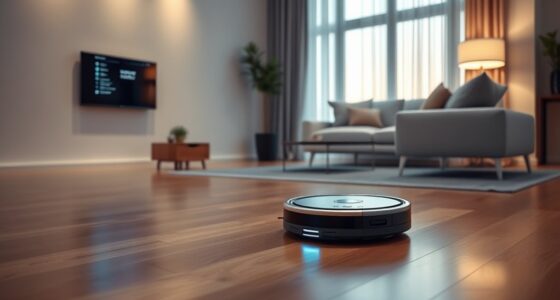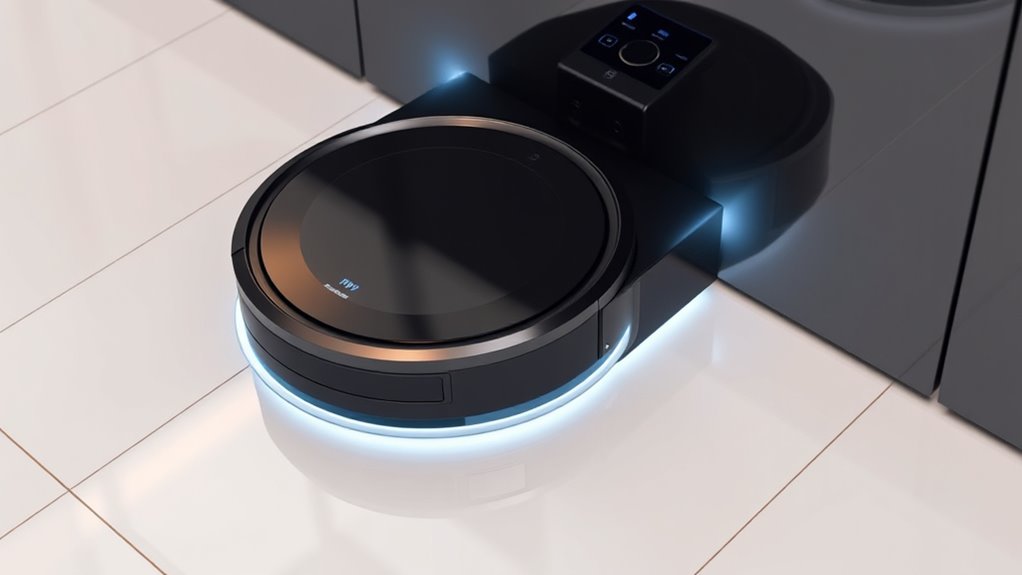

Self-charging vacuums automatically return to their docking stations when their batteries run low. They use sensors and onboard mapping to find the shortest route back. The docking station has precise guides, magnets, or visual markers to help the robot align correctly. Once docked, the vacuum connects securely and begins recharging. Advanced software manages this process seamlessly, so your home stays clean with minimal effort. Keep going to discover more about how these smart systems work behind the scenes.
Key Takeaways
- Self-charging vacuums use sensors and mapping technology to detect low battery levels and locate their docking station automatically.
- The docking station features precise alignment guides, magnetic or visual markers, and sensors to ensure correct robot positioning.
- The robot navigates back to the dock via the shortest, safest route, guided by onboard sensors and software coordination.
- Upon docking, contact points connect securely, and the vacuum’s charging cycle begins automatically without user intervention.
- After recharging, the vacuum seamlessly resumes cleaning, maintaining continuous home maintenance with minimal effort.
Self-charging vacuums are revolutionizing cleaning by eliminating the hassle of manual recharging. Instead of you having to plug in and disconnect the device repeatedly, these smart cleaners automatically return to their docking stations when their batteries run low. This seamless process relies heavily on advancements in battery technology and thoughtful docking station design. Battery technology, especially lithium-ion cells, has improved considerably, providing longer run times and faster charging. This means your robot vacuum can operate for extended periods before needing to recharge, and it can get back to full power quickly once docked. The batteries are lightweight, durable, and capable of withstanding numerous charging cycles, guaranteeing your vacuum remains reliable over time.
Self-charging vacuums use advanced lithium-ion batteries for longer, faster cleaning cycles and seamless docking.
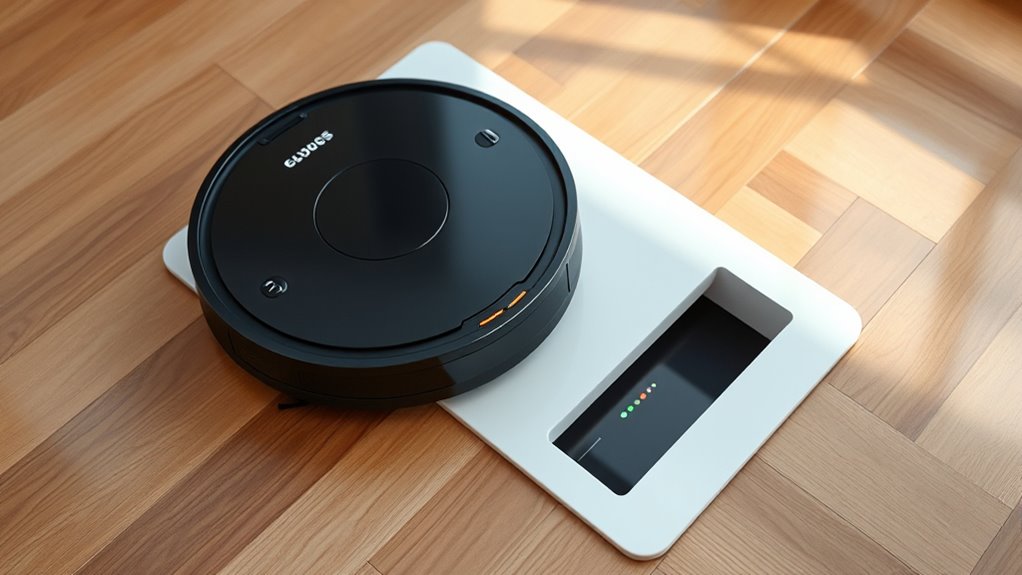
The docking station itself isn’t just a simple charging pad. Its design plays a vital role in the self-charging process. A well-designed station includes precise alignment features that guide the vacuum into the correct position, guaranteeing that charging contacts connect securely every time. Some stations incorporate magnetic guides or visual markers that help the robot locate the docking point easily. The station’s placement in your home is equally important; it should be positioned in an accessible, open area, away from obstacles, to allow the robot to find its way back effortlessly. Many stations are equipped with sensors that detect the robot’s arrival, triggering the charging process automatically.
When your vacuum detects that its battery is running low, it uses its onboard sensors and mapping technology to determine the shortest and safest route back to its dock. Once it reaches the station, the contact points on the robot align with those on the station, initiating the charging cycle. Advanced docking stations even feature automatic lid closures or privacy covers, maintaining a neat appearance and protecting the charging contacts from dust and debris. The whole process is synchronized with the robot’s internal software, which manages the shift from cleaning to recharging without any user intervention.
This intelligent system guarantees your space stays consistently clean without you needing to think about it. You benefit from uninterrupted cleaning cycles, as the vacuum automatically returns to recharge and resumes cleaning once fully charged. As battery technology continues to evolve, and docking station designs become more sophisticated, these self-charging vacuums will only get smarter, more efficient, and more convenient. With minimal effort on your part, your home stays spotless, thanks to this seamless blend of innovative battery tech and thoughtful design that keeps your robot vacuum ready whenever you need it.
Frequently Asked Questions
How Long Does It Take for a Robot Vacuum to Fully Recharge?
You’re probably wondering how long it takes for your robot vacuum to fully recharge. Charging time depends on its battery capacity, typically taking 2 to 4 hours to reach full capacity. Larger batteries may need a bit more time, while smaller ones recharge faster. If your vacuum has a quick-charge feature, it can reach sufficient power in less than an hour, making it ready for its next cleaning session quickly.
Can Robot Docks Operate in Multiple Rooms or Only One Area?
You might wonder if robot docks can work across multiple rooms. With good multi-room navigation, your vacuum can clean various areas before returning to the docking station. Proper docking station placement is key; placing it centrally or near doorways helps your robot access different rooms easily. Advanced models use mapping technology, enabling them to move seamlessly between rooms and find the dock efficiently, making multi-room cleaning possible.
Do Self-Charging Vacuums Work on All Floor Types?
You might wonder if self-charging vacuums work on all floor types. They generally do, thanks to good floor compatibility, including carpets, hardwood, and tile. However, docking precision can vary, especially on uneven or thick floors, which might affect how well they return to the dock. Always check your vacuum’s specifications to guarantee it’s compatible with your specific floor surfaces for ideal performance.
What Happens if the Robot Misses Its Charging Station?
Did you know that over 15% of robot vacuum docking issues are caused by docking misalignment or power failure? If your robot misses its charging station, it might struggle to find its way back, especially if there’s a docking misalignment or a power failure. In such cases, it could keep cleaning or stop altogether. To avoid this, guarantee the dock is clear, aligned properly, and the power source is steady.
Are There Safety Features to Prevent Accidents During Docking?
During docking safety, your robot vacuum has built-in accident prevention features to keep it secure. It uses sensors to detect obstacles and avoid collisions, ensuring safe docking even if it’s not perfectly aligned. These safety features actively monitor the process, stopping or adjusting movement if anything unexpected occurs. This way, you can trust that your vacuum docks safely, preventing accidents and protecting your furniture and the device itself.
Conclusion
Now that you understand how robot docks keep your vacuum powered, you might wonder — isn’t it amazing how these tiny machines manage their own energy? With smart docking stations, your vacuum stays ready without you lifting a finger. Isn’t it time you let technology do the work for you? Embrace the convenience of self-charging vacuums and enjoy a cleaner home with less effort. After all, why not let innovation handle the hard part?