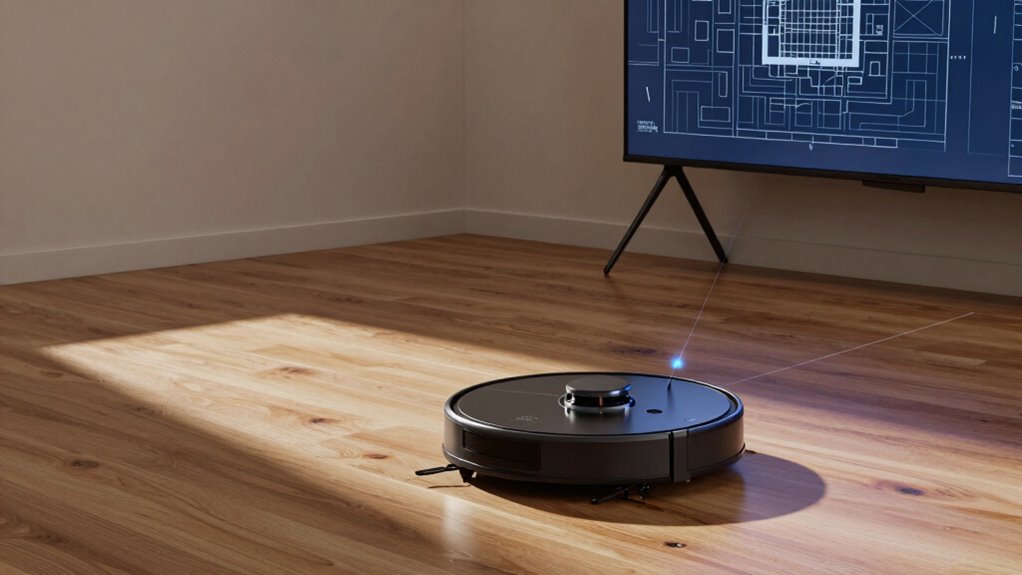

To keep your robot vacuum maps accurate over time, regularly update its firmware and guarantee the navigation sensors stay clean and aligned. Recalibrate the sensors after any hardware changes or impacts, and rerun the mapping process whenever your home layout shifts. Use your robot’s app to access remapping features and store multiple maps for different setups. Staying proactive with these steps helps your vacuum navigate efficiently and avoid missed spots, and you’ll discover more tips ahead.

Get cleaning gear delivered free with Prime
- Fast, free delivery on millions of items
- Prime Video, Amazon Music and more included
- Member-only deals all year
Key Takeaways
- Regularly update the robot vacuum’s firmware to improve mapping algorithms and sensor performance.
- Recalibrate sensors after physical impacts or hardware changes to maintain accuracy.
- Periodically rerun the mapping process when furniture or room layouts change.
- Clean sensors frequently to prevent dirt or misalignment from affecting obstacle detection.
- Use app features to refresh or remap specific areas without performing a full reset.

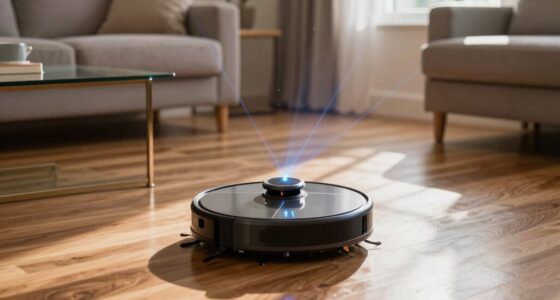
Keeping your robot vacuum’s maps accurate over time is essential for ensuring thorough cleaning and efficient navigation. As your vacuum moves through your home, it creates a digital map, guiding it to cover every area without unnecessary repetition. However, over time, these maps can become outdated or inaccurate, especially if your furniture moves or if the environment changes. To keep your maps precise, you need to pay attention to the role of navigation sensors and firmware updates. Navigation sensors are vital because they help your robot detect obstacles, recognize boundaries, and build a detailed understanding of your space. If these sensors are dirty, misaligned, or malfunctioning, your robot’s mapping ability diminishes, leading to errors or missed spots. Regularly inspecting and cleaning the sensors ensures they function properly, maintaining accurate maps. Additionally, if your vacuum has adjustable sensors or calibration options, take the time to recalibrate them whenever you notice issues with navigation or mapping. Using navigation sensors effectively is crucial for maintaining mapping accuracy, as they are the primary tools your robot relies on to perceive its environment. Firmware updates are equally significant for preserving map accuracy. Manufacturers often release updates that enhance sensor performance, fix bugs, or improve mapping algorithms. Keeping your robot’s firmware current ensures that it can better interpret sensor data, adapt to environmental changes, and correct previous mapping errors. Regularly updating the firmware also helps to prevent potential software glitches that could impair mapping. Moreover, sensor calibration can be necessary after hardware adjustments or impacts, further improving the robot’s ability to interpret its surroundings. It’s also beneficial to understand the specific mapping features of your model, as some models include remapping features that allow you to refresh the map without needing a full reset, which can save time and effort. Check for updates periodically through the app or device interface, and follow the manufacturer’s instructions carefully when installing them. Firmware updates often include improvements that make your robot smarter and more adaptable, reducing the chances of mapping inaccuracies over time. When your home layout changes—like moving furniture or adding new objects—it’s a good idea to rerun the mapping process, if your device allows it. Some models enable you to reset or remap specific areas, which helps keep the digital map aligned with your actual environment. If your robot has the ability to save multiple maps, use this feature to switch between different layouts or update existing maps without losing previous data.
robot vacuum sensor cleaning kit
As an affiliate, we earn on qualifying purchases.
As an affiliate, we earn on qualifying purchases.
Frequently Asked Questions
How Often Should I Recalibrate My Robot Vacuum’s Sensors?
You should recalibrate your robot vacuum’s sensors whenever you notice it’s missing spots or bumping into objects more often. Regular sensor calibration helps maintain accuracy, especially if dust accumulation occurs. Dust buildup can interfere with sensor function, so clean sensors regularly. Recalibrating every few months or after thorough cleaning guarantees your vacuum maps stay precise, improving cleaning efficiency and preventing navigation errors over time.
Can Adding More Furniture Affect the Vacuum’s Mapping Accuracy?
Adding more furniture can turn your home’s layout into a complex maze, confusing your vacuum’s mapping. Furniture rearrangements and obstacle placement can cause the robot to misinterpret or forget parts of the map, reducing cleaning efficiency. To maintain accuracy, update the map after significant changes, and consider recalibrating sensors regularly. This way, your vacuum navigates smoothly, adapting to new obstacles and ensuring thorough cleaning.
Do Software Updates Improve Map Precision?
Yes, software updates can improve map precision by fixing mapping errors and enhancing sensor calibration. When you update your robot vacuum’s software, it often includes improvements that help the device better interpret its environment, reducing inaccuracies. These updates can enhance navigation algorithms and sensor functions, which directly contribute to more accurate mapping over time. Regular updates ensure your vacuum maintains peak performance and navigational accuracy in your home.
How Does Lighting Impact Mapping Performance?
Like a painter needs good light to see details, your robot vacuum relies on proper lighting conditions for accurate mapping. Poor lighting can cause sensors to misread the environment, leading to errors. Bright, consistent lighting helps sensors calibrate correctly, ensuring the map stays precise. Dim or changing lighting confuses the sensors, impacting performance. Keep lighting steady and well-lit to maintain ideal sensor calibration and accurate mapping over time.
Is It Necessary to Reset the Map After Moving Large Objects?
You don’t always need to reset the map after moving large objects, but doing so can improve mapping consistency and obstacle detection. When big items block sensors or change room layouts, your vacuum might struggle to recognize the area accurately. If you notice navigation issues or missed spots, resetting the map helps the robot update its layout. Regularly review and adjust the map to guarantee maximum cleaning performance over time.
Conclusion
By regularly updating and maintaining your robot vacuum, you keep its map as fresh as spring rain on a garden. Clear obstacles, recalibrate sensors, and run routine cleanings to prevent your device’s memory from becoming outdated. Think of it as tending a delicate bonsai—small, consistent care keeps it thriving and accurate. With these simple steps, your vacuum’s map remains sharp and reliable, turning your home into a smoothly navigated landscape rather than a maze of confusion.
Halloween Picks
halloween
As an affiliate, we earn on qualifying purchases.