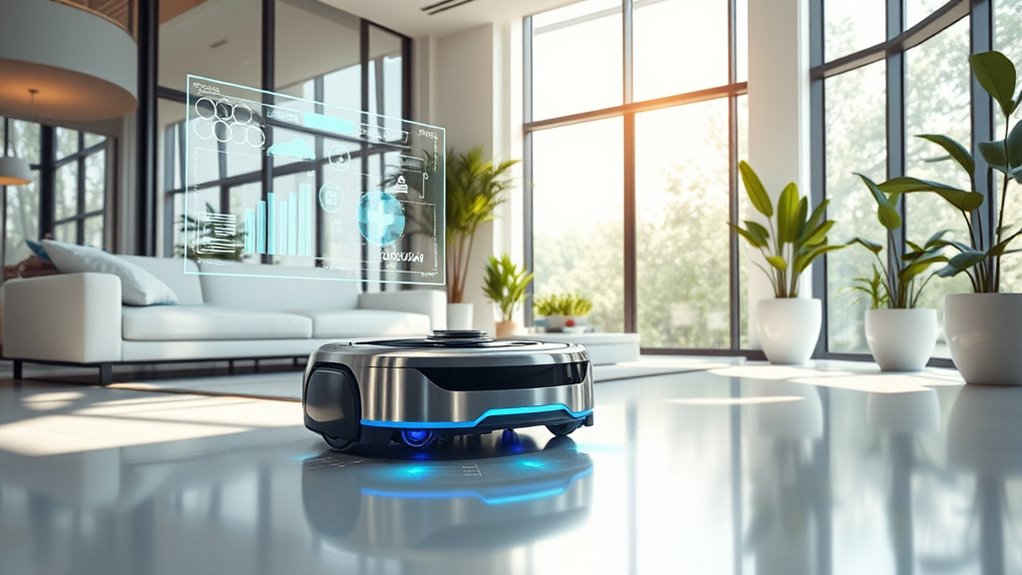

The future of vacuuming is all about making your life easier. Imagine vacuums that understand your home’s unique cleaning needs and automatically adjust their power based on the surfaces they encounter. They’ll also learn your daily routines, initiating cleaning when you leave the house. Smart sensors and AI will optimize their performance, while seamless integration with your smart home will enhance convenience. If you’re curious about the exciting innovations ahead, there’s more to discover about this transformation.
Key Takeaways
- Future vacuums will be fully automated, adapting to daily routines for seamless operation without manual oversight.
- Advanced sensors will optimize cleaning power based on surface type, enhancing efficiency and saving time.
- AI will enable personalized cleaning experiences, recognizing dirt patterns and scheduling adaptive cleanings for minimal intervention.
- Integration with smart home systems will allow vacuums to coordinate cleaning with other devices, streamlining home management.
- Continuous technological advancements will lead to more intelligent vacuums capable of handling diverse surfaces effectively.

As technology advances, you might find yourself wondering how vacuuming will evolve in the coming years. The rise of robot automation is already reshaping how you approach cleaning your home. Envision a future where your vacuum not only navigates your space effortlessly but also learns your daily routines and preferences. You won’t have to think twice about when to vacuum; it’ll become a seamless part of your lifestyle.
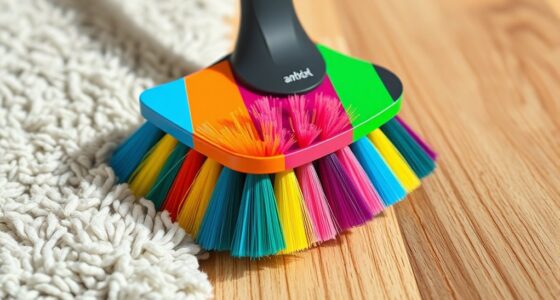
The integration of smart sensors into vacuum technology is a game-changer. These sensors can detect various surfaces and adjust the vacuum’s cleaning power accordingly. Imagine this: your vacuum glides effortlessly from hardwood to carpet, automatically increasing suction when it senses a thicker pile. You’ll appreciate how much time and energy this saves, allowing you to focus on the things that matter most, rather than worrying about dirt and dust.
As robot automation continues to improve, you might also find yourself enjoying more personalized cleaning experiences. Your future vacuum could be equipped with advanced AI, enabling it to analyze dirt patterns and adapt its cleaning schedule. If you have pets, it might recognize when they shed and prioritize those areas. You’ll no longer need to manually schedule cleanings; your vacuum will do the heavy lifting and keep your home fresh without your intervention.
Moreover, the potential for connectivity will make vacuuming even smarter. Your vacuum could communicate with other smart home devices, working in tandem with your smart thermostat or lighting system. For example, if you leave the house, your vacuum could kick into gear while you’re gone, ensuring a clean space awaits your return. The convenience this offers is undeniable, and it’ll redefine your cleaning routine. Additionally, as vacuum technology progresses, you might witness the rise of smart sensors that optimize cleaning efficiency and adapt to your home’s unique needs.
Frequently Asked Questions
What Are the Best Vacuum Brands Currently on the Market?
When you’re looking for the best vacuum brands currently on the market, consider options like iRobot, Dyson, and Shark. iRobot’s Roomba offers smart robot vacuum solutions that make cleaning effortless, while Dyson provides powerful cordless convenience with its innovative designs. Shark’s vacuums are known for their versatility and affordability. With these brands, you’ll find reliable performance, advanced features, and user-friendly designs that can meet your cleaning needs effectively.
How Often Should I Vacuum My Home?
You should vacuum your home at least once a week, like a gardener tending to their plants. Just as they nurture life, you maintain cleanliness. If you’ve pets or allergies, consider vacuuming more often. Robot vacuuming can help automate this task, keeping your floors tidy with minimal effort. Opt for eco-friendly vacuums to protect Earth while you clean. By doing so, you’re not just vacuuming; you’re cultivating a healthier environment.
Are Bagless Vacuums Better Than Bagged Models?
Bagless vacuums can be better than bagged models for many people, especially when it comes to maintenance convenience. You won’t need to buy and replace bags regularly, which saves money and time. However, consider dust containment; bagged vacuums often trap dust more effectively, reducing allergens in your home. If you’re sensitive to dust, a bagged model might be the way to go. Ultimately, it depends on your priorities and cleaning habits.
Can Vacuuming Improve Indoor Air Quality?
Yes, vacuuming can substantially improve indoor air quality. In fact, regular vacuuming can reduce allergens by up to 50%! By using a vacuum with effective air purification features, you’ll capture dust, pet dander, and pollen, which helps alleviate allergy symptoms. When you vacuum often, you’re not just keeping your floors clean; you’re creating a healthier environment for yourself and your family. So, grab that vacuum and start breathing easier today!
What Is the Average Lifespan of a Vacuum Cleaner?
The average lifespan of a vacuum cleaner is around 8 to 10 years, but proper vacuum maintenance can extend that. Regularly cleaning filters, replacing bags, and checking for clogs help keep your vacuum running efficiently. Additionally, choosing energy-efficient models can save you money on electricity while providing better performance. If you take good care of your vacuum, you can enjoy a cleaner home and maximize your investment for years to come.
Conclusion
As you step into the future of vacuuming, imagine your trusty vacuum as a loyal steed, galloping through your home, effortlessly battling dust and debris. With smart technology at its side, it’ll navigate like a skilled knight, adapting to every twist and turn. You won’t just clean; you’ll undertake a grand quest for a spotless sanctuary. Embrace this adventure, and let your vacuum lead the charge towards a cleaner, brighter tomorrow. Your home deserves a champion!