When choosing between bagged and bagless vacuums, consider your priorities. Bagged models offer larger dust capacity, easier maintenance, and better allergen containment, making them ideal for allergy sufferers and bigger homes. Bagless vacuums let you see dirt easily and may cost less over time, but they require more frequent emptying and can release dust if not handled carefully. Keep exploring to uncover the full insights that can help you pick the best fit.
Key Takeaways
- Bagged vacuums typically have larger dust capacities, making them better for extended cleaning sessions and large spaces.
- Bagless models offer immediate visibility of dirt, but require frequent emptying and more regular filter maintenance.
- Bagged vacuums excel at trapping allergens and reducing dust escape, benefiting allergy sufferers more effectively.
- Bagless vacuums may have lower ongoing costs but can release fine dust during emptying if not handled carefully.
- The choice depends on your cleaning routine, allergy concerns, maintenance preferences, and whether capacity or convenience is your priority.

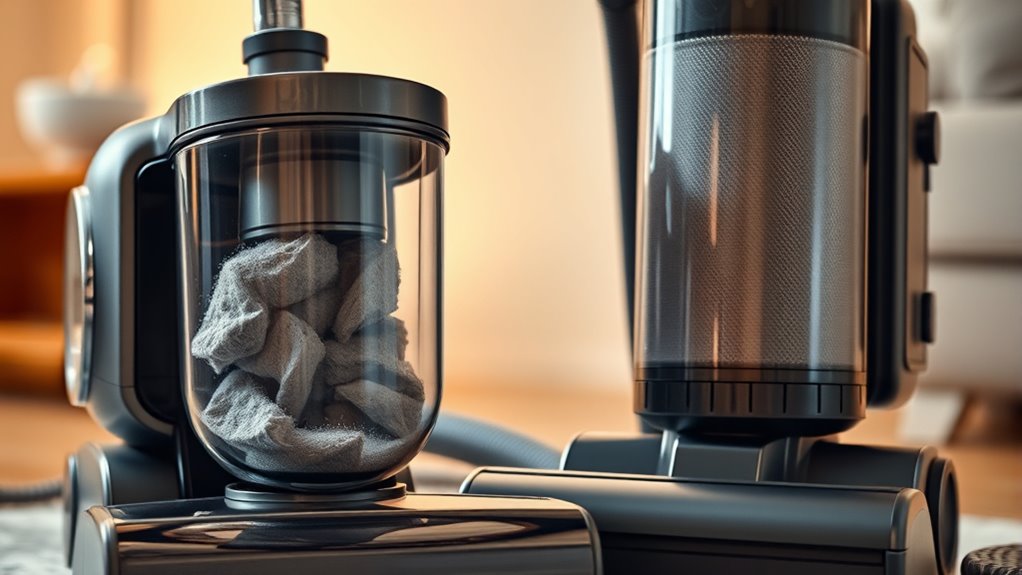
When choosing a vacuum cleaner, understanding the difference between bagged and bagless models is essential. One of the key factors worth weighing is dust capacity. Bagged vacuums typically have a larger dust capacity, allowing you to clean for longer periods without frequent emptying. This is especially helpful if you have a large home or deal with lots of debris, as it means fewer interruptions during your cleaning routine. Conversely, bagless models usually have smaller canisters, which fill up faster and require more frequent emptying. While this might seem inconvenient, it also means you can see exactly how much dirt you’ve collected, giving you a clear indication of your home’s cleanliness.
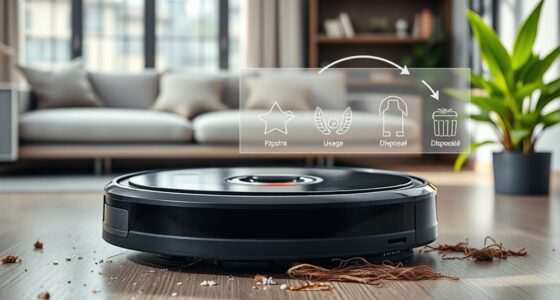
Bagged vacuums offer larger dust capacity, reducing emptying frequency and ideal for big homes or heavy debris cleaning.
Maintenance requirements are another crucial aspect. Bagged vacuums tend to be easier to maintain in the long run. Since the dust and debris are contained within a disposable bag, you don’t need to worry about cleaning out filters or canisters as often. When the bag is full, you simply swap it out for a new one, which can be less messy and more hygienic. On the other hand, bagless models require regular maintenance. You need to empty the canister frequently, and this process can release dust back into the air if not done carefully. Additionally, bagless vacuums often have filters that need periodic cleaning or replacement to maintain ideal performance. Neglecting this can lead to reduced suction power and decreased efficiency over time.
Another point to keep in mind is that bagged vacuums are generally better for allergy sufferers because the sealed bags trap dust and allergens more effectively. When you change the bag, you reduce the risk of dust escaping into the air. Bagless models, while convenient, can sometimes release fine dust particles during emptying if you’re not cautious. This makes them less suitable for people with allergies or asthma unless they have a good filtration system in place. Moreover, high-quality filtration systems in bagless models can mitigate some of these concerns, making them more allergy-friendly.
Ultimately, your choice depends on your priorities. If you prefer a hassle-free, less messy option with larger dust capacity, a bagged vacuum could be the way to go. But if you don’t mind the routine of emptying the canister and maintaining filters, a bagless model offers the advantage of immediate visibility of dust and potentially lower ongoing costs. Both types have their pros and cons, so weigh these factors carefully to find the vacuum that best fits your cleaning needs.
Top picks for "bagg bagles vacuum"
Open Amazon search results for this keyword.
As an affiliate, we earn on qualifying purchases.
Frequently Asked Questions
Which Vacuum Type Is Better for Allergy Sufferers?
If you suffer from allergies, a vacuum with HEPA filtration is your best choice. It captures tiny allergens and prevents them from escaping back into the air, offering better allergen containment. Bagged vacuums often provide more effective HEPA filters and sealed systems, making them ideal for allergy sufferers. You’ll breathe easier knowing that your vacuum minimizes airborne allergens, creating a cleaner, healthier home environment.
How Often Should You Replace Filters in Each Vacuum?
You should replace filters regularly to maintain peak vacuum performance. The filter lifespan varies, but generally, you need to check and replace filters every 3 to 6 months. For bagged vacuums, change the filter more often if you have pets or allergies. In bagless models, replace or clean filters more frequently, usually every 1 to 3 months, depending on usage. Regular replacement keeps your vacuum efficient and improves air quality.
Are Bagless Vacuums More Environmentally Friendly?
You might think bagless vacuums are more eco-friendly because they don’t use disposable bags, but consider their environmental impact. Bagless models often use recyclable materials, reducing waste, and may have lower energy consumption during operation. However, frequent filter and component replacements can offset these benefits. Overall, they can be more environmentally friendly if you maintain them properly and choose models designed with sustainability in mind.
Can Bagged Vacuums Handle Pet Hair Better?
Yes, a bagged vacuum often handles pet hair better because it maintains consistent suction power and has a larger dirt capacity. The bag traps hair more effectively, preventing clogs and loss of suction as it fills. This means you can clean longer without interruption. If pet hair is a concern, opt for a bagged model with high suction power and ample dirt capacity to guarantee thorough cleaning and better hair management.
Is Maintenance Cost Higher for Bagless Vacuums?
While bagless vacuums save you from buying bags, their maintenance costs can add up. You’ll often need to replace filters more frequently, increasing long-term expenses. Plus, emptying the canister and cleaning filters can be messier and time-consuming. In contrast, bagged vacuums typically have lower ongoing costs, as filter replacements are less frequent. So, your maintenance costs might be higher with bagless models over time, especially if you have pets or heavy debris.
Conclusion
Choosing between a bagged or bagless vacuum depends on your cleaning needs, but did you know that 60% of users prefer bagless models for convenience? While bagless vacuums save money on replacement bags, they can release more dust into the air. Consider your allergy sensitivities and maintenance preferences before making a decision. Whichever you pick, understanding these differences helps you choose a cleaner that fits your lifestyle perfectly.