AI-driven dirt detection transforms your cleaning routine by using advanced algorithms to identify dirt and grime accurately. This technology targets the areas that need the most attention, making your efforts more efficient. With features like sensor calibration and customizable user interfaces, it adapts to your specific space, ensuring maximum effectiveness. You’ll find that it eliminates over-cleaning and saves you time. Learn about the innovations that continue to shape this smart cleaning technology.
Key Takeaways
- AI-driven dirt detection utilizes algorithms to identify and prioritize cleaning areas with higher dirt levels, enhancing efficiency in cleaning routines.
- Sensor calibration is crucial for accurately detecting various dirt types and conditions, preventing missed spots and over-cleaning.
- A user-friendly interface allows easy customization of cleaning settings, supporting scheduling and adjustments for different user needs.
- The system adapts cleaning strategies based on unique characteristics of spaces, ensuring targeted cleaning and maximum results.
- Continuous innovation through collaborative development enhances dirt detection algorithms and promotes the evolution of smarter cleaning technologies.
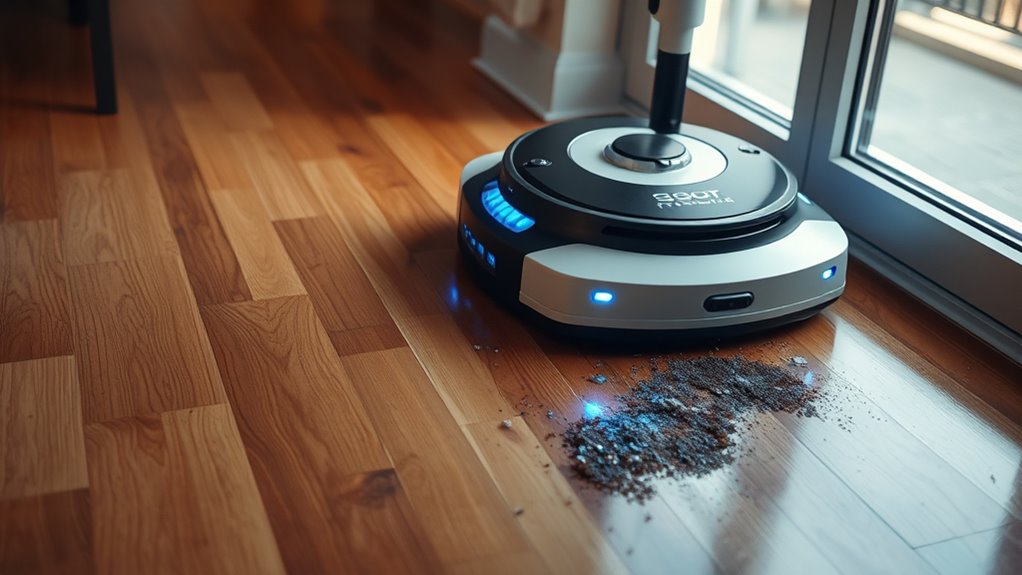
As technology advances, you might find yourself wondering how to keep your spaces cleaner and more efficient. One of the most exciting innovations in this domain is AI-driven dirt detection, which uses advanced algorithms to identify dirt and grime in your environment. Imagine a cleaning system that not only cleans but also targets the areas that need it most. This tech can transform your cleaning routine, providing a level of efficiency and effectiveness that traditional methods simply can’t match.
AI-driven dirt detection revolutionizes cleaning by targeting the most soiled areas, maximizing efficiency beyond traditional methods.
When it comes to AI-driven cleaning, sensor calibration plays a vital role. These sensors need to be finely tuned to recognize various types of dirt, from dust to tougher stains. This calibration ensures that the system accurately identifies areas requiring attention, rather than wasting time on already clean surfaces. You won’t have to worry about your device missing spots or over-cleaning areas that don’t need it. The precision of sensor calibration can markedly enhance the overall cleaning experience.
Moreover, user interface design is key to maximizing the potential of such technology. A well-designed interface allows you to easily interact with your cleaning system, making it simple to customize settings based on your specific needs. Whether you’re scheduling a cleaning session, adjusting sensitivity levels, or selecting particular rooms, an intuitive user interface makes the process seamless. You’ll find that even if you’re not tech-savvy, you can quickly learn how to operate the system to its fullest potential.
As you explore the benefits of AI-driven dirt detection, you’ll appreciate how it can adapt to the unique characteristics of your spaces. Each home or office is different, and a smart system can adjust its cleaning strategy based on floor types, furniture arrangements, and patterns of daily activity. This adaptability not only saves time but also guarantees that your cleaning efforts yield maximum results. Additionally, leveraging remote hackathons can inspire innovative solutions in developing such AI-driven technologies.

Dirt Devil 12V Whole Home Cordless Handheld Vacuum, with Multi-Surface Tool Kit, Powerful Suction and Lightweight, BD40200V, Black
LIGHTWEIGHT HANDHELD VACUUM CLEANER: The Dirt Devil Whole Home Handheld Vacuum quickly tackles dust, debris and dirt whenever…
As an affiliate, we earn on qualifying purchases.
As an affiliate, we earn on qualifying purchases.
Frequently Asked Questions
How Does AI Improve Dirt Detection Accuracy?
AI improves dirt detection accuracy by enhancing sensor calibration and optimizing data processing. You’ll find that advanced algorithms analyze sensor data more effectively, identifying patterns and distinguishing between dirt types. This precision leads to better decision-making in cleaning tasks. By constantly learning from new data, AI adapts to various environments, ensuring sensors remain finely tuned. Ultimately, you get a more reliable cleaning solution that targets dirt where it matters most, maximizing efficiency.
What Types of Surfaces Can Benefit From Targeted Cleaning?
You’ll find that various surfaces can benefit from targeted cleaning, including hardwood, tile, carpet, and upholstery. Each surface has its own sensitivity, so it’s essential to choose cleaning methods that align with material compatibility. For instance, delicate fabrics require gentler approaches, while tougher surfaces can handle more aggressive cleaning. By understanding these factors, you can effectively maintain cleanliness and prolong the life of your surfaces without causing damage.
Is Ai-Driven Cleaning Safe for Pets and Children?
Yes, AI-driven cleaning is generally safe for pets and children. These systems often use non-toxic cleaning agents and targeted approaches, minimizing harmful exposure. You can enjoy peace of mind knowing that pet safety and child protection are prioritized. Always check product specifications and manufacturer guidelines to guarantee their safety features meet your household’s needs. With proper precautions, you can create a clean environment without worrying about your loved ones’ well-being.
How Much Does Ai-Driven Cleaning Technology Typically Cost?
AI-driven cleaning technology typically ranges from a few hundred to several thousand dollars, depending on the features and brand. When you’re doing a cost analysis, consider the long-term savings on cleaning supplies and time. Budget considerations are essential; you might want to start with a mid-range model to see if it suits your needs before investing in a high-end option. Keep in mind, quality and functionality can vary markedly across different products.
Can This Technology Be Integrated With Existing Cleaning Systems?
Yes, this technology can be integrated with existing cleaning systems, but you’ll face some integration challenges. You’ll need to assess compatibility considerations, ensuring that your current equipment can communicate effectively with the new technology. Depending on your system, you might require additional hardware or software adjustments. It is crucial to consult with a specialist to streamline the integration process and maximize the benefits of the advanced cleaning capabilities.
K&F CONCEPT 24mm Full Frame Sensor Cleaning Swab*6 + 20ml Sensor Cleaner, DSLR SLR Digital Camera CMOS and CCD Sensor Cleaning Swab Kits for Nikon Sony Canon Camera Clean
【6 Pieces of 24mm Sensor Cleaning Swabs】 Tailored according to the size of the Full frame frame sensor;Smudge-and…
As an affiliate, we earn on qualifying purchases.
As an affiliate, we earn on qualifying purchases.
Conclusion
With AI-driven dirt detection, you’re like a savvy detective, spotting grime before it even has a chance to settle in. Imagine walking into a room where every speck of dirt is an open book, revealing its secrets to you. Just as a chef knows the importance of fresh ingredients, you’ll appreciate the power of targeted cleaning. Embrace this technology, and you’ll transform your space into a spotless sanctuary, where every corner sparkles with the promise of cleanliness.

Obito X3 Window Cleaning Robot, Dual Nozzles with Ultrasonic Spray, 5.0 AI Path Planning, Max 3200Pa & Steady-Climbing System, Automatic Edge Detection, Robot Window Cleaner Inside/Outside, Black
【Intelligent Path Planning, Deep Cleaning with No Dead Zones】 Upgrade AI 5.0 bow-shaped path planning, detect the window…
As an affiliate, we earn on qualifying purchases.
As an affiliate, we earn on qualifying purchases.

eufy X10 Pro Omni Robot Vacuum and Mop Combo, Incredible Suction, Dual Mops with 12 mm Auto-Lift and Carpet Detection, AI Obstacle Avoidance, Auto Mop Washing&Drying, Self-Emptying, Self-Refilling
Hands-Free All-in-One Station: Experience truly hands-free cleaning. The mop pads self-clean with fresh water and dry swiftly with…
As an affiliate, we earn on qualifying purchases.
As an affiliate, we earn on qualifying purchases.