
TL;DR

Get cleaning gear delivered free with Prime
- Fast, free delivery on millions of items
- Prime Video, Amazon Music and more included
- Member-only deals all year
A closet can work as a surprisingly good vocal booth if you treat reflections and leaks properly. The biggest wins come from smart placement, soft absorption, and ensuring airflow for heat. Foam alone won’t cut it for soundproofing or heat management.
Acoustic dampening
& the rig in the closet.
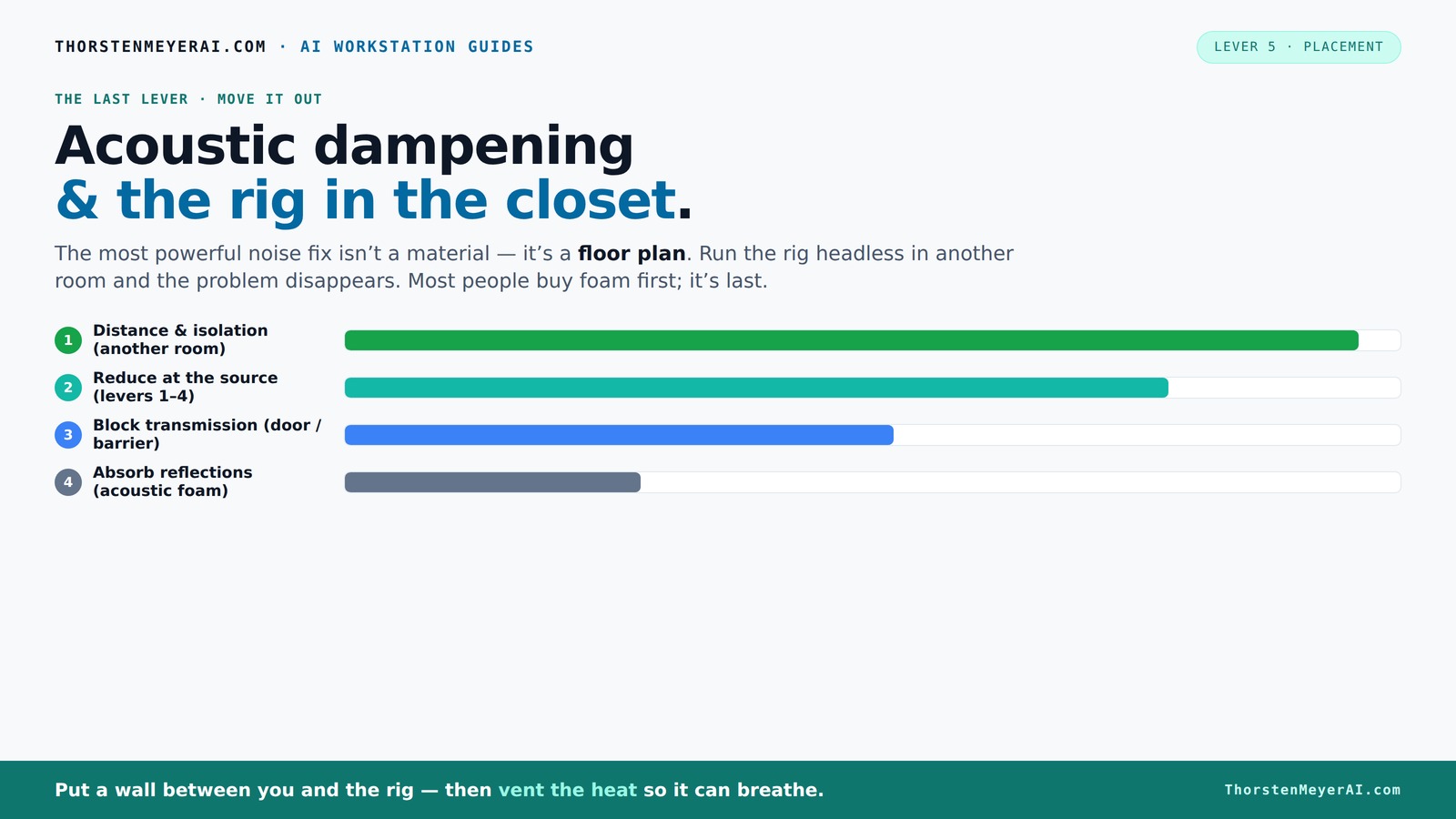
The most powerful noise fix isn’t a material — it’s a floor plan. A rig you can’t hear because it’s in another room beats any amount of foam. Tap the approaches in Part 1 to see what actually works.
(another room)
(levers 1–4)
(door / barrier)
(acoustic foam)
Contain the noise, not the heat
Key Takeaways
- Prioritize moving your rig out of the room; distance beats treatment every time.
- Use a combination of absorption (panels, blankets) and sealing gaps for the best sound quality.
- Treat first reflection points—side walls and ceiling—to tame echo and make vocals sound warm.
- Ensure proper ventilation to prevent heat buildup in a sealed closet, using quiet fans or ducting.
- Vibration isolation and gap sealing cut down on noise leaks, keeping your recordings clean.
soundproofing foam panels for recording booth
As an affiliate, we earn on qualifying purchases.
As an affiliate, we earn on qualifying purchases.
Why Your Closet Can Be a Game-Changer for Sound Quality
Closets are small, enclosed, and often filled with soft materials—clothes, blankets—that naturally absorb sound. This makes them perfect for dampening reflections that cause echo and muddiness in recordings. Plus, their compact size means less space for sound to bounce around.
Imagine recording vocals in a tiny closet: the sound feels warm, intimate, and less hollow than in a big room. You can even use clothing and blankets to tweak the acoustics further. But remember, it’s not just about absorption — it’s about placement and sealing gaps to prevent leaks.
Acoustic Dampening vs. Soundproofing — Know the Difference to Get It Right
Acoustic dampening focuses on controlling sound reflections inside your closet, making recordings clearer and less echoey. Soundproofing, on the other hand, blocks sound from leaking out or in, keeping noise contained.
For example, foam panels inside the closet reduce echo but won’t stop your neighbor’s dog from barking outside. Learn more about acoustic treatment. Conversely, sealing gaps around the door and walls prevents sound from escaping, but won’t improve how your voice sounds inside.
Understanding this difference helps you prioritize: want a quiet space for recordings? Seal gaps. Want better sound quality? Focus on treatment inside.
Best Panel Placement in a Tiny Closet for Clear, Warm Recordings
Where you put your panels matters more than how many you hang. The key is to target the first reflection points—these are spots where sound bounces directly back to the mic.
Use a mirror to locate these points: stand in front of your mic and find the spots on the side walls and ceiling where reflections bounce. Place acoustic panels or foam tiles there. Less important are the corners—unless you’re dealing with bass issues.
For a typical closet, covering about 20-40% of the reflective surfaces with soft materials dramatically improves sound clarity, making vocals feel warm and intimate without sounding boxy.
How to Build a Closet Vocal Booth That Works Without Breaking the Bank
Turning a closet into a vocal booth is easier than you think. Start by tackling the surfaces closest to the mic: the wall behind you, side walls, and ceiling. Use affordable materials like thick blankets, moving blankets, or DIY panels made from foam or fiberglass.
Here’s a simple step-by-step:
- Position your mic at the closet’s center, near the front opening.
- Attach foam panels or blankets behind and on the side walls at reflection points.
- Cover the door with a thick blanket or weatherstripping to seal gaps.
- Place soft materials on the floor—rugs or blankets—to reduce reflections from below.
- Use a reflection filter behind the mic for extra control.
This setup minimizes echoes and unwanted room sound, making your recordings sound professional even in a small, budget-friendly closet.
How to Keep Your Closet Cool and Quiet: Ventilation Tips for a Sealed Space
Closets trap heat, especially with a powerful rig inside. The biggest mistake? Sealing it completely without airflow. To fix this, add ventilation that moves hot air out and cool air in.
Options include:
- Passive vents — small holes or vents with mesh screens to allow airflow.
- Quiet exhaust fans — low-noise fans that pull hot air out, connected to ducting if needed.
- Temperature-controlled cabinets — if you want a professional look, these combine soundproofing with cooling systems.
For example, installing a small, quiet fan with ducting can keep the temperature stable, preventing thermal throttling and fan noise. Check out this guide for more cooling tips.
Vibration and Sound Leak Fixes for a Tight, Quiet Closet Rig
Even with good treatment, vibrations and gaps can leak sound. The secret: decouple your gear from the closet structure. Rubber feet, grommets, and weatherstripping are cheap fixes that cut down on vibrations and sound escape.
For instance, placing your PC on a rubber mat or installing grommets between the shelf and the chassis reduces low-frequency hum transmission. Seal gaps around doors and outlets with weatherstripping or acoustic sealant to block noise leaks.
This way, your rig can hum or roar as much as it wants, but your recordings stay clean and your neighbors stay happy.
Is Foam Enough? When to Consider Better Soundproof Solutions
Foam panels are great for controlling reflections but don’t block sound leaks or heat. If your goal is total silence or a noise-free environment, you’ll need more: heavy drywall, mass-loaded vinyl, or professional soundproofing cabinets.
For example, adding a second drywall layer with damping compound can cut sound transmission by up to 50%. Combining this with sealing gaps boosts isolation significantly. Check out this article for more on building a quiet, cool workspace.
Common Mistakes That Turn a Closet Setup into a Noise Disaster
Many people assume foam panels alone will turn their closet into a studio. Not true. Gaps around doors, windows, or outlets let sound leak. Over-treating corners can cause uneven reflections and muddy recordings. Ignoring ventilation causes heat buildup and potential gear failure.
Another mistake: placing the mic too close to reflective surfaces or not using a reflection filter. This results in harsh, echoey vocals. Instead, focus on placement, sealing gaps, and targeted treatment for best results.
Frequently Asked Questions
How much acoustic treatment do I need in a closet?
Start with covering reflection points—about 20-40% of nearby surfaces—with foam or blankets. Adding bass traps and sealing gaps makes a big difference, but avoid over-treating small spaces. Focus on reflection points first.Should I use foam panels, fiberglass, or blankets?
Foam panels are affordable and effective for reducing echo. Fiberglass offers more absorption but can be messier to install. Thick blankets or moving blankets are a cheap DIY solution that works well in small spaces—just make sure they’re thick enough.Where exactly should I place panels in a closet?
Target the first reflection points: the side walls where sound bounces back to the mic, and the ceiling if it causes bounce. Use a mirror trick to find these spots. Cover about 20-40% of reflective surfaces for best results.Do bass traps help in a small closet?
Absolutely. Bass traps absorb low-frequency buildup that can make recordings boomy or muddy. Place them in corners or behind the mic area for a more balanced sound.Can I make a closet soundproof, or only improve its acoustics?
You can do both, but it’s more practical to treat acoustics with foam and sealing gaps. Full soundproofing requires heavy drywall, damping, and structural sealing—much more complex and expensive.Conclusion
Your closet can become a surprisingly effective studio—if you treat it smartly. Focus on placement, absorption, and airflow, and you’ll get clear recordings without noise or heat issues. Now, go build your perfect tiny space, and make your recordings shine.Halloween Picks
halloween
As an affiliate, we earn on qualifying purchases.