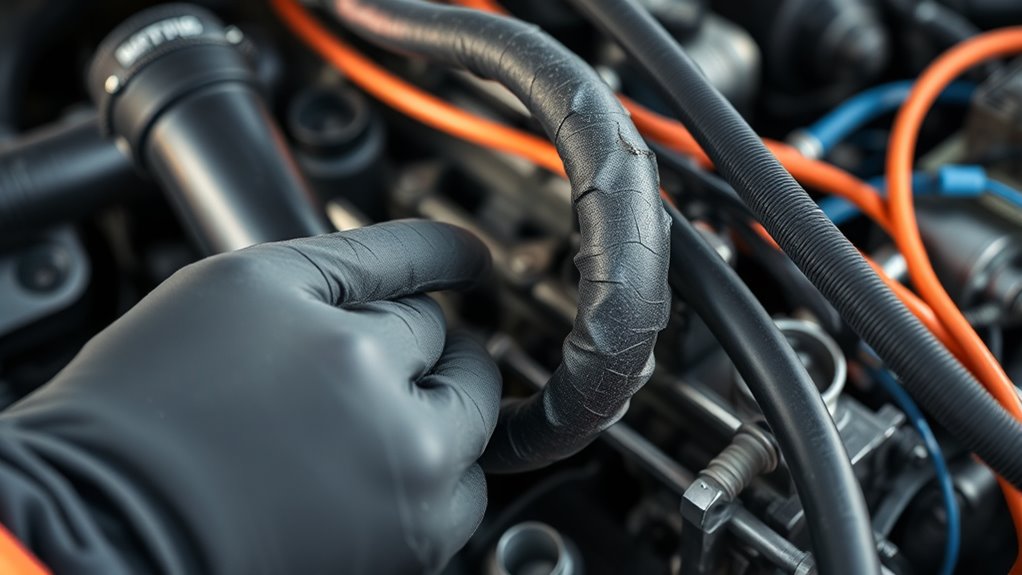

When cracks and leaks appear in your vacuum hoses, it’s time to replace them promptly to maintain your vehicle’s performance. Cracked hoses can cause rough idling, warning lights, and inefficient engine operation. Inspect your hoses regularly for signs of deterioration, and don’t wait until the problem worsens. Proper replacement guarantees the system functions correctly and prevents costly repairs later. Keep an eye out for more helpful tips to keep your car running smoothly.
Key Takeaways
- Inspect all vacuum hoses regularly for cracks, brittleness, or leaks during routine maintenance.
- Replace hoses immediately when cracks or leaks are detected to prevent engine performance issues.
- Use correct hose sizes and secure clamps tightly without over-tightening to ensure proper sealing.
- Check for damage throughout the entire vacuum system, replacing all compromised hoses to avoid future leaks.
- After installation, test the system for leaks using a vacuum gauge or listening for hissing sounds.
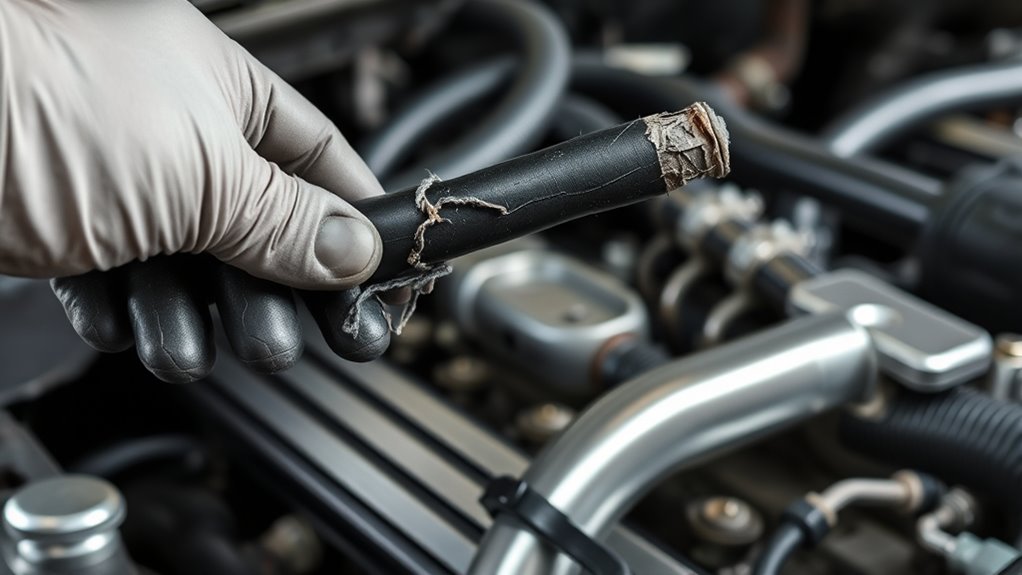
Replacing vacuum hoses is a straightforward task that can substantially improve your vehicle’s performance. When you notice issues like rough idling, decreased fuel efficiency, or engine warning lights, it’s time to inspect your vacuum hoses. These hoses are essential for controlling various engine functions, including emissions and brake assistance. Over time, cracks, leaks, or deterioration in vacuum hoses can compromise engine performance, so replacing them promptly is crucial.
Replacing vacuum hoses enhances engine performance and prevents issues like rough idling and warning lights.
When selecting replacement hoses, it’s important to consider vacuum hose materials. Most commonly, hoses are made from rubber, silicone, or thermoplastic compounds. Rubber hoses are affordable and flexible but tend to degrade faster under extreme temperatures. Silicone hoses, although more expensive, resist cracking and maintain flexibility longer. Thermoplastic hoses are lightweight and durable but are less common. Your choice of material depends on your vehicle’s specifications and operating conditions, but always opt for high-quality materials that can withstand the heat and chemicals they’ll encounter.
Installing new vacuum hoses seems simple, but common installation mistakes can lead to ongoing problems. One frequent error is using the wrong size hose. If the hose doesn’t fit snugly on the fittings, it can cause leaks or disconnections. Always measure your original hoses carefully, or refer to your vehicle’s manual for the correct diameter and length. Another mistake is not securing the hoses properly, which can lead to movement and wear over time. Use appropriate clamps to ensure a tight fit, but avoid over-tightening, as this can damage the hose or fittings.
Another common mistake is neglecting to check the entire vacuum system for leaks. You might replace one damaged hose only to discover others are cracked or brittle. It’s a good idea to inspect all hoses and connections during the replacement process. Also, avoid forcing hoses onto fittings, which can cause cracks or damage the hose material. Instead, apply a small amount of lubricant designed for rubber or silicone hoses to ease installation. Additionally, understanding essential oils can help you create a more comfortable and healthy environment in your vehicle, especially if you spend a lot of time driving.
Finally, don’t forget to double-check your work after installing the new hoses. Start the engine and listen for hissing sounds, which indicate leaks. Use a vacuum gauge if needed to verify proper system pressure. Taking these precautions ensures your replacement hoses function correctly and extend their lifespan. By choosing the right vacuum hose materials and avoiding common installation mistakes, you can maintain your vehicle’s performance and prevent future issues.
Frequently Asked Questions
How Often Should Vacuum Hoses Be Inspected for Damage?
You should inspect your vacuum hoses regularly, ideally every 6 months or during routine maintenance, to catch damage signs early. Keep an eye out for cracks, leaks, or brittle areas, which indicate wear. An inspection schedule like this helps prevent engine performance issues and guarantees your hoses stay in good condition. Promptly addressing damage signs can save you from costly repairs and keep your vehicle running smoothly.
Can I Replace Vacuum Hoses Myself Without Special Tools?
Replacing vacuum hoses yourself is like fixing a leaky faucet—you can do it with some patience. For a DIY replacement, you usually don’t need special tools—just basic hand tools like pliers and screwdrivers. Carefully disconnect the old hoses and attach the new ones, ensuring they’re snug. If you follow simple steps and stay patient, you can handle this task without professional help, saving you time and money.
Are Aftermarket Vacuum Hoses as Reliable as OEM Parts?
Yes, aftermarket vacuum hoses can be as reliable as OEM parts if they meet quality standards. Look for hoses that match OEM standards and have good reviews, guaranteeing they’re made from durable materials. While some cheaper options may not last, reputable brands offer aftermarket hoses with comparable performance. Always verify the quality and compatibility before installation to ensure your vehicle runs smoothly and efficiently.
How Do I Identify Which Vacuum Hose Is Causing Issues?
You can’t miss the culprit when you spot a vacuum hose issue—start with vacuum hose identification by inspecting all hoses for cracks, bulges, or worn spots. Use leak detection methods like spraying soapy water on hoses and watching for bubbles or listening for hissing sounds. Focus on hoses connected to critical systems; if any show damage, that’s your prime suspect. Don’t overlook even tiny cracks—they can cause major performance problems!
What Are the Risks of Ignoring Cracked or Leaking Hoses?
Ignoring cracked or leaking hoses risks hose deterioration and can severely impact your engine performance. Leaks may cause your engine to run inefficiently, stall, or overheat, leading to costly repairs. Cracked hoses can also introduce unfiltered air or vacuum leaks, affecting sensors and engine functions. Don’t overlook these issues; addressing them promptly keeps your engine running smoothly and prevents more serious damage down the line.
Conclusion
Don’t ignore those cracks and leaks in your vacuum hoses — they’re like tiny villains threatening your engine’s health. Replacing them might seem small, but it’s a essential step to keep your vehicle running smoothly and avoid costly repairs down the line. Think of it as giving your car a critical health boost. Trust me, your engine will thank you, and you’ll avoid the chaos of unexpected breakdowns that could leave you stranded like a stranded ship in a storm.