
If you notice reduced airflow, strange noises, or a drop in quality, your filter might be clogged. Turn off your system to prevent damage, locate the filter, and inspect it for dirt or debris. Clean washable filters carefully or replace disposable ones with the correct size and type. Regularly checking and maintaining filters prevents future clogs and extends system life. Keep going to discover more tips on keeping your filters in top shape.
Key Takeaways
- Look for signs like reduced airflow, strange noises, and increased energy use to recognize a clogged filter.
- Turn off the appliance and inspect the filter for dirt, dust buildup, or debris.
- Clean washable filters gently or replace disposable filters when heavily clogged.
- Follow manufacturer guidelines for proper cleaning, replacement, and selecting the correct filter type.
- Schedule regular maintenance checks to prevent future clogs and ensure optimal system performance.
Clogged filters can disrupt the efficiency of your appliances and systems, but addressing the issue promptly can prevent further damage. When you notice a decline in performance or increased energy consumption, it’s often a sign that your filters need attention. Regular filter maintenance is essential to keep everything running smoothly, whether it’s your HVAC system, refrigerator, or water purifier. The first step is to recognize the signs of a clogged filter, which include reduced airflow, strange noises, or a noticeable decrease in output quality. Once you suspect a clog, troubleshooting clogged filters becomes your next priority.
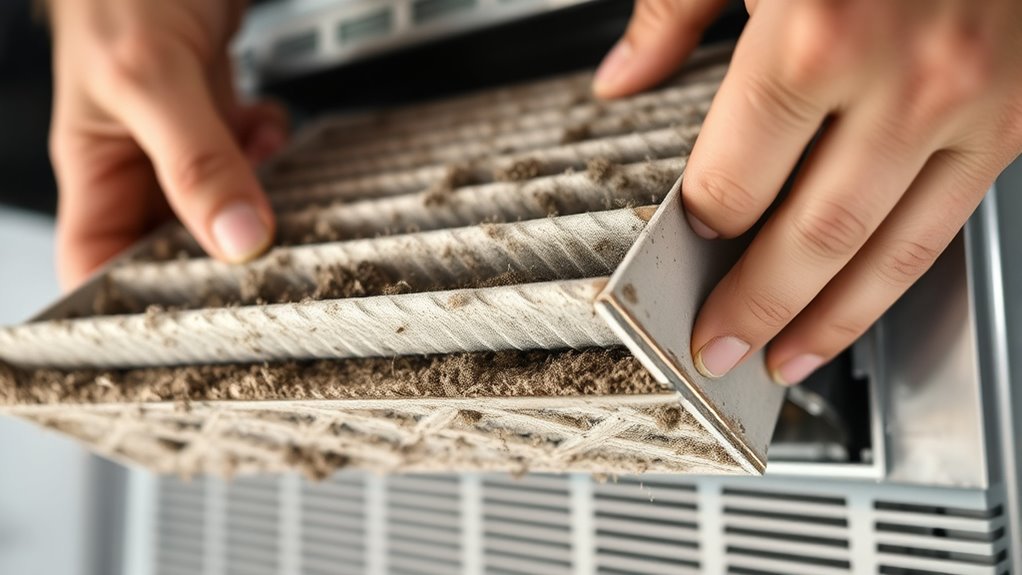
Start by turning off the appliance or system to prevent any damage during the cleaning or replacement process. Carefully locate the filter—this could be behind panels, inside the unit, or just accessible with a quick open. When inspecting, look for visible dirt, dust buildup, or debris that could be blocking airflow. If you see dirt buildup, it’s a good indication that a simple cleaning might resolve the problem. For filters designed to be cleaned, gently wash or vacuum off the dirt, ensuring you follow the manufacturer’s instructions. If the filter is disposable or heavily clogged, it’s best to replace it entirely.
Troubleshooting clogged filters isn’t just about cleaning or replacing; it’s also about understanding the frequency of filter maintenance. Some filters need monthly attention, especially in high-use environments or during allergy seasons, while others might last longer. Regularly checking your filters and sticking to a maintenance schedule helps prevent future clogs. When replacing filters, always select the right size and type recommended by the manufacturer to guarantee peak performance. Improperly fitted filters can cause leaks, reduce efficiency, or lead to further clogging.
Keep in mind that persistent issues after cleaning or replacing filters might indicate a deeper problem, such as duct obstructions or malfunctioning components. In such cases, don’t hesitate to consult a professional. Proper filter maintenance not only extends the lifespan of your appliances but also improves air quality and energy efficiency. Remember, troubleshooting clogged filters doesn’t have to be complicated if you stay consistent with regular checks and replacements. By staying vigilant and proactive, you can prevent costly repairs and maintain the smooth operation of your systems. Handling clogged filters is straightforward when you understand the signs, follow maintenance routines, and replace filters promptly, ensuring your appliances work at peak performance.

Simply 16x25x1 Air Filter, MERV 8, 6 Pack, For Home AC Furnace & HVAC (Actual Size: 15.75"x24.75"x0.75") DUST, Pet, & Allergy Control
Universally Compatible: Measuring 16" x 25" x 1", with an actual size of 15.75"x24.75" x 0.75", Simply Filters…
As an affiliate, we earn on qualifying purchases.
As an affiliate, we earn on qualifying purchases.
Frequently Asked Questions
How Often Should Filters Be Checked for Clogs?
You should check your filters for clogs every one to three months, depending on your filter maintenance routine. Regular inspections help prevent buildup that can reduce efficiency or cause damage. Follow your appliance’s or system’s inspection schedule closely, and replace filters promptly when you notice they’re clogged. Keeping a consistent inspection schedule guarantees your system runs smoothly, saves energy, and extends the lifespan of your equipment.
Can Clogged Filters Cause System Overheating?
Think of your system as a runner with a essential breath. When filters clog, airflow restriction occurs, making the system work harder. This strain can lead to overheating, risking damage. Clogged filters shorten the filter lifespan and cause overheating issues. You must regularly check and replace filters to keep airflow unrestricted, ensuring your system runs smoothly and avoids the dangers of overheating caused by clogged filters.
Are There Eco-Friendly Replacement Options Available?
Yes, eco-friendly replacement options are available. You can choose biodegradable filters that break down naturally, reducing environmental impact. Recyclable filter options are also popular, allowing you to repurpose or recycle them after use. By opting for these sustainable choices, you help protect the environment while maintaining your system’s efficiency. Always check product labels and supplier information to verify you’re selecting truly eco-friendly filters that meet your needs.
What Tools Are Best for Removing Stubborn Filters?
For filter removal, you should choose tools like pliers, a filter wrench, or a screwdriver, depending on your filter type. These tools make filter removal easier and safer, especially for stubborn filters. Select a tool that fits snugly around the filter to prevent damage. Always turn off the equipment first, then carefully apply the tool to loosen and remove the filter without causing harm to surrounding components.
How Do I Dispose of Old Filters Properly?
Disposing of old filters might feel like an epic battle, but it’s simple! You should always follow proper filter disposal methods to avoid environmental damage. Check if your local waste program accepts filters or if you need to take them to an eco-friendly disposal center. Many filters are recyclable—look for eco-friendly options and recycling instructions. Proper disposal not only protects the environment but also keeps your community clean and safe.

CoreCarbon 20x30x1 Cut To Fit Furnace & Air Conditioner Washable Reusable High Air Flow Polyester Fiber Filter Media, Made in USA (20" x 30" x .75" actual)
MADE IN USA: UL 900 Classified Material designed for use in HVAC systems – Polyester Washable Furnace /…
As an affiliate, we earn on qualifying purchases.
As an affiliate, we earn on qualifying purchases.
Conclusion
Don’t ignore clogged filters—they can cause costly damage and inefficiency. You might think replacing filters is a hassle, but it’s simple and saves you money in the long run. Regularly checking and swapping out filters keeps your system running smoothly and extends its lifespan. So, take a few minutes now to handle clogged filters; your equipment and wallet will thank you for it. Staying proactive ensures peak performance and avoids unexpected breakdowns.

CORPORATION 274-160-200 16" x 20" x 1" DISPOSABLE FIBERGLASS AIR FILTER, 12 PER BOX
Koch Filter Brand
As an affiliate, we earn on qualifying purchases.
As an affiliate, we earn on qualifying purchases.

GE XWFE Refrigerator Water Filter, Genuine Replacement Filter, Certified to Reduce Lead, Sulfur, and 50+ Other Impurities, Replace Every 6 Months for Best Results, Pack of 1
PREMIUM FILTRATION: GE Genuine XWFE Filter is certified to reduce 50+ impurities including lead, chlorine, PFOA/PFOS, microplastics, arsenic,…
As an affiliate, we earn on qualifying purchases.
As an affiliate, we earn on qualifying purchases.