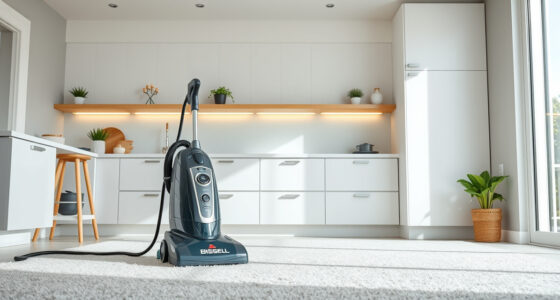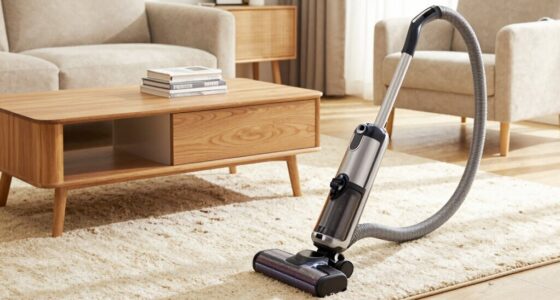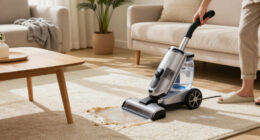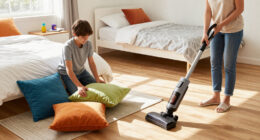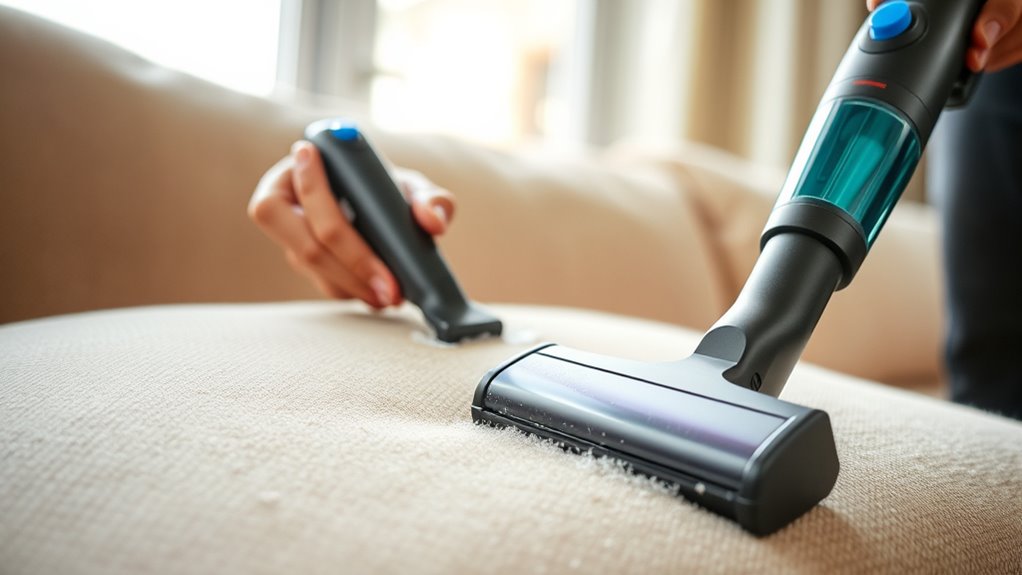

To effectively reduce allergens, vacuum at least twice a week, or daily if you have pets or pollen exposure. Use a vacuum with a HEPA filter and strong suction, especially on carpets, and make certain you use proper techniques like multiple passes over high-traffic areas. Be sure to empty the canister or replace filters regularly, and vacuum in well-ventilated spaces. Keep these tips in mind to improve your indoor air quality — more details await your next step.

Get cleaning gear delivered free with Prime
- Fast, free delivery on millions of items
- Prime Video, Amazon Music and more included
- Member-only deals all year
Key Takeaways
- Vacuum at least twice weekly, or daily if exposed to pets or pollen, to reduce airborne allergens effectively.
- Use vacuums with HEPA filters and strong suction for optimal removal of dust mites, pet dander, and pollen.
- Vacuum in well-ventilated areas to prevent allergen recirculation and improve indoor air quality.
- Employ thorough, multiple passes over high-traffic and carpeted areas for comprehensive allergen removal.
- Regularly maintain and replace filters, empty canisters or bags frequently, and wear a mask if highly sensitive.
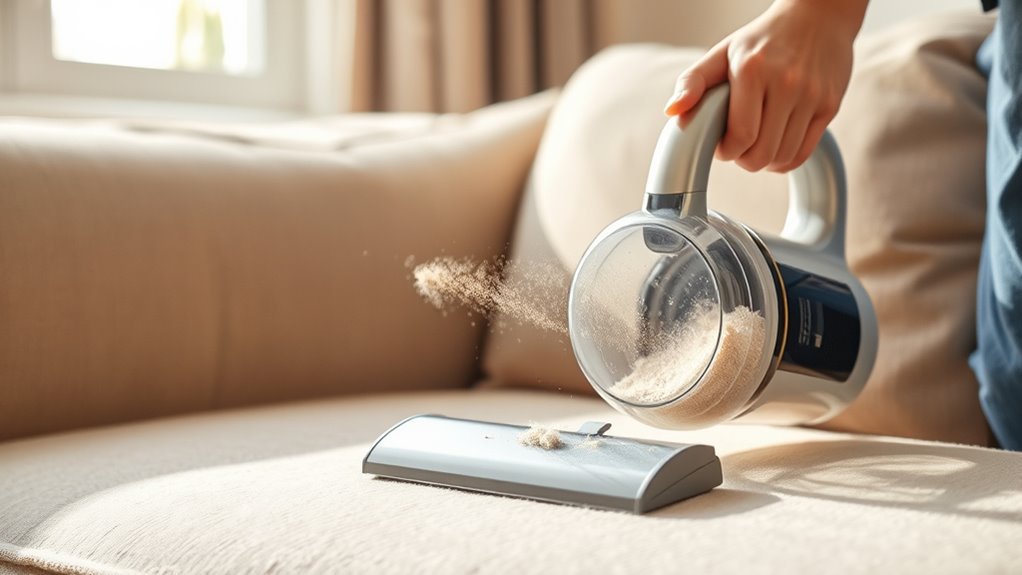
If you suffer from allergies, vacuuming is more than just a chore—it’s an essential step in managing your symptoms. Proper vacuuming can markedly reduce airborne allergens like dust mites, pet dander, and pollen that trigger allergic reactions. When choosing a vacuum, consider its air purifier compatibility. Look for models equipped with HEPA filters, which trap tiny particles that standard filters might miss. This guarantees that allergens are not just stirred up and recirculated but are actually removed from your environment. The effectiveness of vacuuming depends on how well your vacuum captures allergens, so investing in a high-quality appliance is indispensable.
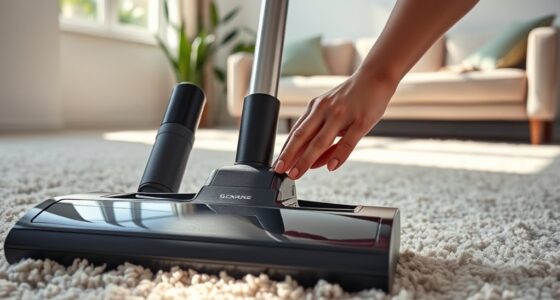
Your flooring type plays an integral role in your vacuuming strategy. Carpet versus hardwood surfaces require different approaches. If you have carpets, you need a vacuum with strong suction and a beater brush or agitator to dislodge debris embedded deep in the fibers. Regularly vacuum carpets at least twice a week, and consider using a vacuum with adjustable height settings for different pile types. Be thorough, making multiple passes over high-traffic areas. For hardwood or other hard flooring, a vacuum with a soft brush or felted wheels prevents scratching and fine dust removal is easier. These surfaces tend to trap fewer allergens than carpets, but they can still harbor dust and dander, so consistent vacuuming remains indispensable.
Frequency of vacuuming depends on your allergy severity and household activity. For allergy sufferers, aim to vacuum at least twice a week, but if you have pets or high pollen exposure, daily vacuuming might be necessary. Always vacuum in well-ventilated areas to prevent allergens from settling back into the air. Using an air purifier in the room can complement vacuuming by further filtering airborne particles, especially if your vacuum’s air purifier compatibility is high. Regular maintenance of your vacuum, such as replacing filters and emptying the canister, is crucial for optimal allergen removal.
Additionally, pay attention to vacuum maintenance. Empty the bag or canister frequently to prevent allergen buildup inside the machine. Replace filters regularly according to the manufacturer’s instructions. When vacuuming, wear a mask if you’re highly sensitive, and consider using a microfiber cloth on surfaces to pick up residual dust. Combining these practices ensures you maximize your vacuuming efforts, reducing allergy symptoms and improving indoor air quality. Proper technique, consistent frequency, and the right equipment make a tangible difference in creating a healthier living environment tailored to your allergy needs. Moreover, understanding the types of allergens prevalent in your home can guide you in customizing your cleaning routine more effectively.
As an affiliate, we earn on qualifying purchases.
Frequently Asked Questions
What Types of Vacuum Cleaners Are Best for Allergy Sufferers?
You should choose a vacuum cleaner with HEPA filters and cordless design for allergy relief. HEPA filters trap tiny allergens like dust mites and pet dander effectively, preventing them from recirculating into the air. Cordless vacuums make it easier to reach all areas without hassle, ensuring thorough cleaning. Combining these features helps you reduce allergens in your home, creating a healthier environment for your allergy symptoms to improve.
How Can I Improve Airflow During Vacuuming?
Think of your vacuum as a breath of fresh air, and airflow optimization as its heartbeat. To improve airflow, choose a vacuum with a well-designed vacuum design that minimizes airflow resistance. Regularly check and clean filters, seals, and hoses, ensuring unobstructed pathways. Using a vacuum with powerful suction and proper attachments also boosts airflow, helping you trap allergens more effectively and create a healthier home environment.
Are There Specific Filters Recommended for Allergy-Friendly Vacuuming?
You should look for vacuums with HEPA filters, as they trap tiny allergens effectively. HEPA filters are essential because they act as allergen barriers, preventing dust and pollen from recirculating into the air. Make sure the vacuum’s filter is sealed properly, and replace it regularly for peak performance. This way, you create a cleaner environment and reduce allergy symptoms during your cleaning routine.
Should I Vacuum All Surfaces or Focus on Specific Areas?
Think of your home as a garden—you want to tend to the most vulnerable plants first. You should prioritize surface cleaning in areas where allergens like dust and pet dander gather most, such as carpets, bedding, and upholstery. Focus on these key spots with area-specific cleaning, rather than trying to vacuum every surface equally. This targeted approach helps reduce allergens where they matter most, providing relief from allergy symptoms.
How Do I Store My Vacuum to Prevent Allergen Buildup?
To prevent allergen buildup, store your vacuum in a clean, dry area with good ventilation. Make sure to empty the canister or replace the bag regularly, sealing it tightly to contain allergens. Keep the vacuum’s filters clean and replace them as recommended. Proper vacuum storage minimizes allergen escape, ensuring your space stays as allergen-free as possible. Avoid damp or cluttered areas to maintain ideal allergen containment.
Conclusion
By vacuuming regularly, you clear away allergens and breathe easier—like opening a window on a stuffy day. But rushing through the task or using the wrong techniques can trap dust rather than remove it. Think of vacuuming as a gentle dance, not a hurried sprint. When you strike the right balance between frequency and technique, allergy symptoms fade into the background, giving you a cleaner, healthier home—and a gust of fresh air.
Fall Picks
fall essentials
As an affiliate, we earn on qualifying purchases.