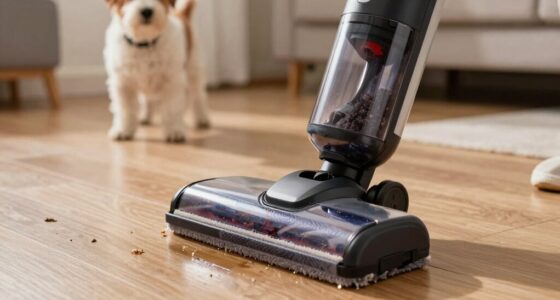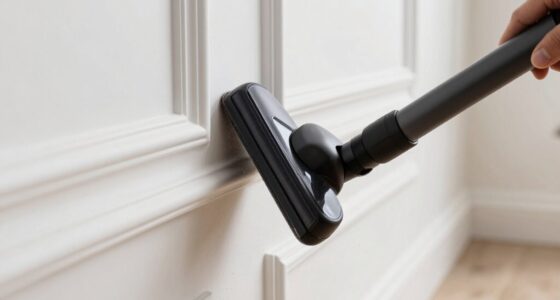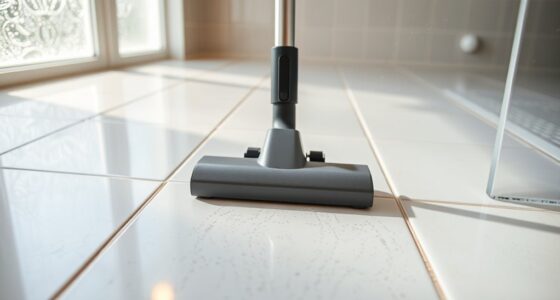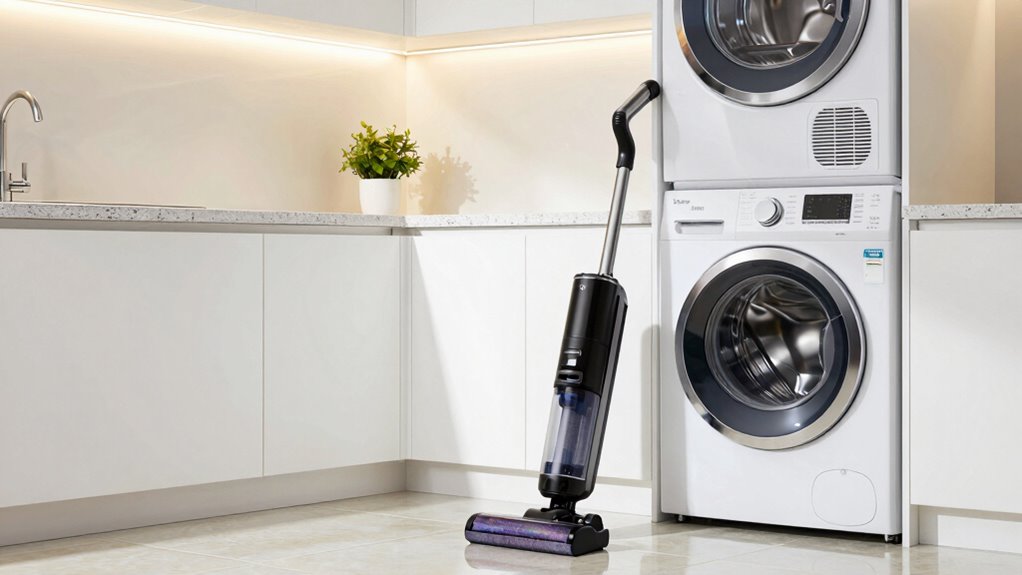

To vacuum laundry rooms, mudrooms, and utility spaces effectively, start by clearing the area of laundry, shoes, and clutter. Use a vacuum with the right attachments, like crevice tools and brushes, to reach corners, behind appliances, and underneath storage. Move slowly over the surfaces, adjusting suction for different floor types, and focus on high-traffic spots. Regularly clean vents and dust nearby surfaces for a thorough tidy-up; keep going to uncover more tips for a spotless space.
Key Takeaways
- Clear the floor of laundry, shoes, and clutter before vacuuming to prevent damage and ensure thorough cleaning.
- Use appropriate attachments like crevice tools to reach behind appliances and along baseboards.
- Adjust vacuum settings based on surface type, such as tile, vinyl, or concrete, for optimal suction.
- Focus on high-traffic areas and corners where dust and debris tend to accumulate.
- Regularly clean vents, filters, and behind storage to maintain air quality and prevent dust buildup.

Have you ever stepped into your laundry room or mudroom and felt overwhelmed by clutter and dirt? If so, you’re not alone. These spaces tend to gather mess quickly, especially when storage organization isn’t a priority. Keeping them tidy and clean requires a straightforward approach, and vacuuming plays an essential role in maintaining a fresh, functional environment. To make this easier, establishing regular cleaning schedules helps prevent dirt from building up and keeps clutter under control, making vacuuming more efficient and less time-consuming.
Start by clearing the floor before you vacuum. Remove any laundry, shoes, or miscellaneous items that may be lying around. This step is vital because vacuuming over clutter can damage your vacuum cleaner and reduce its effectiveness. Once the floor is clear, inspect for larger debris or dirt that might be stuck in corners or along baseboards. These areas tend to trap dust and crumbs, so give them extra attention. Use a handheld vacuum with a crevice tool to reach tight spots, especially around corners, under shelves, or behind appliances. This targeted approach ensures you get rid of hidden dust and dirt that a standard vacuum might miss. Additionally, choosing the right vacuum cleaner with suitable attachments can improve cleaning efficiency in these spaces.
Next, vacuum the entire floor thoroughly, moving slowly to pick up all debris. If your space has different floor types—like tile, vinyl, or concrete—adjust the vacuum settings accordingly to optimize suction. Pay particular attention to high-traffic areas where dirt tends to accumulate most. Regular vacuuming not only keeps the space visually cleaner but also reduces allergens and dust, which can accumulate quickly in utility spaces. Incorporating vacuuming schedules—weekly or biweekly, depending on usage—helps prevent dirt from becoming a persistent problem. Using the correct vacuum attachments for each surface enhances cleaning performance and protects delicate flooring. Incorporating proper cleaning tools like microfiber cloths and dusters alongside vacuuming can further improve overall cleanliness.
Don’t forget to clean around storage solutions and shelving units. Dust and debris often collect behind or underneath storage bins, hooks, or cabinets. Use your vacuum’s hose attachment to reach these tricky spots. This practice helps maintain overall cleanliness and prolongs the life of your storage organization by preventing dust buildup that can damage items or cause mold. Also, check vents and air filters in the room, as these can circulate dust and dirt if neglected. Regularly vacuuming and dusting your utility space can significantly improve air quality and overall cleanliness. Keeping an eye on air quality by removing dust from vents and filters ensures the space remains healthier for everyone using it.

Amazon Basics Upright Bagless Vacuum Cleaner for Carpet and Hard Floors, Washable Filter, Crevice and Upholstery Tools, Detachable Handle, Lightweight, 1.7L Dust Cup, 25ft Cord, Black/White
- Lightweight Design: Weighs only 8.4 lbs
- Long Reach Cord: 25-foot power cord for extended cleaning
- Versatile Attachments: Includes upholstery and crevice tools
As an affiliate, we earn on qualifying purchases.
As an affiliate, we earn on qualifying purchases.
Frequently Asked Questions
How Often Should I Vacuum These Types of Rooms?
You should vacuum laundry rooms, mudrooms, and utility spaces at least once a week to maintain a good cleaning schedule. Regular vacuuming helps improve air quality by removing dust, dirt, and debris that can accumulate quickly in these high-traffic areas. If you notice more dirt or dust, increase the frequency. Consistent cleaning keeps these spaces tidy, reduces allergens, and creates a healthier environment for everyone.
What Vacuum Attachments Are Best for Tight Corners?
Think of vacuum attachments for tight corners like a precision tool in a craftsman’s kit. Use a crevice tool or a small, angled nozzle to reach those tricky spaces. While vacuum sealers and air purifiers handle storage and air quality, your vacuum attachments are your secret weapon for thorough cleaning. They help you target narrow corners and edges, ensuring every inch of your laundry or mudroom is dust-free and fresh.
Can I Use a Wet/Dry Vacuum in These Spaces?
Yes, you can use a wet/dry vacuum in laundry rooms, mudrooms, and utility spaces. Just guarantee your vacuum has a proper vacuum storage for wet and dry debris, and follow a consistent cleaning schedule to prevent buildup. Wet/dry vacuums are versatile and effective for tackling spills, dirt, and debris common in these areas. Regularly maintaining your vacuum helps keep these spaces clean and safe.
How Do I Prevent Dust From Accumulating Quickly?
Think of your space as a delicate dance floor—you want it pristine and smooth. To prevent dust from quickening its return, use air purifiers to trap airborne particles and set up dust barriers around cluttered areas. Regularly wipe surfaces and sweep floors, so dust doesn’t settle into hiding spots. These steps keep your laundry room fresh, turning chaos into calm, and dust into distant memories.
Are There Specific Vacuum Filters Recommended for Utility Rooms?
Yes, for utility rooms, you should look for vacuums with HEPA filters, as they trap fine dust and allergens effectively. These filters also help with odor control, keeping your space smelling fresh. Choose vacuums with washable or replaceable HEPA filters for easy maintenance. This guarantees your cleaning is thorough and your utility room remains a healthier, fresher environment.
Conclusion
Keeping your laundry room, mudroom, and utility space clean is like tending a garden—you need regular care to keep it thriving. I once neglected mine, and it became a cluttered jungle. But once I committed to weekly vacuuming, it transformed into a tidy oasis. Just as a garden flourishes with consistent attention, your space stays functional and inviting when you make cleaning a routine. A little effort today keeps chaos at bay tomorrow.