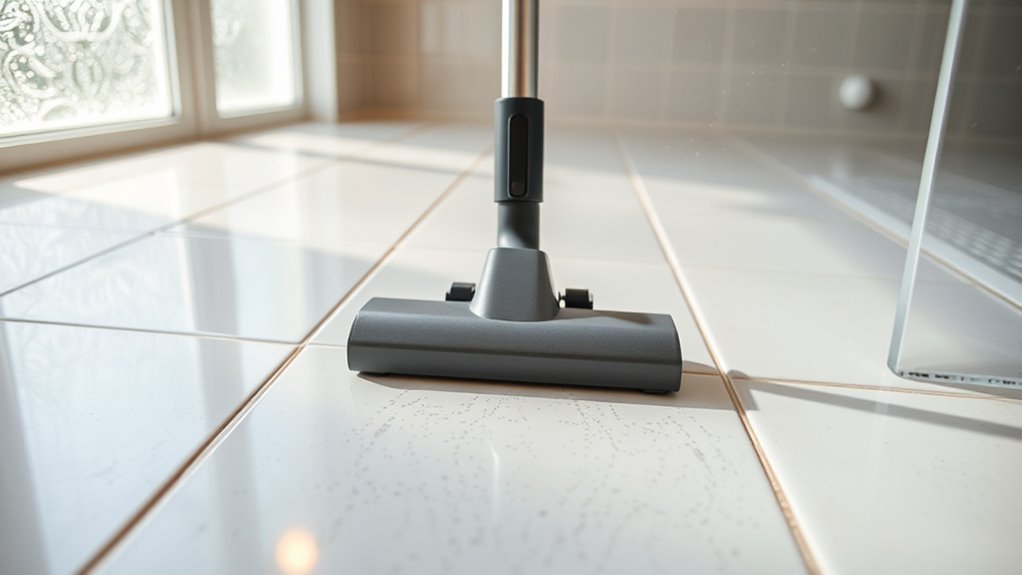

Vacuuming tile and grout lines is essential for keeping your floors clean and looking great. It removes dirt and grime that can dull surfaces and cause damage over time. Use a vacuum with a narrow nozzle to reach those tight grout lines, and don’t forget to go slowly for thorough cleaning. Regular vacuuming not only makes it easier to maintain your floors but also promotes a healthier living environment. Discover more about the best techniques and tools for effective cleaning.
Key Takeaways
- Regular vacuuming of tile and grout lines prevents dirt buildup and maintains floor aesthetics.
- Use a vacuum with a narrow nozzle attachment for effective dirt removal from grout lines.
- Vacuum at least once a week to extend the lifespan of flooring materials and reduce grime.
- Sealing grout periodically protects against stains and moisture, facilitating easier cleaning.
- A consistent maintenance routine promotes a healthier living environment by removing debris effectively.
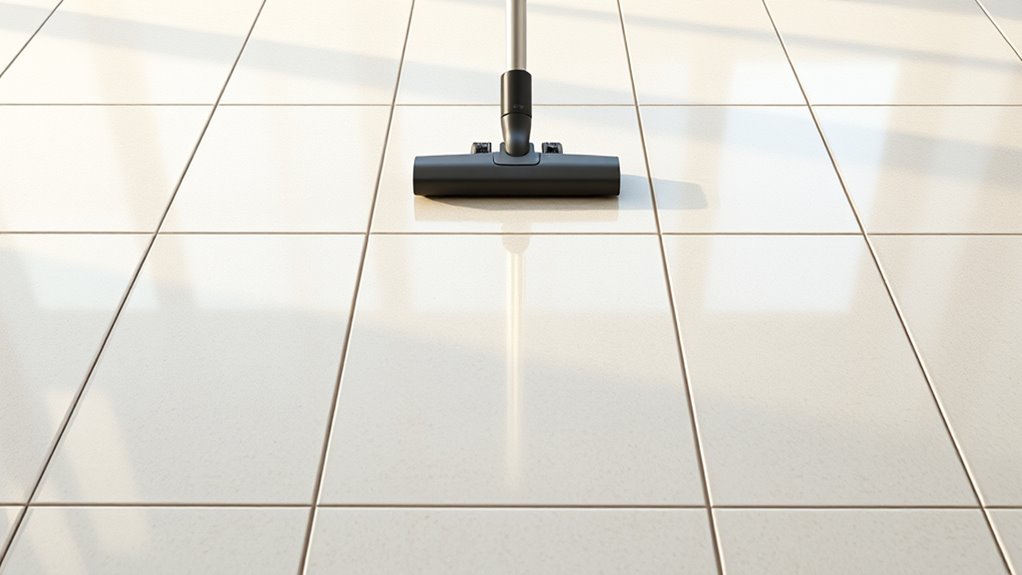
Have you ever noticed how dirt and grime seem to settle into tile and grout lines, making your floors look dull? It’s frustrating, isn’t it? Maintaining clean tile and grout isn’t just about aesthetics; it can also impact the longevity of your floors. Vacuuming these areas regularly is one of the best ways to keep them looking fresh and new. You might think that sweeping or mopping will do the trick, but a vacuum cleaner can reach those tight spaces and eliminate dirt that other methods leave behind.
To effectively vacuum tile and grout lines, you’ll want the right cleaning tools. A vacuum with a narrow nozzle attachment is ideal for getting into those hard-to-reach grout lines. This way, you can suck up dirt and debris without scattering it around your floor. If you don’t have a vacuum with a specialized attachment, a handheld vacuum can work just as well. Just make sure it has enough suction power to draw out the grime. As you vacuum, take your time and move slowly along the grout lines to ensure you’re catching everything.
After you’ve vacuumed, consider sealing your grout. Grout sealing protects against stains and moisture, which can lead to mold and mildew over time. Sealing creates a barrier that makes it easier to clean in the future. You’ll find that clean floors are much easier to maintain when your grout is sealed properly. If you haven’t done it in a while, or if you’ve never sealed your grout, it’s time to take action. You can usually purchase grout sealant at your local hardware store, and applying it is a straightforward process.
Once you’ve sealed your grout, you’ll want to keep up with your vacuuming routine. Aim to vacuum your tile and grout lines at least once a week. This simple habit can prevent dirt from building up and becoming embedded in the grout, which means less scrubbing for you later on. If you notice stubborn stains, you may need to use a specialized cleaner along with your vacuuming. Additionally, implementing a consistent cleaning routine can improve your overall data privacy challenges in maintaining a healthy living environment.
Incorporating these cleaning strategies will not only enhance the appearance of your floors but also extend their lifespan. Remember, a little effort now goes a long way in maintaining a clean and inviting home. So grab your vacuum and get started on those tile and grout lines today!

PetOde 2Pcs Dryer Vent Cleaner Kit Universal Vacuum Hose Attachment & Brush
- Universal Connector: Elastic stretch fits most vacuum cleaners
- Compatible with Most Dryers: Fits narrow gaps with slim design
- Multi-purpose Lint Brush: Cleans dryer lint, coils, and radiators
As an affiliate, we earn on qualifying purchases.
As an affiliate, we earn on qualifying purchases.
Frequently Asked Questions
How Often Should I Vacuum My Tile and Grout Lines?
You should vacuum your tile and grout lines at least once a week as part of your maintenance routines. This cleaning frequency helps prevent dirt buildup and keeps your floors looking their best. If you notice more dust or debris, consider increasing the frequency, especially in high-traffic areas. Regular vacuuming not only maintains cleanliness but also prolongs the life of your tiles and grout, making your cleaning efforts more effective.
Can I Use a Regular Vacuum on Tile Floors?
You can use a regular vacuum on tile floors, but it’s wise to choose one with a hard floor setting. Keep in mind, regular vacuum maintenance is key; clean the filters and brushes to avoid damage. To keep your tiles looking sharp, consider these tile cleaning tips: vacuum regularly to prevent dirt build-up, and for deeper cleaning, mop with a suitable solution. With a little effort, your tiles will shine like new!
What Attachments Are Best for Vacuuming Grout Lines?
For grout cleaning, you’ll want to use specific attachment options that can effectively reach those narrow spaces. A crevice tool is ideal for getting into tight grout lines, while a soft brush attachment can help remove dirt without scratching your tile. If your vacuum has a specialized grout cleaning attachment, that’s even better! Just make sure to work slowly, so you don’t miss any dirt hiding in those grooves.
Should I Wet the Grout Lines Before Vacuuming?
Imagine a desert landscape, parched and cracked. Wetting the grout lines before vacuuming can make a world of difference. It softens the dirt, allowing your vacuum to glide over the surface like a gentle breeze. Plus, if you’ve sealed your grout, this moisture won’t harm it. Just remember, keeping your vacuum maintenance in check guarantees it performs at its best, ready to tackle those stubborn, embedded particles with ease.
How Do I Prevent Dirt Buildup in Grout Lines?
To prevent dirt buildup in grout lines, you should consider grout sealing. Sealing your grout creates a protective barrier that repels dirt and moisture, making cleaning easier. Regularly sweeping or vacuuming the surface helps remove debris before it settles into the grout. Additionally, mop with a mild cleaner to maintain cleanliness. By following these steps, you’ll considerably reduce dirt accumulation and keep your grout looking fresh and new.
Conclusion
In summary, vacuuming your tile and grout lines not only keeps your floors looking fresh but also helps maintain a healthier environment. By removing dirt and debris, you’re preventing stains and prolonging the life of your flooring. So, make it a habit to vacuum regularly, embrace the ease of routine cleaning, and enjoy the beauty of your tiles. With consistent care, you’re ensuring a clean home, a happy family, and a space you can truly be proud of.