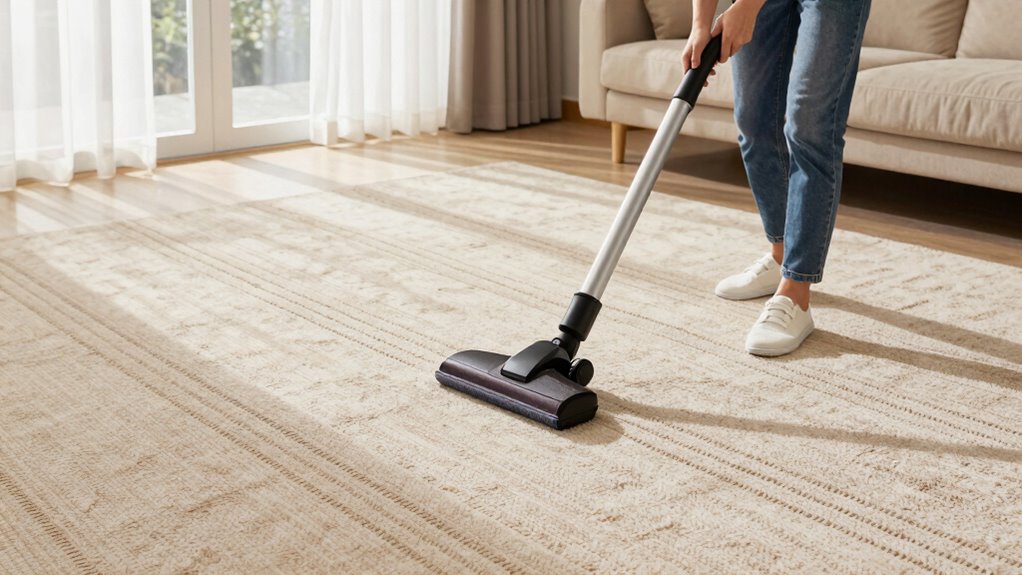

To choose better vacuuming patterns for large rooms, start by dividing the space into sections using natural boundaries or grids. Work systematically from one corner to the exit, using straight, parallel lines to guarantee no spots are missed. Use criss-cross or zigzag patterns with multiple passes, especially from different angles, to loosen stubborn dirt. Keep your movements slow for better dirt removal, and vary your passes based on carpet type. If you want to master these techniques, keep exploring next steps.

Get cleaning gear delivered free — and shop member deals
- Fast, free delivery on millions of items
- Access to Prime Big Deal Days deals on October 6–7
- Prime Video, Amazon Music and more included
Key Takeaways
- Divide large areas into manageable sections to ensure systematic coverage and prevent missed spots.
- Use straight, parallel lines or criss-cross patterns for thorough and consistent vacuuming.
- Adjust vacuum settings and attachments based on carpet type for optimal dirt removal.
- Vacuum slowly with overlapping passes to maximize cleaning efficiency.
- Develop a routine pattern, turning at room boundaries to maintain uniform coverage.
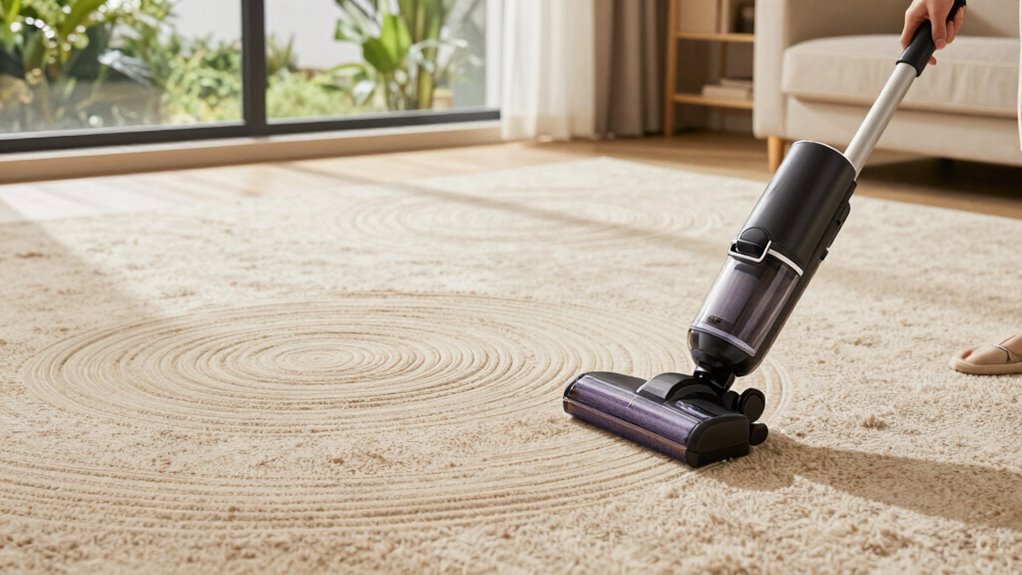
Vacuuming might seem straightforward, but choosing the right pattern can make a significant difference in how clean your floors get. When tackling large rooms, the way you move your vacuum can impact both efficiency and effectiveness. Understanding your carpet types is vital because different carpets demand different approaches. For example, plush carpets with dense fibers require slow, deliberate passes to lift embedded dirt, while low-pile carpets can be cleaned more quickly with overlapping strokes. Recognizing these differences helps you avoid missed spots and reduces the need for multiple passes, saving you time and effort.
Choosing the right vacuum pattern and understanding your carpet type ensures a cleaner, more efficient clean.
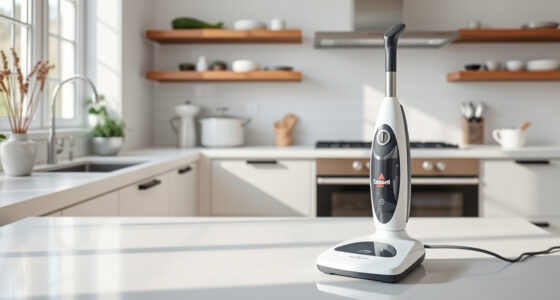
Equally important are your vacuum cleaner features. Modern vacuums come with various settings, adjustable suction, and attachments that can optimize your cleaning pattern. For instance, a vacuum with adjustable height settings allows you to adapt to different carpet types effortlessly. Use the lowest setting for high-pile carpets and increase suction power for deeper dirt removal. Additionally, vacuums equipped with powerful motors and wide cleaning heads cover more ground per pass, making it easier to develop efficient patterns across large areas. Consider vacuums with edge-cleaning brushes and swivel heads, which help reach tight corners and navigate around furniture smoothly, ensuring thorough coverage.
When choosing your pattern, start by dividing the room into sections mentally or physically, creating a grid or using furniture as natural boundaries. Begin at one corner of the room and work your way systematically toward the exit, avoiding overlapping your passes excessively. Overlapping is vital because it guarantees no spots are missed but too much overlap leads to wasted effort. A common, effective pattern is to vacuum in straight, parallel lines, gradually turning at the end of each pass to cover adjacent strips. This method minimizes missed areas and keeps your cleaning organized.
For large rooms, it’s often best to vacuum in a criss-cross or zigzag pattern, especially if you’re dealing with high-traffic areas or heavily soiled carpets. This pattern ensures thorough coverage, as each section gets multiple passes from different angles, dislodging stubborn dirt. Remember, slow passes help your vacuum cleaner’s features work at their best—especially on delicate or textured carpets—so don’t rush through your routine. Consistency is key: develop a pattern that works for your room and vacuum model, and stick to it. Over time, this structured approach will make your vacuuming more effective, efficient, and less tiresome, leaving your large rooms cleaner and fresher.
vacuum cleaner with adjustable height
As an affiliate, we earn on qualifying purchases.
As an affiliate, we earn on qualifying purchases.
Frequently Asked Questions
How Often Should I Change My Vacuuming Pattern?
You should change your vacuuming pattern regularly to maintain pattern consistency and guarantee thorough cleaning. Typically, adjusting your pattern every few weeks helps prevent dirt buildup and keeps your carpets looking fresh. If you notice uneven wear or missed spots, it’s a good sign to switch up your pattern sooner. Regularly changing your vacuuming approach also prevents you from developing habits that might miss hidden debris, ensuring a cleaner, healthier home.
Does Flooring Type Affect Vacuuming Pattern Effectiveness?
Yes, flooring type affects vacuuming pattern effectiveness. You should consider flooring compatibility when choosing your pattern, as different surfaces require specific approaches. For example, hardwood floors benefit from gentle, straight passes, while carpets need overlapping, circular motions. Pattern customization allows you to adapt your technique to each surface, ensuring thorough cleaning. Adjusting your vacuuming pattern based on flooring type helps remove debris more efficiently and prevents damage.
Can Vacuuming Patterns Reduce Cleaning Time?
Think of vacuuming as steering through a vast, open sea. Using consistent patterns acts like a reliable map, boosting your vacuuming efficiency and reducing the time spent battling ocean currents. When you stick to predictable routes, you cover every area thoroughly and avoid retracing your steps. This pattern consistency helps you clean faster, making large rooms feel less like a chore and more like a smooth sailing adventure.
Are Certain Patterns Better for Pet Hair Removal?
Yes, certain vacuuming patterns are better for pet hair removal. When cleaning carpet versus hardwood, focus on overlapping strokes to loosen pet hair embedded in fibers or trapped in crevices. For carpets, vacuum in multiple directions to lift hair effectively. On hardwood, use slow, deliberate passes along the grain to pick up pet hair without scattering it. Adjust your pattern based on flooring type for maximum pet hair removal.
How Do I Adapt Patterns for Uneven or Cluttered Floors?
To adapt vacuuming patterns for uneven floors and cluttered spaces, focus on methodical, overlapping strokes to guarantee thorough cleaning. For unevenness, adjust your vacuum’s height setting for better suction on varied surfaces. In cluttered areas, move furniture and obstacles first, then vacuum slowly to catch dirt hidden beneath. Use different patterns—straight lines, zigzags, or circular motions—to cover all surfaces effectively, preventing missed spots and ensuring a deep clean.
Conclusion
Remember, choosing the right vacuuming pattern isn’t just about cleaner floors—it’s about reclaiming your space and peace of mind. Think of your vacuum as a dance partner, guiding you through your room with purpose and rhythm. When you master the pattern, your large room transforms from chaos to calm, turning cleaning from a chore into a choreographed routine. So, take charge, plan your steps, and let your floors shine as brilliantly as your effort.
Fall Picks
fall essentials
As an affiliate, we earn on qualifying purchases.