To thoroughly clean your vacuum, start by unplugging it and inspecting or washing filters, ensuring they’re fully dry before reinserting. Clear debris from the brush roll, hoses, and vents using tools like crevice nozzles or a broomstick. Check and empty the dust container or bag regularly, and wipe down surfaces. Test suction power and clean attachments for peak performance. Keep up with these steps to maintain top cleaning efficiency—stay tuned for more expert tips beyond the basics.
Key Takeaways
- Regularly inspect and replace or wash filters, ensuring they are dry before reinstallation.
- Clear debris from brush rolls, suction pathways, and hoses to maintain optimal airflow.
- Check and clean vacuum attachments and hoses for blockages or damage.
- Test suction power regularly and remove tangled hair or threads from the brush roll.
- Empty dust containers and wipe surfaces frequently to prevent dust recirculation and allergens.
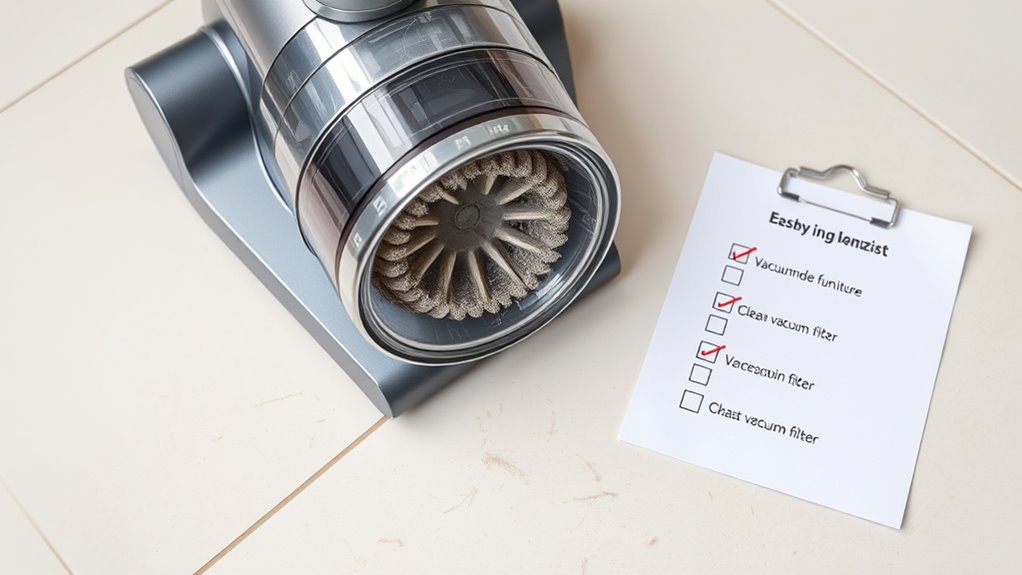
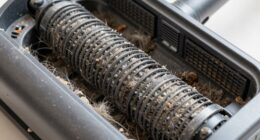
Have you ever wondered if your vacuum is truly clean enough to keep your home fresh and allergen-free? If you’re serious about deep cleaning, it’s essential to look beyond surface dirt and focus on effective dust removal and proper filter maintenance. Your vacuum’s ability to trap dust and allergens hinges on a well-maintained filter, so don’t overlook this step. Start by unplugging your vacuum and inspecting the filter—whether it’s a HEPA, foam, or cloth type—check for dirt buildup or damage. If it’s washable, rinse it thoroughly with water and let it dry completely before reinstalling. A dirty or clogged filter reduces suction power and diminishes dust removal efficiency, so maintaining it is key to keeping your home allergen-free. Regularly checking filter replacement indicators can help you stay on top of timely maintenance. Next, examine the vacuum’s brush roll and suction pathway. Remove any hair, threads, or debris tangled around the brush to ensure it spins freely. This not only improves dust removal but also prevents strain on the motor. Use a crevice tool or small brush to clear out corners, vents, and filters, making sure no hidden dust or debris lurks where it can be blown back into the air. Don’t forget to check the vacuum bag or canister; a full or clogged container hampers dust removal and can lead to reduced suction. Empty or replace them as needed, ideally after every few uses or when they’re half full. To maximize dust removal, inspect the vacuum’s hoses and attachments for blockages. A clogged hose can considerably reduce airflow, making your deep-cleaning efforts less effective. Use a broomstick or similar tool to push out any obstructions. While at it, wipe down exterior surfaces and the filter housing to remove surface dust and prevent it from recirculating during your next clean. Finally, test your vacuum’s suction by holding a tissue or small piece of paper near the nozzle. If it doesn’t hold firmly, it’s time to revisit the filter and hose checks. Regularly maintaining your vacuum’s filters and ensuring dust removal components are clear will greatly improve its performance. This not only keeps your home cleaner but also reduces allergens and improves air quality. Remember, a well-maintained vacuum isn’t just about cleaning—it’s about creating a healthier living environment for you and your family.

2Pack Hepa Filters Replacement Compatible with SUXIANGVAC Cordless Vacuum A27, Washable Filters Compatible with VOKENE& VICEASE& OIRFND A27& TITIPOY A27 Series
💪【Perfect Compatibility】These stick vacuum cleaner replacement filters are compatible with VICEASE TY-A27O-03/TY-A27P-01, SUXIANGVAC USA27G/ A27G/A27P, VOKENE A27/A27B, OIRFND…
As an affiliate, we earn on qualifying purchases.
As an affiliate, we earn on qualifying purchases.
Frequently Asked Questions
How Often Should I Deep-Clean My Vacuum?
You should deep-clean your vacuum every 1 to 3 months, depending on your cleaning schedule and usage. Regular vacuum maintenance helps keep it running efficiently and extends its lifespan. If you have pets or allergies, consider deep-cleaning more frequently. By sticking to a consistent schedule, you prevent buildup and maintain peak suction. Remember, a well-maintained vacuum makes your cleaning easier and more effective.
Can I Use Household Cleaning Agents on My Vacuum?
Sure, go ahead and toss household cleaning solutions into your vacuum—what could possibly go wrong? But seriously, you shouldn’t. These cleaning agents can damage filters and internal parts. Stick to manufacturer-recommended cleaning solutions and prioritize filter maintenance. Using the wrong stuff might seem convenient, but it risks ruining your vacuum and reducing its lifespan. Keep it simple and safe; your vacuum will thank you.
What Are Signs My Vacuum Needs a Deep Clean?
You’ll know your vacuum needs a deep clean if it’s losing suction, making unusual noises, or if the brush roller isn’t spinning properly. Check for clogs or debris, and replace the vacuum bag if it’s full. Also, inspect and maintain the brush roller by removing hair or fibers wrapped around it. Regular vacuum bag replacement and brush roller maintenance keep your vacuum performing at its best and extend its lifespan.
Is It Necessary to Replace Vacuum Filters Regularly?
You might think vacuum filters last forever, but in reality, regular filter maintenance is vital. Skipping replacement can clog your vacuum, reducing suction and efficiency. Following a proper replacement schedule ensures your vacuum stays in top shape, saving you time and frustration. So, yes, it’s necessary to replace filters regularly—otherwise, you’ll be fighting an uphill battle against dirt, all while pretending your vacuum’s doing just fine.
How Do I Prevent Future Dust Buildup in My Vacuum?
To prevent future dust buildup in your vacuum, focus on air filter maintenance and brush roll care. Regularly check and replace filters to ensure peak airflow, and clean or replace the brush roll to prevent debris from spreading. Keep the vacuum’s intake and exhaust vents clear of dust, and routinely inspect these areas. Doing these simple steps helps maintain suction power and keeps your vacuum running efficiently longer.

2 Packs Universal Robot Vacuum Brush Cleaning Tool Handheld Vacuum Cleaner Brush Kit Compatible with j7,i7,s9,i4,i3,694 Series Robot Vacuum
【Universal Compatibility】This handheld vacuum cleaning brush works with most robot vacuum brands and models, compatible with j7/i7/s9/i4/i3/694/675/692 series
As an affiliate, we earn on qualifying purchases.
As an affiliate, we earn on qualifying purchases.
Conclusion
Now that you’ve tackled your vacuum’s deep-clean checklist, your home will feel fresher and healthier. Think of this routine as giving your vacuum a well-deserved spa day—revitalized and ready to serve you better. Staying consistent turns a chore into a habit, transforming your cleaning into a moment of pride. So, embrace this ritual with enthusiasm—because a cleaner home isn’t just a dream, it’s your next victory waiting to happen.

10 Foot Long Dust Collection Power Tool Hose Kit with 5 Fittings Universal for Multiple Tools & Vacuums
Complete Kit Contents:The box contains: a 10 – foot long, 1 – 3/16 inch O.D. small – diameter…
As an affiliate, we earn on qualifying purchases.
As an affiliate, we earn on qualifying purchases.

RUKHOOL V8 Replacement Dust Bin for Dyson V7 V8 SV10 SV11 Parts Vacuum Canister Replacement for Dyson V8 Attachments Dust Bucket Container Trash Can Dirt Cup Dustbin Part No.967699-01
🏠 Compatibility: The V8 replacement canister is for Dyson V7 V8 SV11 SV10 stick cordless vacuum cleaner. Package…
As an affiliate, we earn on qualifying purchases.
As an affiliate, we earn on qualifying purchases.