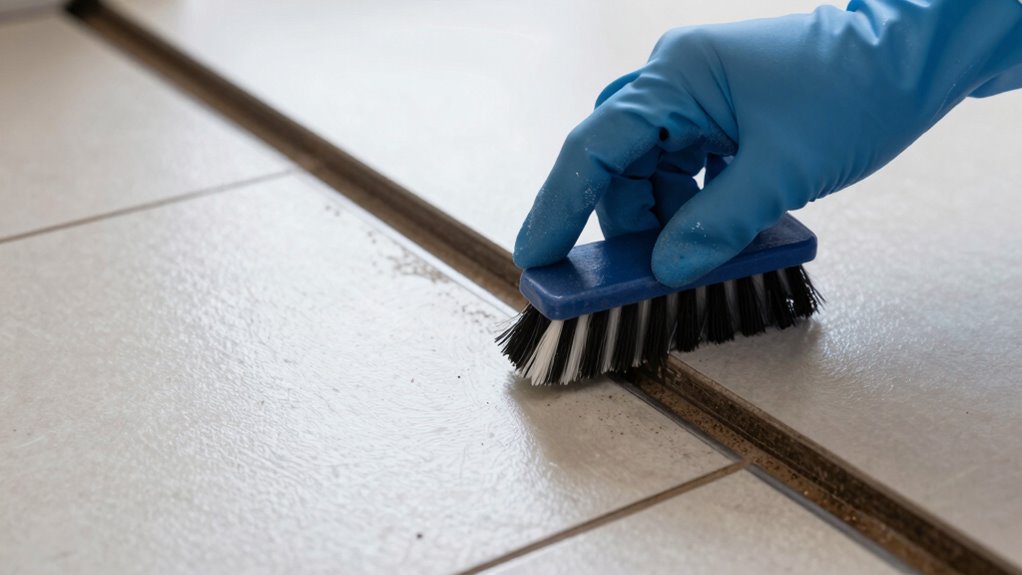

To clean floor edges, thresholds, and tight spots effectively, use small brushes like a toothbrush or detail brush dipped in cleaning solution to loosen stubborn dirt. Follow up with a damp cloth to wipe away grime thoroughly. Remember to work from top to bottom, and don’t forget to inspect and re-clean tricky areas. With consistent attention, you’ll keep these spots spotless—and you’ll find more tips on mastering these detailed cleaning tasks ahead.

Get cleaning gear delivered free with Prime
- Fast, free delivery on millions of items
- Prime Video, Amazon Music and more included
- Member-only deals all year
Key Takeaways
- Use small, angled brushes or detail brushes dipped in cleaning solution for thorough grime removal in tight spots.
- Employ a toothbrush for stubborn dirt on thresholds, followed by a damp cloth to wipe clean.
- Dust edges and thresholds first with microfiber cloth or soft brush to loosen debris before wiping or mopping.
- Incorporate regular cleaning of transition areas into routine to prevent long-term dirt buildup.
- Follow up with a damp cloth after scrubbing to ensure all loosened dirt is removed from edges and tight spots.
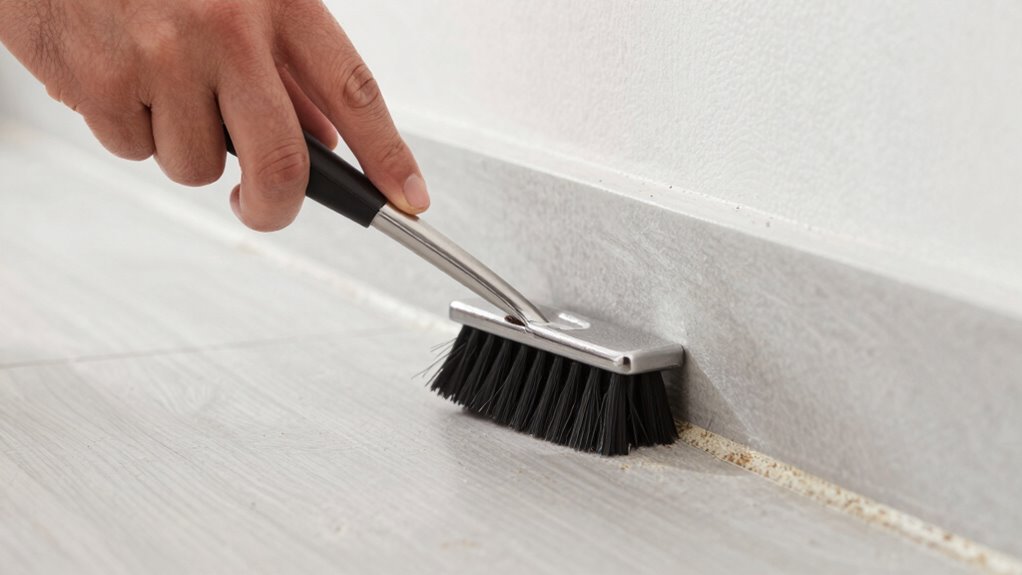
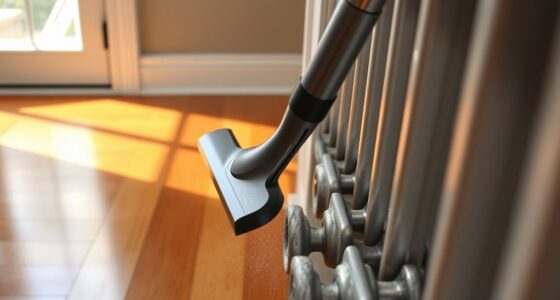
Dusting methods are equally important in maintaining clean edges and thresholds. Use a microfiber cloth or a small, soft brush to dislodge dust from edges, baseboards, and tight corners. These tools are excellent because they attract dust electrostatically, making it easier to lift particles away without spreading them around. When dusting, start from the top—such as the base of a wall or molding—and work your way down. This way, any debris you loosen falls onto the floor, ready to be picked up with your mop or vacuum. For stubborn dust or pet hair, a handheld vacuum with a narrow nozzle can be highly effective, especially in crevices or along thresholds. Proper filtration/suction basics can enhance your vacuum’s ability to pick up fine dust particles more effectively. Additionally, using a vacuum with a HEPA filter can significantly improve air quality by capturing even the tiniest dust particles.
For the actual mopping of edges and thresholds, use a damp cloth or sponge to wipe along the borders after dusting. Combining this with your regular mopping routine guarantees no dirt or grime is left behind. Sometimes, a small, angled brush can help loosen dirt in tight spots before you wipe or mop. When cleaning thresholds, pay close attention to the transition areas between different flooring types—these spots tend to accumulate dirt and debris. Use a toothbrush or detail brush dipped in cleaning solution to scrub away stubborn grime, then follow up with a damp cloth. Regular inspection and deep cleaning of these areas can prevent long-term buildup and damage.
Consistency is key. Incorporate these dusting methods into your regular cleaning routine and adapt your mopping techniques to fit the space. With patience and the right tools, you’ll find that no corner or tight spot remains neglected. Over time, this attention to detail not only improves the appearance of your floors but also prolongs their lifespan by preventing dirt buildup that can cause wear and tear. Remember, thorough cleaning isn’t just about the visible areas; it’s about making certain every inch, especially those hard-to-reach spots, gets the care it needs. Regularly inspecting and cleaning hard-to-reach areas can prevent long-term damage and maintain a pristine look.
As an affiliate, we earn on qualifying purchases.
Frequently Asked Questions
What Tools Are Best for Cleaning Hard-To-Reach Floor Corners?
For cleaning hard-to-reach floor corners, you’ll want to use corner brushes and detail tools. Corner brushes have angled bristles that fit snugly into tight spots, making it easier to dislodge dirt. Detail tools, like small scrub brushes or narrow vacuum attachments, help you access narrow gaps and edges. These tools give you precision and control, ensuring you thoroughly clean every corner without missing a spot.
How Often Should I Clean Thresholds and Tight Spots?
Think of your thresholds and tight spots as the delicate gears of a clock—requiring regular care to keep everything running smoothly. You should clean these areas at least once a week to prevent dirt buildup. For better results, incorporate maintenance tips like using small brushes or vacuum attachments. Regular cleaning not only maintains cleanliness but also prolongs the lifespan of your flooring, ensuring your home stays spotless and well-kept.
Can I Use a Vacuum on Delicate Floor Edges?
Yes, you can use a vacuum on delicate floor edges, but you should prioritize vacuum safety. Use a vacuum with a gentle setting or a soft brush attachment to prevent damage. Be careful around fragile materials or intricate trim, avoiding aggressive suction that could cause scratches or dislodging. For delicate cleaning, always test a small area first and opt for lower power levels to protect your flooring while effectively removing dirt.
Are Natural Cleaning Solutions Effective for Stubborn Grime?
Natural cleaning solutions are like gentle warriors fighting stubborn grime—they can be surprisingly effective. While they might not always remove the toughest stains, remedies like vinegar and baking soda often break down dirt without harsh chemicals. For stubborn grime, give these natural remedies a try first. They’re eco-friendly and safe, making your cleaning routine more sustainable while still tackling those tricky spots with a bit of patience and persistence.
How Can I Prevent Debris Buildup in Tight Spots?
To prevent debris buildup in tight spots, you should regularly dust using precise dusting techniques with a small brush or vacuum attachment. Incorporate these areas into your cleaning schedule, ensuring they’re cleaned at least weekly. This proactive approach stops dirt from accumulating, making deep cleaning easier. By staying consistent and using the right tools, you’ll keep those hard-to-reach spots clean and debris-free.
Conclusion
Now that you know how to tackle those tricky edges, thresholds, and tight spots, cleaning becomes less of a chore and more of a breeze. Remember, even the most stubborn dirt and grime can be conquered with patience and the right tools. Just like the trusty broom of yesteryear, your effort will make your floors gleam brighter than the morning sun. Keep at it, and you’ll enjoy a spotless space that feels as warm and welcoming as Grandma’s cozy kitchen.
Columbus Day / Indigenous Peoples' Day Picks
long weekend sales
As an affiliate, we earn on qualifying purchases.