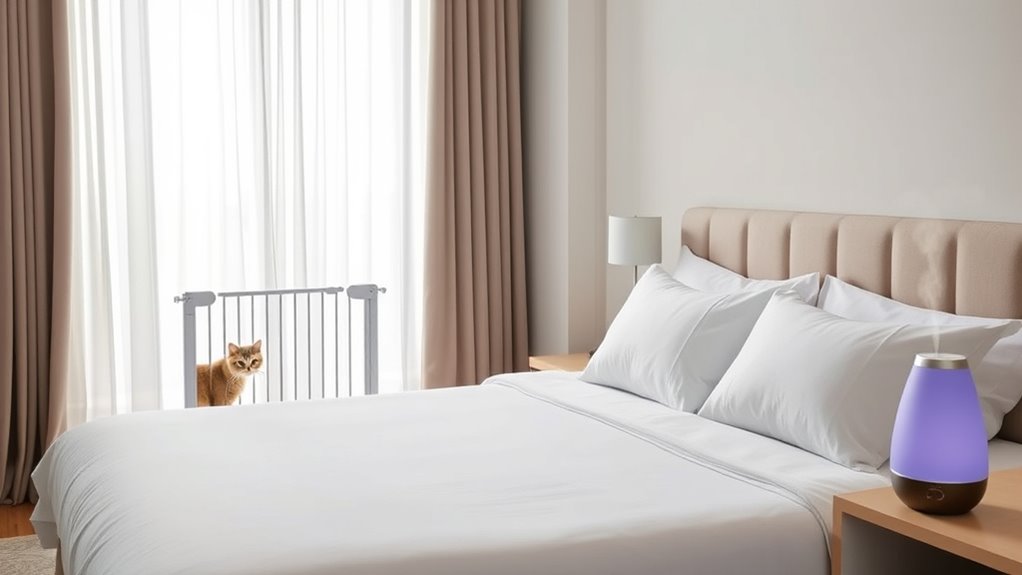

To manage allergies, keep pets out of your bedroom to reduce pet dander buildup on bedding, furniture, and carpets. Regularly groom your pets outside and use HEPA vacuums to remove hair and dander effectively. Use air purifiers, allergen-proof covers, and maintain a strict cleaning routine to improve air quality. These simple steps can markedly decrease allergy symptoms and help you sleep better — and there’s more you can do to create a healthier environment.
Key Takeaways
- Keep pets out of bedrooms to reduce pet dander and allergen buildup on bedding and furniture.
- Regularly groom pets outside and use HEPA vacuums to minimize airborne pet hair and dander.
- Use HEPA air purifiers and allergen-proof covers to filter allergens and protect bedding.
- Maintain a strict cleaning routine, including frequent washing of bedding, curtains, and plush toys.
- Ventilate rooms and practice consistent allergen control to improve sleep quality and respiratory health.

Have you ever wondered why keeping pets out of bedrooms can benefit both your health and your pet’s well-being? The answer lies in reducing exposure to pet dander, which is a common allergen. Pet hair removal and allergen control techniques are essential steps you can take to create a healthier living environment. When pets roam freely in your bedroom, their fur, skin flakes, and saliva can accumulate on bedding, furniture, and carpets, exacerbating allergy symptoms. By limiting their access, you minimize these allergen sources, making it easier to manage allergies and improve sleep quality.
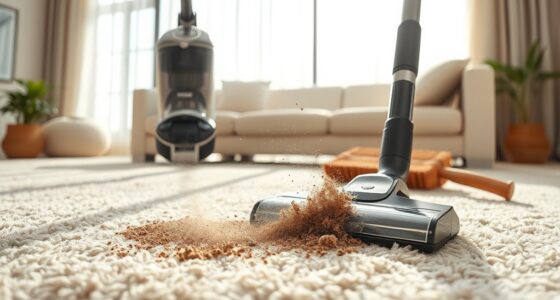
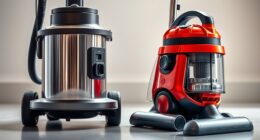
Pet hair removal plays a vital role in allergen control. Regularly grooming your pet and using a high-efficiency particulate air (HEPA) vacuum can considerably reduce the amount of pet hair and dander in your space. Grooming outside or in well-ventilated areas prevents fur from spreading indoors. When you do groom your pet indoors, make sure to use tools that trap hair effectively, and dispose of fur promptly. Additionally, washing bedding, curtains, and plush toys frequently helps remove accumulated pet hair and dander, further reducing allergen levels. These pet hair removal practices are simple but impactful, especially when combined with other allergen control techniques.
Regular grooming and frequent washing reduce pet hair and dander, helping create a healthier, allergen-free home environment.
Implementing allergen control techniques involves more than just grooming and cleaning. You can invest in HEPA air purifiers for your bedroom to filter out airborne pet dander. Keeping windows open when possible helps ventilate the room, diluting allergens. Using allergen-proof covers on pillows and mattresses creates a barrier that prevents pet dander from settling into your bedding. Also, maintaining a strict cleaning routine—vacuuming carpets, sweeping floors, and wiping down surfaces—keeps pet hair and dander from accumulating. These measures work together to create a cleaner, allergen-reduced environment, making it easier for allergy sufferers to breathe comfortably and sleep well.
Additionally, recent studies highlight that increased smartphone usage among seniors can influence how they manage their health and household environments, including allergen control practices. Incorporating pet hair removal and allergen control techniques into your daily routine might require some effort, but it’s well worth the benefits. Not only do you protect your respiratory health, but you also help your pet stay healthier by minimizing dust and dander buildup. Remember, keeping pets out of the bedroom is a simple step toward allergy management that can lead to better sleep, fewer allergy symptoms, and a more comfortable home overall. With consistent cleaning, grooming, and air quality improvements, you’ll notice a notable difference in your environment’s cleanliness and your well-being.
Frequently Asked Questions
How Can I Reduce Pet Dander in Other Parts of the House?
To reduce pet dander in other parts of your house, start with regular pet grooming to minimize loose hair and dander. Use allergen-proofing covers on furniture and wash bedding frequently. Vacuum often with a HEPA filter vacuum to trap allergens. Also, encourage your pets to stay off furniture and keep them out of certain rooms. These steps help cut down pet dander and improve air quality throughout your home.
Are Air Purifiers Effective in Allergy Management?
Air purifier effectiveness is high when it comes to allergy management, especially for reducing pet dander. Using a HEPA filter can trap tiny particles, providing allergy symptom relief. You should run the air purifier regularly in rooms where your pets spend time. Keep windows closed during high pollen seasons, and clean or replace filters as recommended. This helps make certain you get the most benefit and create a healthier environment for allergy sufferers.
What Are Natural Remedies for Pet Allergy Relief?
Imagine a calming garden where herbal remedies like butterbur or quercetin soothe your allergy symptoms, reducing sneezing and itching. Incorporate dietary adjustments, such as omega-3-rich foods and local honey, to build your immunity. These natural remedies can help ease pet allergy symptoms gently, creating a more comfortable environment. You’ll feel relief as your body responds positively, turning your home into a peaceful haven free from allergic discomfort.
How Often Should I Clean Bedding and Furniture?
You should wash your bedding at least once a week to reduce pet allergens, and vacuum furniture regularly using a HEPA filter. For furniture cleaning tips, spot clean upholstery with allergen-reducing sprays and consider using washable covers that you can wash frequently. This routine helps minimize pet dander, keeping your environment allergen-free and making breathing easier. Consistent cleaning is key to allergy relief.
Can Allergy Medications Help With Pet Allergen Symptoms?
Pet allergy medications can definitely help with pet allergen symptoms by providing allergy symptom relief. These medications, like antihistamines or nasal sprays, target allergic reactions and reduce sneezing, itching, or congestion. Make sure to follow your healthcare provider’s instructions for best results. While medications help, combining them with other allergy management strategies, like frequent cleaning and keeping pets out of bedrooms, offers the most all-encompassing relief from pet allergens.
Conclusion
Keeping pets out of your bedroom reduces allergens and promotes better sleep, creating a healthier space. Yet, their companionship offers comfort and joy that no allergy spray can replace. It’s a balance between the love you feel and the health you need. By setting boundaries, you protect your lungs without sacrificing the bond that makes your house a home. Ultimately, a cleaner bedroom allows you to breathe easier—without giving up the pet love you cherish.