
To make allergy season cleaning less overwhelming, focus on targeted strategies like using allergen-proof covers on bedding, regularly washing in hot water, and vacuuming with a HEPA filter. Keep air clean with air purifiers in key areas and guarantee proper ventilation inside. Renegotiate your cleaning routine by dusting with a damp cloth and maintaining HVAC filters. Staying organized and tackling small tasks daily will help, and if you want more tips, stay tuned.
Key Takeaways
- Prioritize regular cleaning of bedding, curtains, and upholstery with hot water and HEPA vacuuming to reduce allergens efficiently.
- Use air purifiers in main living areas and bedrooms to continuously filter airborne allergens.
- Incorporate allergen-proof covers on bedding to minimize dust mites and pollen buildup.
- Keep windows closed during peak pollen times and shower after outdoor activities to prevent allergen entry.
- Establish a simple cleaning routine to maintain indoor air quality and prevent allergen accumulation.

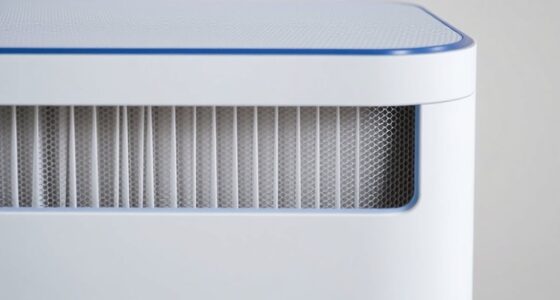
As allergy season ramps up, cleaning your home can feel like an overwhelming task. Pollen, dust, pet dander, and mold spores seem to be everywhere, making it difficult to breathe freely and stay comfortable. The key to managing this chaos is to focus on targeted strategies that reduce allergens without turning your entire cleaning routine into a formidable chore. One effective way to do this is by investing in air purifiers. These devices help filter out airborne particles, capturing pollen and other irritants before they settle on surfaces or get inhaled. Keep them running in main living areas and bedrooms, especially where you spend most of your time. This simple addition can greatly improve your indoor air quality and lessen allergy symptoms.
Another essential step involves protecting your bedding and furniture with allergen-proof covers. These specialized covers create a barrier that prevents dust mites, pet dander, and pollen from penetrating mattresses, pillows, and comforters. Using allergen-proof covers means you won’t have to wash bedding as frequently, which saves time and effort. When you do wash your bedding, use hot water to kill dust mites and allergens, and dry everything on a high heat setting. This routine helps keep your sleeping environment cleaner and less allergenic, making nights more restful. Additionally, understanding air filtration technology can help you choose the most effective equipment for your home. Incorporating proper ventilation can also help reduce indoor moisture levels, discouraging mold growth, which is a common allergen during allergy season. Regularly inspecting for and addressing microplastics in dust can further improve indoor air quality, as these particles can embed in dust and irritate sensitive individuals.
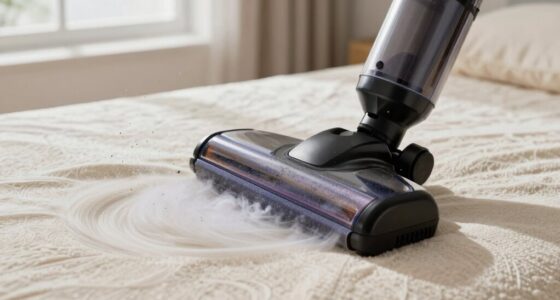
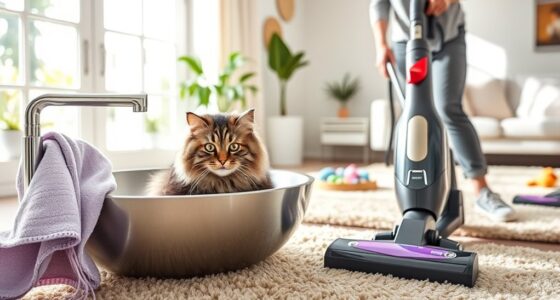
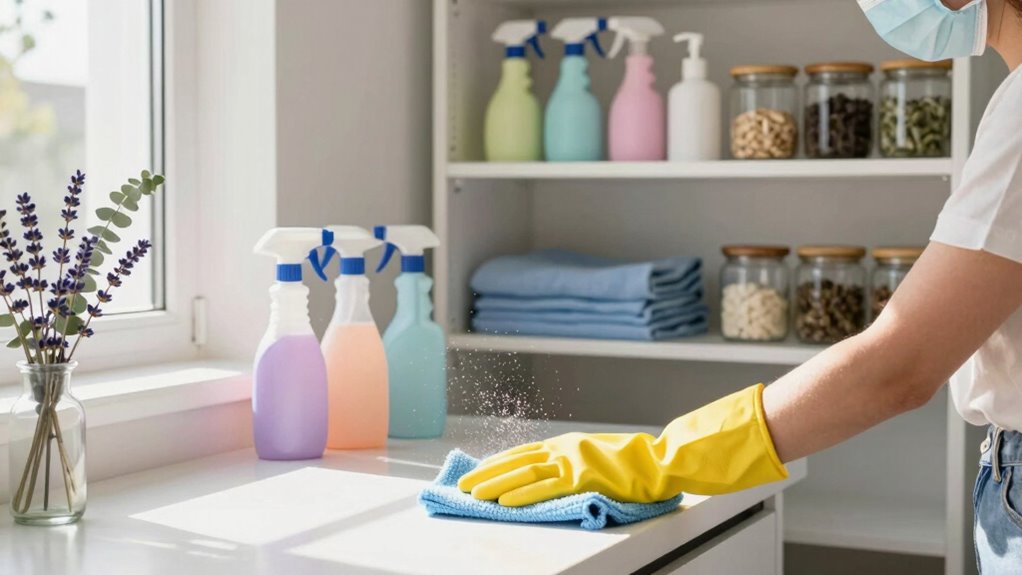
To further minimize allergens, adopt a regular cleaning schedule that targets common problem areas. Dust surfaces with a damp cloth to trap particles rather than spreading them into the air. Vacuum carpets, rugs, and upholstery with a HEPA filter-equipped vacuum cleaner to efficiently remove embedded allergens. Don’t forget to clean curtains and blinds, as these can trap pollen and dust. When dusting, wear a mask to prevent inhaling irritants. Also, consider replacing or thoroughly washing air filters in your HVAC system to ensure it’s circulating clean air. Regular maintenance of your air filtration system can significantly improve indoor air quality during allergy season.
In addition, placing air purifiers in strategic locations can help continuously reduce airborne allergens, especially in rooms where you spend the most time. Lastly, manage outdoor allergens by keeping windows closed during peak pollen times and changing clothes after spending time outside. Showering or rinsing off after outdoor activities can prevent pollen from transferring onto your bedding and furniture. By combining these measures—using air purifiers, allergen-proof covers, diligent cleaning, and outdoor precautions—you create a more manageable environment during allergy season. It’s not about eliminating every allergen but reducing their presence enough to breathe easier and feel more in control of your home. This way, allergy season becomes less overwhelming, and you can enjoy your space without constant irritation.

LEVOIT Air Purifier for Home Allergies and Pets Hair Smokers in Bedroom, H13 True HEPA Filter, 24db Filtration System Cleaner Odor Eliminators, Remove 99.97% Dust Smoke Mold Pollen, Core 300, White
- Certified for Performance and Efficiency: AHAM Verifide certified for reliability
- Powerful Air Cleaning: 56W motor with 143 CFM CADR
- Effective for Large Rooms: Covers up to 1073 ft²
As an affiliate, we earn on qualifying purchases.
As an affiliate, we earn on qualifying purchases.
Frequently Asked Questions
Can I Use Natural Remedies to Reduce Allergies During Cleaning?
Yes, you can use natural remedies for allergy relief during cleaning. Incorporate options like vinegar, baking soda, or essential oils such as eucalyptus or tea tree to help reduce allergens. These natural remedies can cut down dust, mold, and pet dander, making your cleaning less overwhelming and more effective. Just guarantee proper ventilation, and consider wearing a mask for added protection. This way, you support your allergy relief naturally.
How Often Should I Replace Air Filters During Allergy Season?
Did you know that the average air filter’s lifespan is about 90 days? During allergy season, you should replace your air filters every 30 to 60 days to prevent allergen buildup. Regular changes guarantee your HVAC system runs efficiently and reduces airborne irritants. If you notice increased dust or allergy symptoms, it’s a sign to swap out your filter sooner, keeping indoor air cleaner and healthier.
Are There Specific Cleaning Tools Best for Allergy Sufferers?
Yes, certain cleaning tools are best for allergy sufferers. Use microfiber cloths and dusters, as they trap allergens effectively. An HEPA vacuum cleaner is essential for deep cleaning carpets and upholstery. Incorporate allergy proofing tips like sealing gaps and washing bedding regularly. Pair these tools with effective cleaning products designed to reduce allergens, and you’ll considerably lessen allergy symptoms during cleaning, making the process less overwhelming and more manageable.
Should I Wear a Mask While Cleaning During Allergy Season?
Wearing a face mask while cleaning during allergy season can really help reduce the risk of inhaling airborne allergens. Masks mask your face, preventing pollen and dust from irritating your respiratory system. Incorporate a consistent cleaning routine, wearing masks when dusting, sweeping, or vacuuming, to keep allergens at bay. By blending beneficial barriers with regular routines, you create a cleaner, calmer, and more comfortable space, season or not.
How Can I Reduce Indoor Humidity Effectively?
You can reduce indoor humidity effectively by using a dehumidifier, which helps control humidity levels and prevent mold growth. Make certain your home is well-ventilated, especially in bathrooms and kitchens, by using exhaust fans or opening windows. Fix any leaks promptly to prevent excess moisture. Regularly cleaning and drying damp areas also supports mold prevention. Keeping humidity between 30-50% creates a healthier environment during allergy season.
Conclusion
As you breathe in the fresh promise of spring, remember that cleaning doesn’t have to feel like battling a storm. With each small step, you’re clearing away the clouds of allergens, making your home a sanctuary of calm and comfort. Embrace these simple strategies, and watch as your space transforms into a gust of fresh air—light, bright, and welcoming. You hold the power to turn allergy season into a season of renewal and peace.